"Architectural," "laminated" and "dimensional" all describe the same basic shingle: two or more layers bonded together for a thicker, shadowed look. The terms that really separate one product from another are the wind rating and the nailing it requires, algae resistance, impact rating, and the fine print of the "limited lifetime" warranty. Those details vary by manufacturer and product line, so the most useful habit is to ask what each term means for the specific product on your estimate.
We have already compared shingle types in choosing shingles for Houston weather and the major brands in best shingle brands for Houston homes. This article is a decoder: the words you will see on a brochure, a bundle wrapper or an estimate, what they mean in plain language, and the question that gets you a straight answer.
What makes a shingle "architectural"?
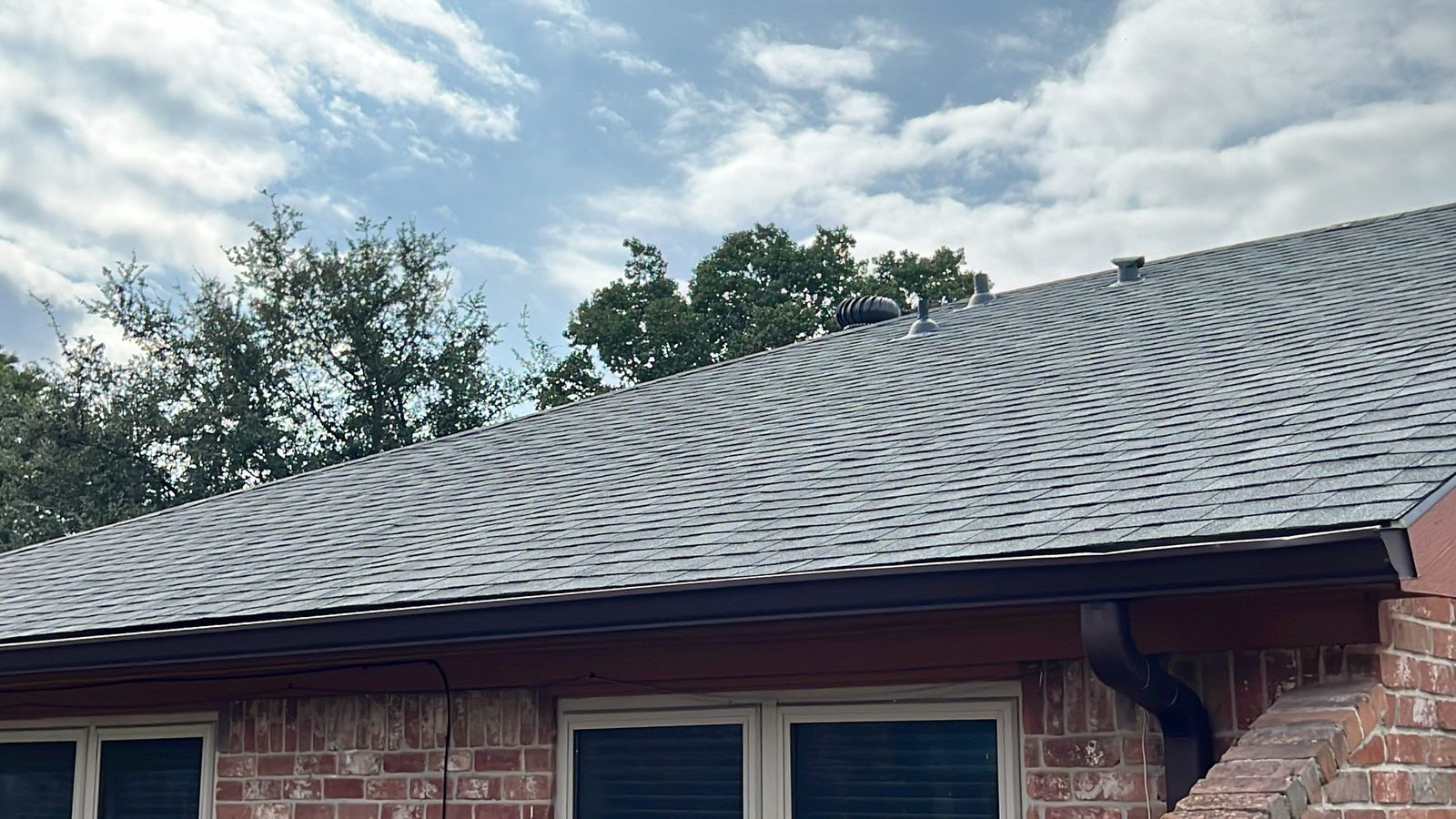
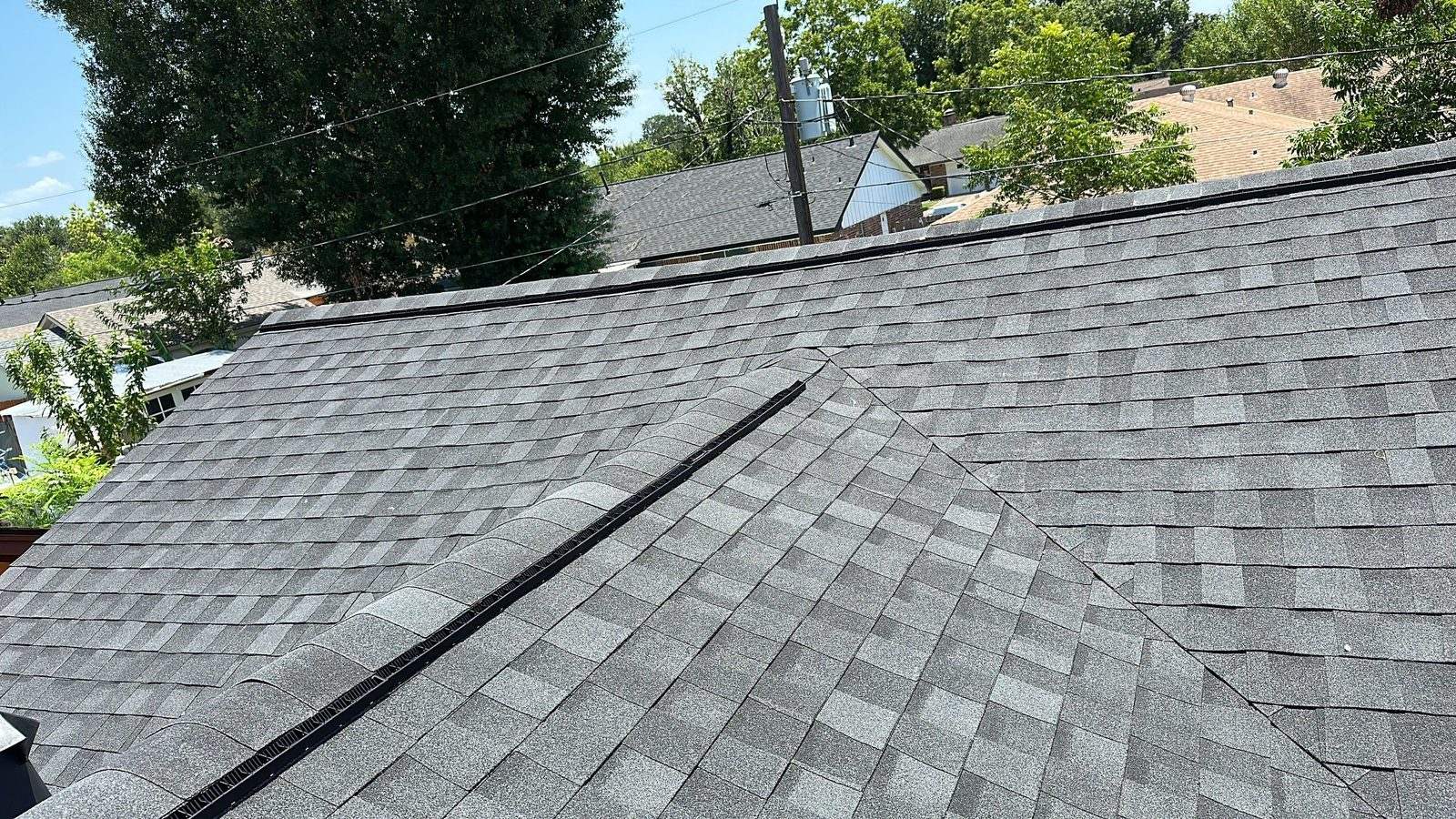
A traditional 3-tab shingle is a single flat layer cut into three tabs. An architectural shingle laminates a second layer onto the first, which makes it thicker and gives the roof a textured, shadowed look. Manufacturers use "laminated" and "dimensional" for the same construction. "Designer" or "luxury" lines go a step further in weight and styling, often imitating slate or wood shake. None of these names, on its own, tells you how a shingle performs in wind or hail; for that you need the ratings and the warranty.
The brochure decoder
| Term you'll see | What it means | What to ask |
|---|---|---|
| Architectural, laminated, dimensional | Two or more bonded layers; the three words describe the same idea | Which brand and product line, exactly? |
| Designer or luxury | A heavier, more styled architectural shingle; naming varies by brand | Besides the look, what changes: weight, wind rating, warranty? |
| Wind rating (mph) | The wind speed the product is rated for. Some ratings require specific accessories: CertainTeed, for example, lists a standard 110 mph rating that upgrades to 130 mph with the right starter and hip and ridge products | What is the rating, and which accessories does it require? Are they on my estimate? |
| High-wind nailing pattern | More nails per shingle, in the locations the manufacturer specifies. Some manufacturers tie enhanced wind coverage to it | How many nails per shingle will you use, and does that match the warranty I'm being offered? |
| Algae-resistant (AR) | Granules designed to resist the dark streaks algae leaves on roofs in humid climates | Is there a separate algae coverage period, and how long is it? |
| Class 4 (UL 2218) | The highest rating in the UL 2218 impact test: a lab benchmark, not a promise the shingle won't be damaged by hail | Is this product Class 4, and will you give me paperwork showing what was installed? |
| Limited lifetime warranty | A material warranty with conditions and exclusions. How "lifetime" is defined, and who is covered after a sale, is set in the warranty document | Can I read the actual warranty before I sign? |
| Non-prorated period (SureStart, Full Start and similar) | The early years when coverage is strongest. CertainTeed says its SureStart protection covers replacement costs for early-life defects, typically 10 years | How long is it for this product, and does it include labor? |
| Prorated | After the early period, coverage on many products shrinks as the roof ages | What does the schedule look like in year 15 or 20? |
| System or enhanced warranty | Longer or broader coverage that requires qualifying components and, usually, a contractor credentialed by that manufacturer | Is this contractor eligible to offer it, and who registers it? |
| Registration | Some warranties must be registered, sometimes by a deadline | Who registers, by when, and will I get confirmation? |
| Workmanship warranty | The installer's own warranty on how the roof was put on, separate from the manufacturer's | How many years, and is it written on the estimate? |
What does "lifetime" really mean on a shingle warranty?
It is not a prediction of how long your roof will last. A shingle warranty is a promise about defects in the material, on the manufacturer's terms. Malarkey, for example, describes its standard coverage as a limited lifetime warranty "against manufacturing defects" (Malarkey warranties). Installation mistakes and storm damage are different problems.
Read the warranty for four things:
- The strong early period. Most brands name it: CertainTeed's SureStart (CertainTeed warranties), TAMKO's Full Start (TAMKO warranties). Note its length and whether labor is included.
- What happens after. Look for the proration schedule and how coverage changes with the roof's age.
- The conditions. Enhanced coverage often depends on matching components and who installed them. Malarkey's Certified warranties require a complete system with a minimum number of its accessories, and its Enhanced Wind Warranty is available on other roofs when four nails are used per architectural shingle or as code requires (Malarkey). TAMKO says its enhanced warranties must be registered by the installing TAMKO Certified Contractor within 90 days, and its limited warranty includes a binding arbitration clause (TAMKO).
- Transfer and registration. If you sell, transfers can have deadlines; Malarkey lists a window after the title transfer. The Federal Trade Commission notes that you may sometimes have to register a product to qualify for warranty service, and that a warranty must be available to read before you buy (FTC: Warranties).
Keep the warranty, your invoice and the installation paperwork together. Our guide to roof warranties goes deeper into proration and transfers.
Where does installation come in?
Almost every rating on a brochure assumes the shingle was installed the way the manufacturer specifies: nails in the right zone, the right number per shingle, matching starter and ridge pieces, and an attic that can breathe. A rating is earned partly at the factory and partly on your roof.
That is why we install shingles to manufacturer requirements with proper fastening, and why our own workmanship warranty is separate from the manufacturer's. Ours is tiered at 5, 10 or 15 years depending on the system installed; 10 years is the common term on architectural shingle replacements. It is included in the price, confirmed in writing before you sign, and stated on your estimate and closeout paperwork. The manufacturer's terms are set by the manufacturer, not by us, and we explain the options in plain language before you decide.
Architectural shingle questions
Does a lifetime warranty mean my roof will last a lifetime?
No. It is a limited warranty on the material, with conditions, exclusions and, on many products, coverage that becomes prorated after an early period. It is not a prediction of how long your roof will last.
Do I need the high-wind nailing pattern?
Ask what the specific warranty you are being offered requires. Some manufacturers tie enhanced wind coverage to a specific nail count, and local code may set its own requirements.
Will algae-resistant shingles never streak?
Algae-resistant granules are designed to resist the dark streaks, not guarantee a spotless roof. Ask whether the product has a separate algae coverage period. Our guide to roof algae and black streaks explains the cause.
Want someone to walk through the shingle options and warranty paperwork with you, without the sales jargon? Book a free, photo-documented inspection or call PL Roofing & Remodeling at 832-860-0354. Hablamos español.
Sources
- CertainTeed, "Residential Roofing Warranties" (reviewed Oct. 29, 2026)
- TAMKO, "Warranties" (reviewed Oct. 29, 2026)
- Malarkey Roofing Products, "Warranties" (reviewed Oct. 29, 2026)
- Federal Trade Commission, "Warranties" (reviewed Oct. 29, 2026)