A roof touches almost every other part of a home's exterior. Gutters hang at the roof edge, fascia boards hold the gutters, siding meets the roof wherever a wall rises above it, and paint covers the trim. When several trades work on the same house, problems tend to show up in the gaps, in the item each crew assumed the other one owned. The fix is simple: agree on the order of work, name who is responsible for each item, and put it in writing before anyone starts.
Why does the order of exterior work matter?
Each layer of the exterior laps over or under another, and the order decides whether water is guided out or let in. A few common examples:
- Gutters before a new roof. If brand-new gutters go up first, they may need to come off, or be worked around, when the roof edge is replaced.
- Fascia surprises. Rotten fascia or soffit wood is often hidden behind old gutters and roof edges until they are removed.
- Siding and roof flashing. Where a roof meets a wall, the flashing and the siding are layered together. Replace one without planning for the other, and the joint can end up wrong.
- Paint too early. Fresh paint on trim near the roof edge can be scuffed during roofing, and new wood needs paint after it goes in.
Who usually handles what, and in what order?
Contracts vary, so treat this as a starting point, not a rule.
| Item | Typical trade | Sequence | Question to ask |
|---|---|---|---|
| Roof deck (sheathing) repairs | Roofer | During tear-off, before underlayment goes down | How will damaged decking be documented, priced and approved? |
| Drip edge (metal at the roof edge) | Usually the roofer, as part of the roof edge | With the underlayment, before gutters are reset or installed | Is drip edge included, and how will it sit relative to the gutter? |
| Fascia and soffit wood | Carpenter, gutter installer or remodeler, depending on the contract | After old gutters come down, before drip edge and gutters go on | If rotten wood is found, who replaces it, how is it priced, and who approves it? |
| Gutters and downspouts | Gutter contractor | After roofing and any fascia repair | Who removes, stores and rehangs the existing gutters, or are new ones planned? |
| Step and kick-out flashing at walls | Roofer installs the flashing; siding trade works around it | With the roof, before siding is closed up | Who removes and reinstalls siding where it meets the roof? |
| Siding repair or replacement | Siding contractor | Coordinated with roof-to-wall flashing | Will the siding crew keep the roofer's flashing intact? |
| Painting and caulking | Painter | Last, after roofing, carpentry and gutters | Is touch-up of trim scuffed during other work included? |
The roof-edge details worth understanding
Drip edge and gutters
Drip edge is the metal strip along the eaves and rakes that guides water off the roof edge. Model building code text shown on UpCodes puts underlayment over the drip edge along the eaves and the drip edge over the underlayment along the rakes. Where the drip edge ends up relative to the gutter is something the roofer and the gutter installer should agree on, so water lands in the gutter instead of behind it.
Kick-out flashing where a roof meets a wall
The U.S. Department of Energy's Building America Solution Center recommends installing kick-out flashing at the end of a roof-wall intersection to divert water away from the wall and into the gutter. Its guidance also says siding goes over the step flashing, ending at least one inch above the roof, and that the end of the gutter should not touch the intersecting wall. That one corner involves three trades, which is why it gets missed. Our guide to roof flashing explains step and wall flashing in more detail.
What if rotten wood turns up in the middle of the project?
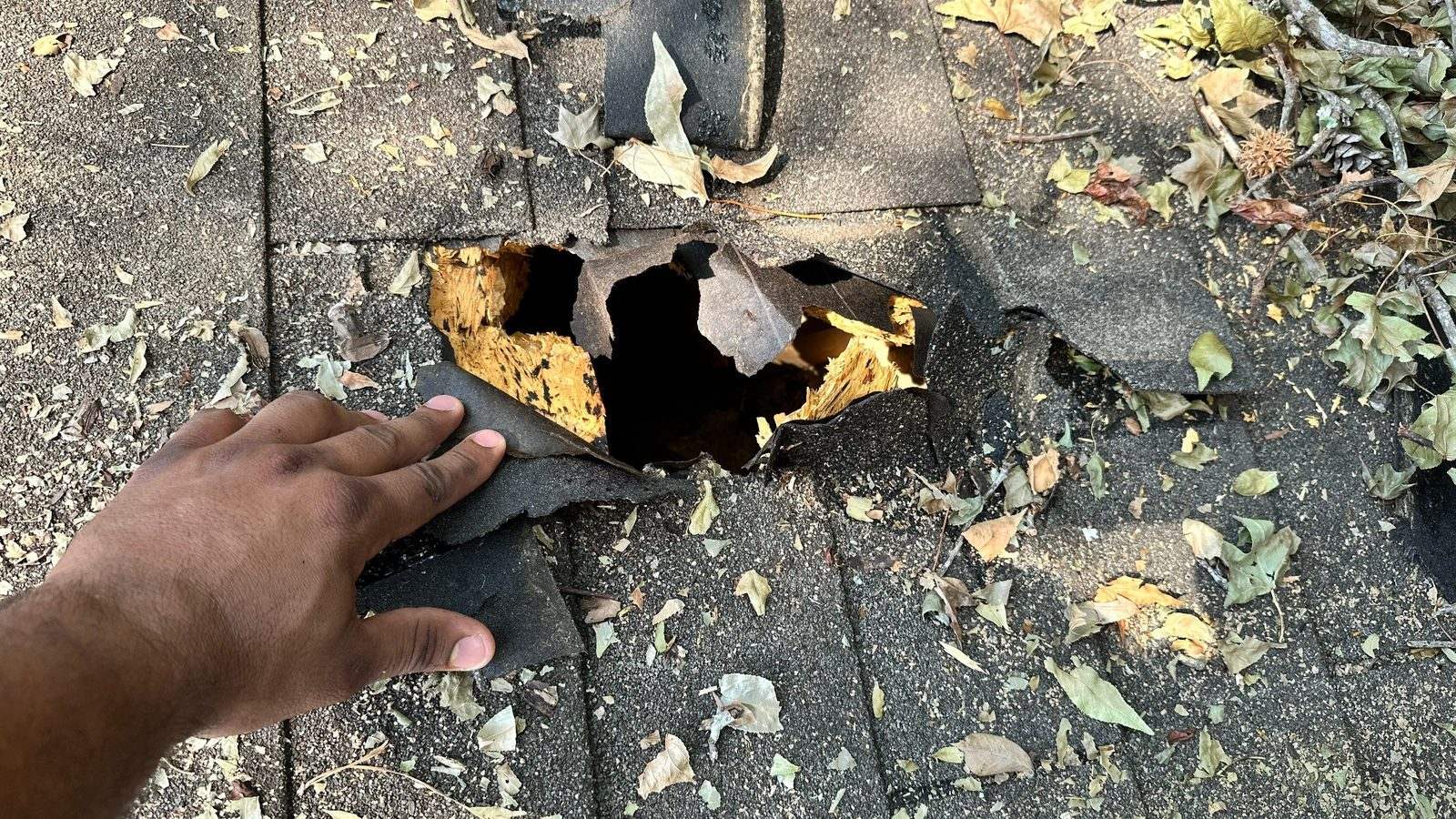
It is common not to know the condition of the roof deck or fascia until the old materials come off. Rather than hoping it will not happen, plan for it:
- Ask each contractor how hidden damage is documented. Photos before and after are reasonable to expect.
- Ask how extra work is priced and approved, and who pays the trade that fixes it.
- Agree that no one closes up rotten wood behind new gutters or new metal.
On our roof replacements, PL Roofing & Remodeling inspects the exposed deck after tear-off, documents rotted or damaged wood so you know what was found, and replaces unsuitable decking where authorized. Our article on roof decking damage shows what that looks like.
Putting it in writing
The Texas Department of Insurance advises getting written estimates with clear contact information and never signing a contract with blank spaces. When several trades are involved, it also helps to have each written scope answer the same short list:
- Which items on the table above this contractor is responsible for, by name.
- What they will remove, and whether they or someone else will reinstall it.
- When their work happens relative to the other trades.
- Who is responsible for debris, permits and any touch-ups their work causes. Permit requirements vary by city and type of work, so ask what applies and check with your city's permitting office.
- How their warranty treats work done afterward by another trade.
That last point matters. Our roofing warranty page notes that repairs or additions made by someone else after our installation are the most common reason workmanship coverage lapses, and that penetrations added later need proper flashing. If another trade needs to fasten anything to the roof, call your roofer first.
Where does the roofer fit?
PL Roofing & Remodeling handles the roofing side: tear-off, deck inspection, underlayment, flashing at pipes, walls, chimneys and valleys, ventilation and shingles. During installation we protect landscaping, siding and windows where needed. For gutters, fascia, siding and paint, ask each contractor what they cover and get it in writing so nothing falls between trades.
Questions about sequencing exterior work
Should I replace gutters before or after a new roof?
Usually after. The roof edge, including drip edge, is typically finished first, then gutters are reset or installed. Confirm the plan with both contractors so nobody has to undo the other's work.
Who fixes rotten fascia found during a roof replacement?
It depends on your contracts. Ask before work begins who replaces fascia or soffit wood, how it is priced and how you approve it, and make sure that answer is in writing.
What is kick-out flashing, and who installs it?
It is a small piece of flashing at the bottom of a roof-to-wall joint that steers water into the gutter instead of down the wall. It is part of the roof flashing, but the siding and gutter crews work right next to it, so all three should know where it goes.
Should I paint before or after the roof?
Generally after roofing, carpentry and gutters are done, so new wood gets painted and fresh paint is not scuffed. Ask whether touch-ups are included in any scope.
Planning a roof alongside other exterior work? Book a free, photo-documented inspection or call PL Roofing & Remodeling at 832-860-0354, and we will walk you through the roofing side of the plan. Hablamos español.
Sources
- U.S. DOE Building America Solution Center, Step and kick-out flashing at roof-wall intersections (reviewed Oct. 29, 2026)
- Model building code text, Drip edge (UpCodes) (reviewed Oct. 29, 2026)
- Texas Department of Insurance, State law cracks down on roof scams (reviewed Oct. 29, 2026)