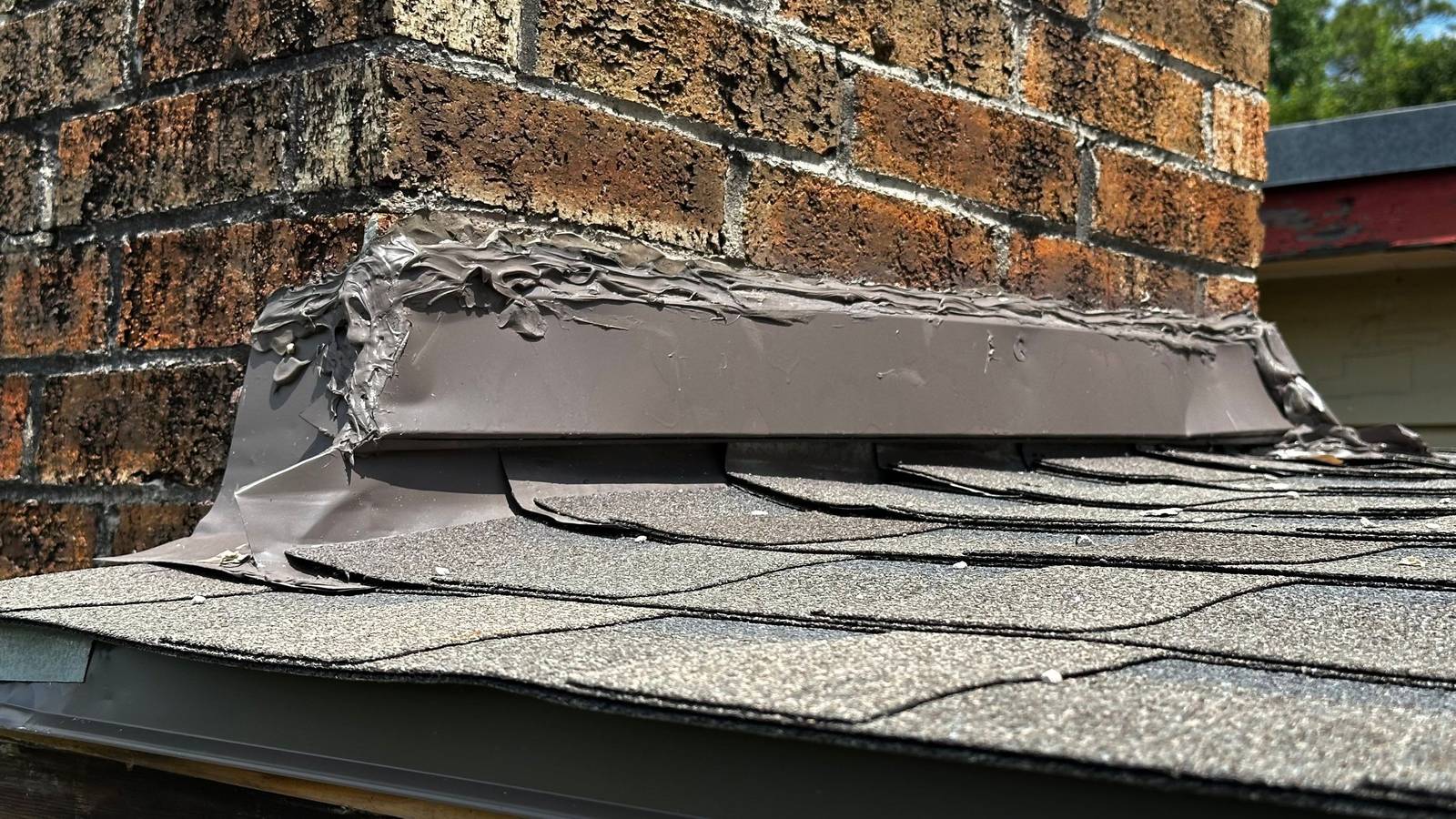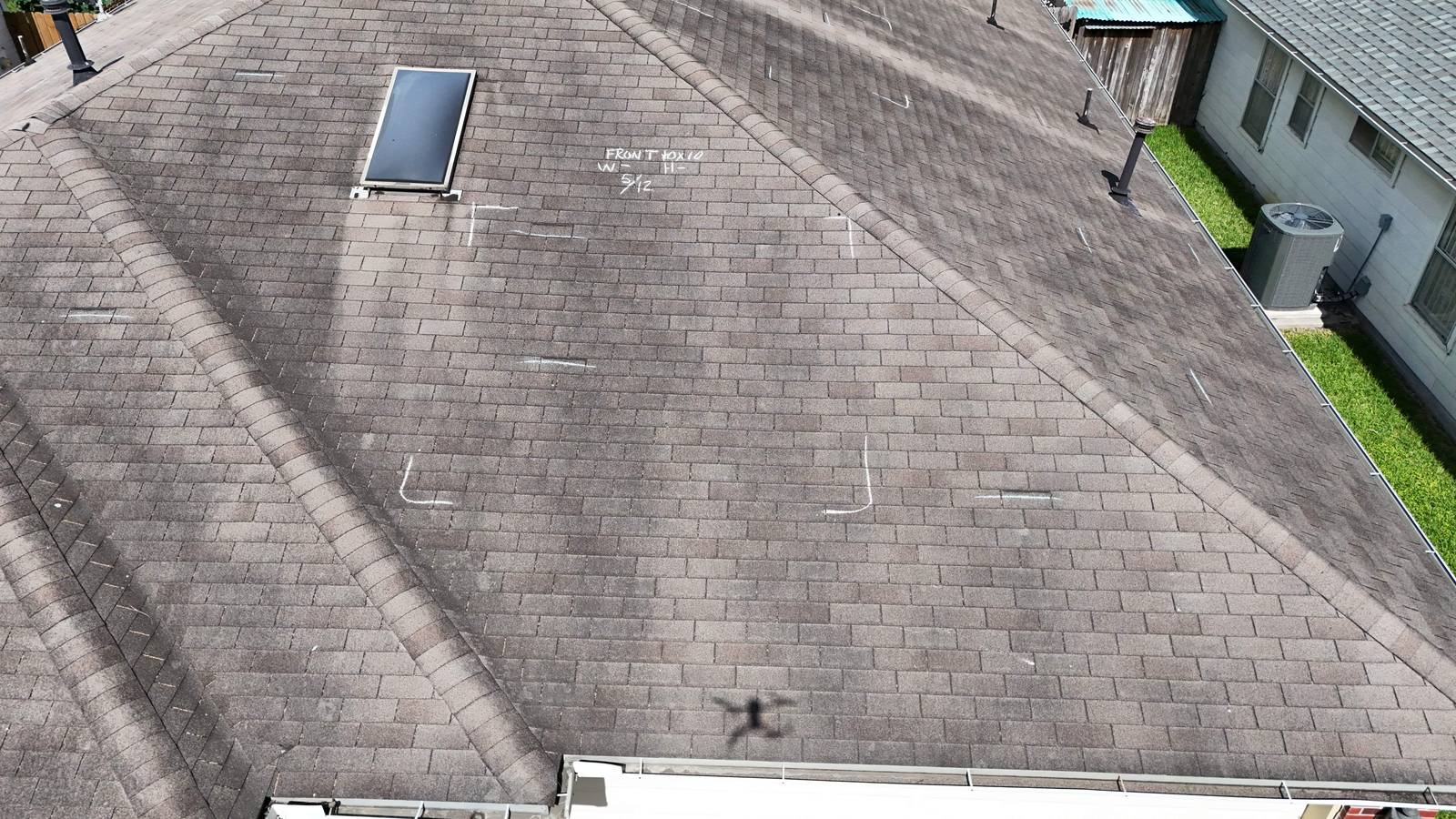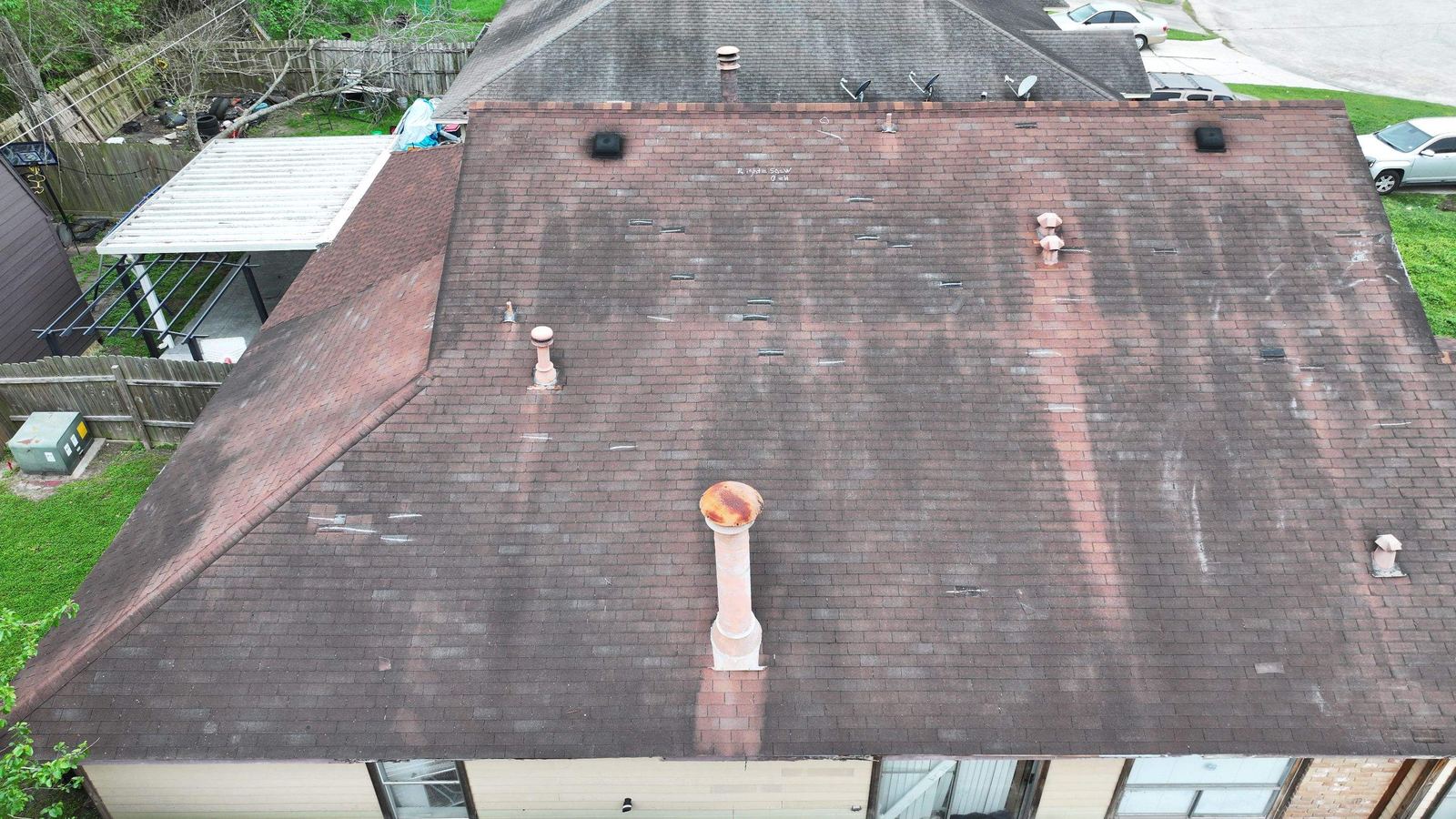
The dark streaks running down many Houston roofs are usually algae, not dirt, soot or mold inside the house. They are mostly a cosmetic problem, and they can be lightened with a gentle cleaning, but never with a pressure washer, which can strip the granules that protect your shingles. Streaks become a real concern when they come with bare spots, curling, moss or leaks, so it is worth having the roof checked if you see those signs.
Drive through almost any neighborhood in Spring, Cypress or Katy and you will see them: black or brown stripes that start near the top of a slope and run toward the gutters, often worst on the shady side. Homeowners worry that the roof is rotting or failing. Most of the time it is not. Here is what the streaks are, why our climate encourages them, how to clean them safely and how to tell a cosmetic stain from a roof that needs attention.
What are the black streaks on my roof?
The Asphalt Roofing Manufacturers Association explains that roof discoloration from algae usually looks brown to black and may be mistaken for fungus, soot, dirt, moss or tree droppings. It names Gloeocapsa magma as probably the most common of several species involved. The algae travel through the air, settle on roofs and produce dark pigments, which is why a light gray roof can slowly turn streaky and dark.
The discoloration can be uniform or appear as streaks. It is most visible on lighter shingles and harder to see on darker colors, which is one reason two neighboring houses can look so different even when both roofs have some growth.
Why are roof algae so common in Houston?
According to the same ARMA guidance, algae discoloration is most widespread in the Gulf States and along the Northwest and Eastern Seaboards, and grows especially in warm, humid conditions. That describes Greater Houston for much of the year. A few local conditions make it worse:
- Shade. North-facing slopes and areas under trees stay damp longer after rain and morning dew.
- Overhanging branches. Trees drop leaves and debris that hold moisture on the shingles.
- Clogged gutters. Water that backs up keeps the lower edge of the roof wet.
- Roof age. Older shingles may have less of the protective treatment some newer products include.
The Texas Department of Insurance's roof maintenance checklist recommends removing tree limbs hanging over or near your roof and keeping gutters clean. Those same steps help the roof dry out faster, which gives algae less of a foothold.
Is algae damaging my roof, or is it just cosmetic?
| What you see | Usually means | What to do |
|---|---|---|
| Even dark streaks, shingles lie flat | Algae staining, mostly cosmetic | Clean gently if the look bothers you, or plan for algae-resistant shingles at replacement |
| Green, fuzzy clumps, often in shade | Moss, which holds moisture against the shingles | Have it looked at; follow the shingle manufacturer's guidance for removal |
| Streaks plus bare or smooth patches | Granule loss from age, wear or past damage | Schedule an inspection |
| Streaks plus curling, cracking or missing shingles | An aging roof or storm damage | Schedule an inspection |
| Ceiling stains or attic moisture | A leak, unrelated to the streaks themselves | Find and fix the water source quickly |
Algae on its own is mainly an appearance issue. Moss is different because it traps water, and a roof that is already worn out will show other signs alongside the streaks. If you see a stain on a ceiling, treat it as a leak, not an algae problem. The EPA's guide to mold and moisture explains that fixing the water problem is the key to controlling mold indoors.
How do you clean algae off a roof safely?
ARMA says the discoloration may be lightened with a solution of liquid household bleach and water, gently applied, left on for a short time and then rinsed with a gentle spray. It also cautions that:
- The results are temporary, and the streaks may come back.
- Mixing directions vary by shingle manufacturer, and other chemicals or methods should not be used without the manufacturer's approval.
- Scrubbing can loosen and remove granules, so it should be avoided.
- The cleaning process makes the roof slippery, and ARMA encourages using professionals.
- Care is needed to protect plants, siding and other parts of the house from the solution.
Because working on a roof is dangerous, we recommend leaving roof cleaning to a professional who follows the shingle manufacturer's instructions. Please do not climb up to do it yourself.
Can pressure washing damage roof shingles?
Yes. ARMA is direct about it: do not use a power washer or any type of brush or broom to clean algae from the roof surface, because high-pressure washing is likely to damage asphalt roofing. The granules on a shingle are what shield the asphalt from Houston sun. Blasting them off can shorten the life of the roof and may create problems a manufacturer will not cover. If someone offers to pressure-wash your shingles, ask them what the manufacturer's instructions say first.
What are algae-resistant shingles, and are they worth it?
Many shingle lines now include algae-resistant versions. ARMA describes them as specifically designed to inhibit algae growth for extended periods of time. How long that protection lasts, and what the manufacturer's warranty says about it, varies by product, so ask to see the specific manufacturer's documents rather than relying on a general promise.
For most Houston homes, algae resistance is worth considering at replacement time, especially with lighter colors, shaded lots or an HOA that cares about appearance. Our guides to choosing shingles for Houston weather and the best shingle colors for Houston heat cover the tradeoffs, and you can browse options on our brands and colors pages.
When should I have a roofer look at the streaks?
- The streaks came with bare patches, curling or cracked shingles.
- You see moss, especially near valleys or gutters.
- You have a ceiling stain, musty attic or damp insulation.
- The roof is older and you are deciding between cleaning and replacing. Our repair-or-replace checklist can help.
If streaks turn out to be hiding a real problem, our preliminary ranges for roof repairs run $450 to $1,900 or more, and a full asphalt replacement about $375 to $650 per roofing square. The final number is confirmed after an inspection.
Roof algae questions
Are the black streaks on my roof mold?
Usually not. They are typically algae, which the roofing industry identifies as a common cause of dark streaks on shingles in warm, humid areas. Mold inside your home is a separate problem tied to moisture indoors.
Will the streaks come back after cleaning?
They often do. Industry guidance says bleach-solution cleaning only lightens the stains temporarily. Keeping branches trimmed and gutters clear helps the roof dry, and algae-resistant shingles are an option at replacement.
Do black streaks mean I need a new roof?
Not by themselves. Streaks alone are mostly cosmetic. A roof needs attention when streaks come with bare spots, curling, cracked or missing shingles, moss or leaks.
Not sure whether it is just algae? Book a free, photo-documented inspection with no obligation, or call PL Roofing & Remodeling at 832-860-0354. We show you what the streaks are and whether anything else needs attention. Hablamos español.