Roof decking, also called sheathing, is the plywood or OSB layer your shingles are nailed to. Signs of damage include a sagging or wavy roofline, dark stains or mold on the underside in the attic, daylight through the boards, and soft spots a roofer can feel underfoot. Some damage shows up at an inspection, but the full condition is usually only known once the old shingles come off, which is why a good quote explains in writing how any replacement decking will be priced.
Decking is the part of your roof nobody thinks about until it is soft. It holds the nails that hold the shingles, it ties the roof framing together, and it is the surface underlayment and flashing depend on. Here is how to spot trouble, why surprises happen on replacement day, and how to make sure decking is handled fairly on your quote.
What is roof decking made of?
| Decking type | What it is | What to know |
|---|---|---|
| Plywood | Thin wood layers glued in alternating directions. | Common on many Houston homes. |
| OSB (oriented strand board) | Wood strands pressed with resin into sheets. | Widely used in newer construction. It performs well when kept dry, but prolonged moisture can make edges swell. |
| Plank or board decking | Individual boards, sometimes with gaps between them, found on some older homes. | Depending on the condition and the shingle manufacturer's requirements, it may need to be covered with new sheathing before shingles go on. |
What damages roof decking?
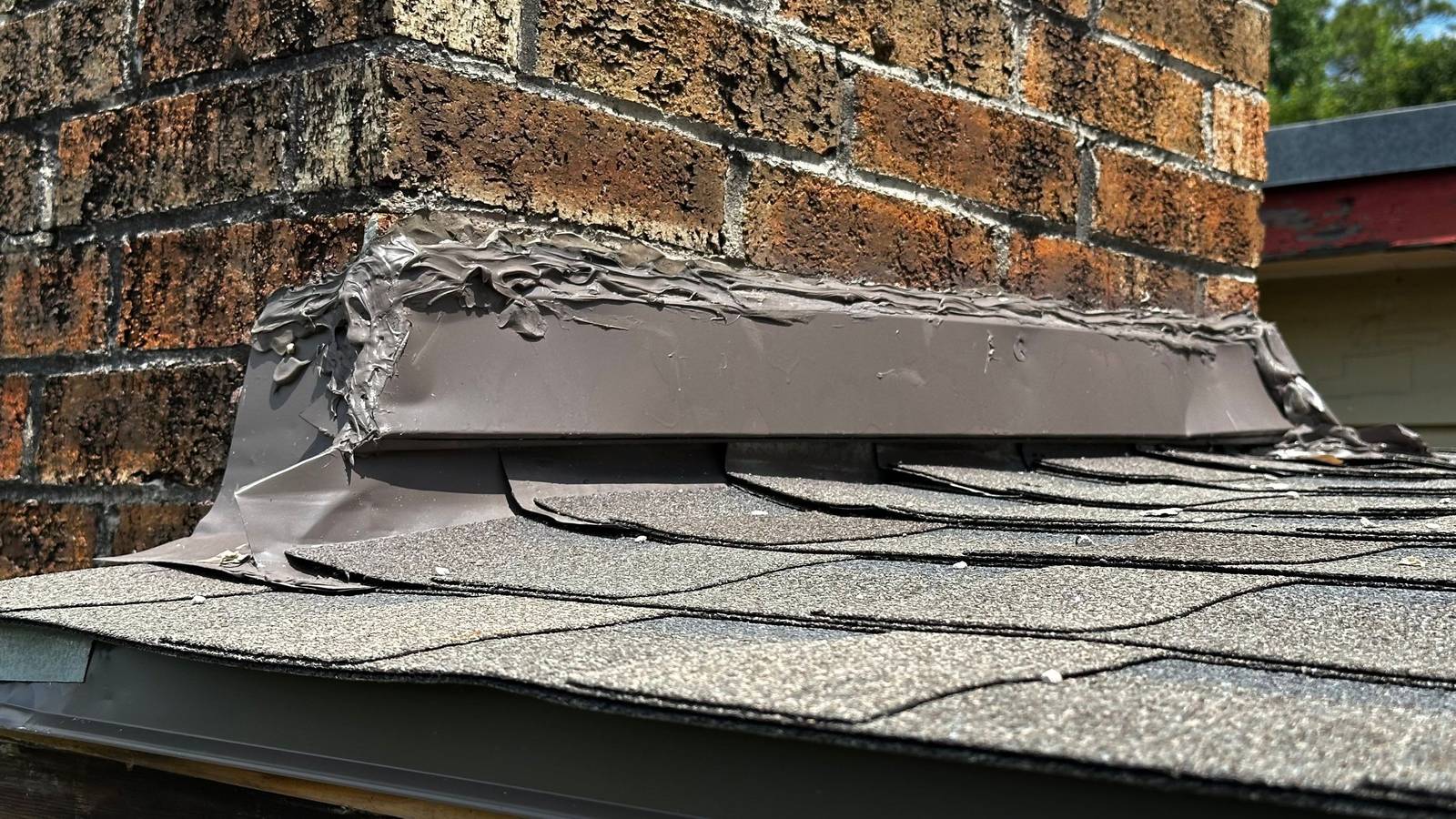
- Long-running leaks from failed flashing, cracked pipe boots or missing shingles.
- Attic moisture. Poor ventilation in a hot, humid attic can let moisture condense on the underside of the deck.
- Clogged gutters that let water back up under the first row of shingles and soak the edge of the deck.
- Storm damage such as a fallen limb or wind that lifts shingles and exposes the wood.
- Age and past shortcuts, such as layered roofs that trapped moisture or decking that was never properly fastened.
Our guide to attic ventilation in Texas heat explains how airflow helps keep the deck dry from below.
What are the signs of damaged roof decking?
| Where to look | What you might see | What it can mean |
|---|---|---|
| From the street | A sagging, wavy or dipped roofline between rafters | Decking that has weakened, often from moisture, or framing problems |
| On the roof (for a roofer) | Soft or spongy spots underfoot; shingles that will not lie flat | Wood that has lost strength and may not hold nails |
| In the attic | Dark stains, water rings or wet insulation | Past or active leaks reaching the deck |
| In the attic | Mold or mildew on the underside of the boards | Moisture from leaks or poor ventilation |
| In the attic | Daylight through the boards, or nails backing out | Gaps, deterioration or failed fastening |
| Inside the house | Ceiling stains or peeling paint under the roof | Water that got past the deck; the deck itself may be affected |
If you look in the attic yourself, step only on framing, never on the drywall between it, and use good light. Leave walking the roof to a professional; soft decking is exactly where people fall through.
Why is decking damage only fully known at tear-off?
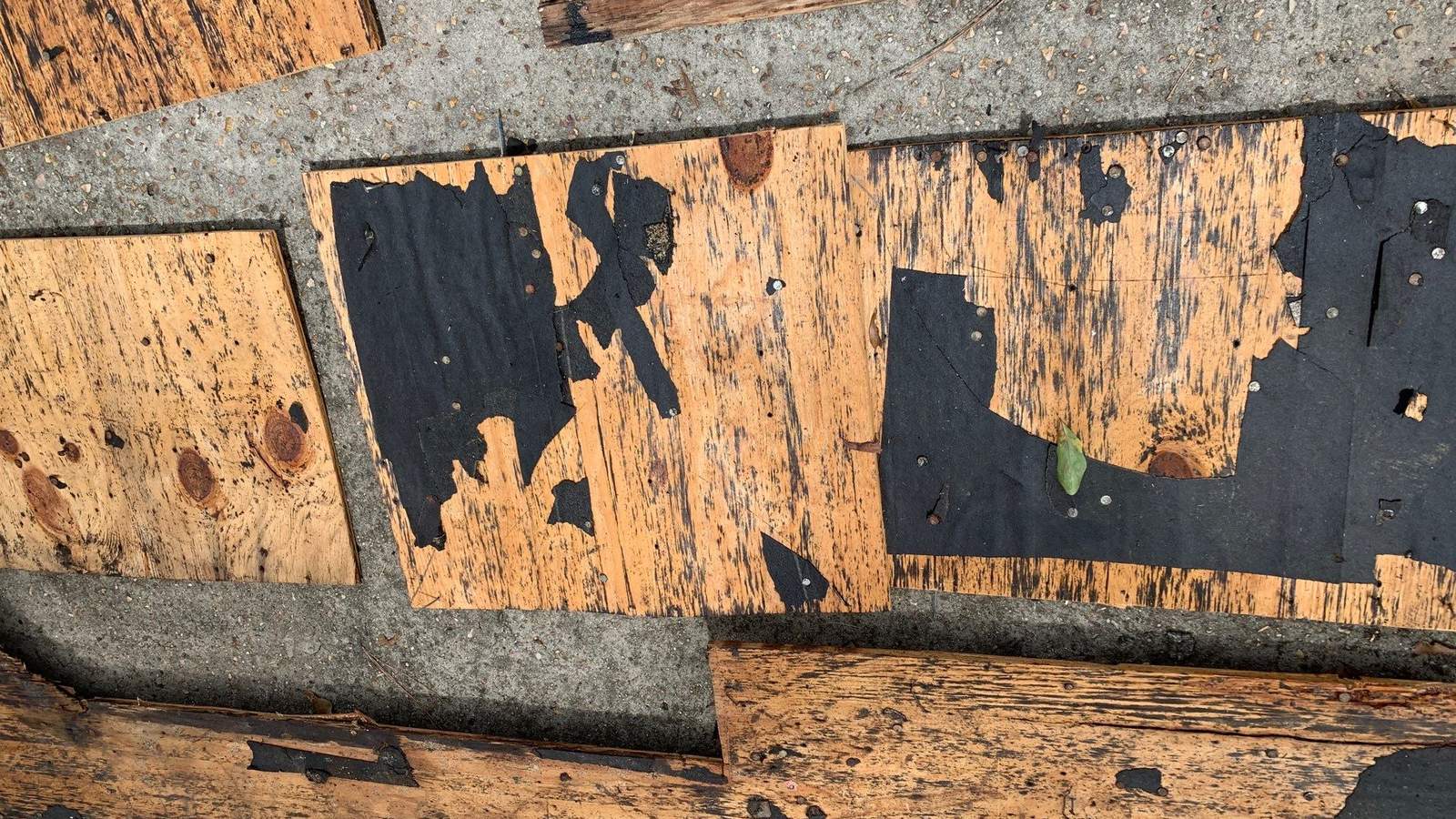
An inspection can find a lot: soft spots, sagging, attic stains and mold. But a roofer cannot see the top of the deck while shingles and underlayment cover it, and the attic view is often blocked by insulation, ductwork or low clearance. Small areas of rot, delaminated plywood or swollen OSB edges often show up only when the old roof comes off. That is normal, and it is why honest quotes plan for it instead of pretending it will not happen.
Tear-off is also a chance to strengthen the deck. The Insurance Institute for Business & Home Safety says that in its FORTIFIED program, using ring-shank nails nearly doubles the strength of a roof deck's attachment against wind, and that sealing the deck seams helps keep water out if shingles are lost. Ask your roofer whether re-nailing the existing deck or sealing its seams is included or available as an option.
How is decking replacement usually quoted?
Since nobody knows exactly how much decking needs replacing until tear-off, a good quote spells out the rules in advance. Look for:
- A per-sheet unit price in writing. Decking is usually replaced by the full sheet (4 by 8 feet), and the contract should state the price per sheet so there are no surprises.
- Whether any sheets are included. Some quotes include a set number of sheets in the base price; others charge for every sheet replaced. Either can be fair if it is written down.
- Photo documentation. Ask for photos of damaged decking before it is covered, so you can see what was replaced and why.
- A notice or approval step. Ask how you will be told if decking needs go beyond what was expected.
- Plank decking plans. If your home has board decking, ask whether new sheathing over it is included or priced separately.
The Texas Department of Insurance also warns homeowners never to sign a contract with blank spaces that can be filled in later. For context, a full asphalt replacement runs about $375 to $650 per roofing square in our preliminary ranges, and any decking replacement is confirmed after inspection and at tear-off. Our guide to what happens on roof replacement day shows where decking fits in the process.
Will insurance pay for rotted roof decking?
Your insurer decides, based on your policy and the cause. If a storm damaged the roof and the decking with it, that is a different situation from wood that rotted over years. The Texas Department of Insurance notes that most home policies do not cover water damage from gradual leaks or seepage. Photos of the damage and its cause help you and your insurer understand what happened, but the insurer makes the call.
Is decking damage a sign I need a new roof?
Not always. One soft area around a failed pipe boot can be fixed as part of a repair. But soft spots in several places, sagging across a slope, or widespread attic mold usually point to a roof that is near the end of its life or has had water problems for a long time. Our guide to the signs you need a new roof covers the other clues.
Roof decking questions
Can a roofer tell me exactly how much decking needs replacing before tear-off?
Not exactly. An inspection can find soft spots, sagging and attic stains, but some rot only shows once the shingles are off. That is why the quote should state a per-sheet price and how you will be told about extra sheets.
Can new shingles go over bad decking?
They should not. Damaged decking may not hold nails properly, which can affect how the shingles perform in wind and how they wear. Soft or rotted sections should be replaced before the new roof goes on.
Is OSB worse than plywood?
Both are widely used and both perform well when kept dry and installed correctly. OSB edges can swell with prolonged moisture, and plywood can delaminate, so the bigger issue is keeping water and attic moisture away from either one.
Worried about soft spots or a sagging roofline? Book a free, photo-documented inspection with no obligation, or call PL Roofing & Remodeling at 832-860-0354. We show you what we find and confirm your price after the inspection. Hablamos español.