Flashing is the thin metal, and sometimes rubber, that seals the joints of a roof: where it meets walls and chimneys, around pipes and vents, along the edges and in valleys. Because those joints are where water is most likely to get in, many roof leaks start at flashing rather than in the open field of shingles. Loose or cracked flashing can often be repaired, and during a full replacement it is usually best to replace most flashing along with the shingles.
Shingles do a good job on a flat, open slope. The trouble spots are where the roof changes direction or something breaks through it. Flashing is the detail work that bridges those gaps, and in Houston it has to handle intense sun, heavy downpours and wind-driven rain. Here is what each type does, how to spot problems and how to decide between a repair and a replacement.
What are the main types of roof flashing?
| Type | Where it goes | What it does |
|---|---|---|
| Step flashing | Where a sloped roof meets a side wall, such as a second story or dormer | Individual L-shaped pieces woven between each course of shingles so water steps down and away from the wall |
| Counter flashing | Over step flashing on chimneys and some walls | Covers the top edge of the step flashing, often set into a cut in the masonry |
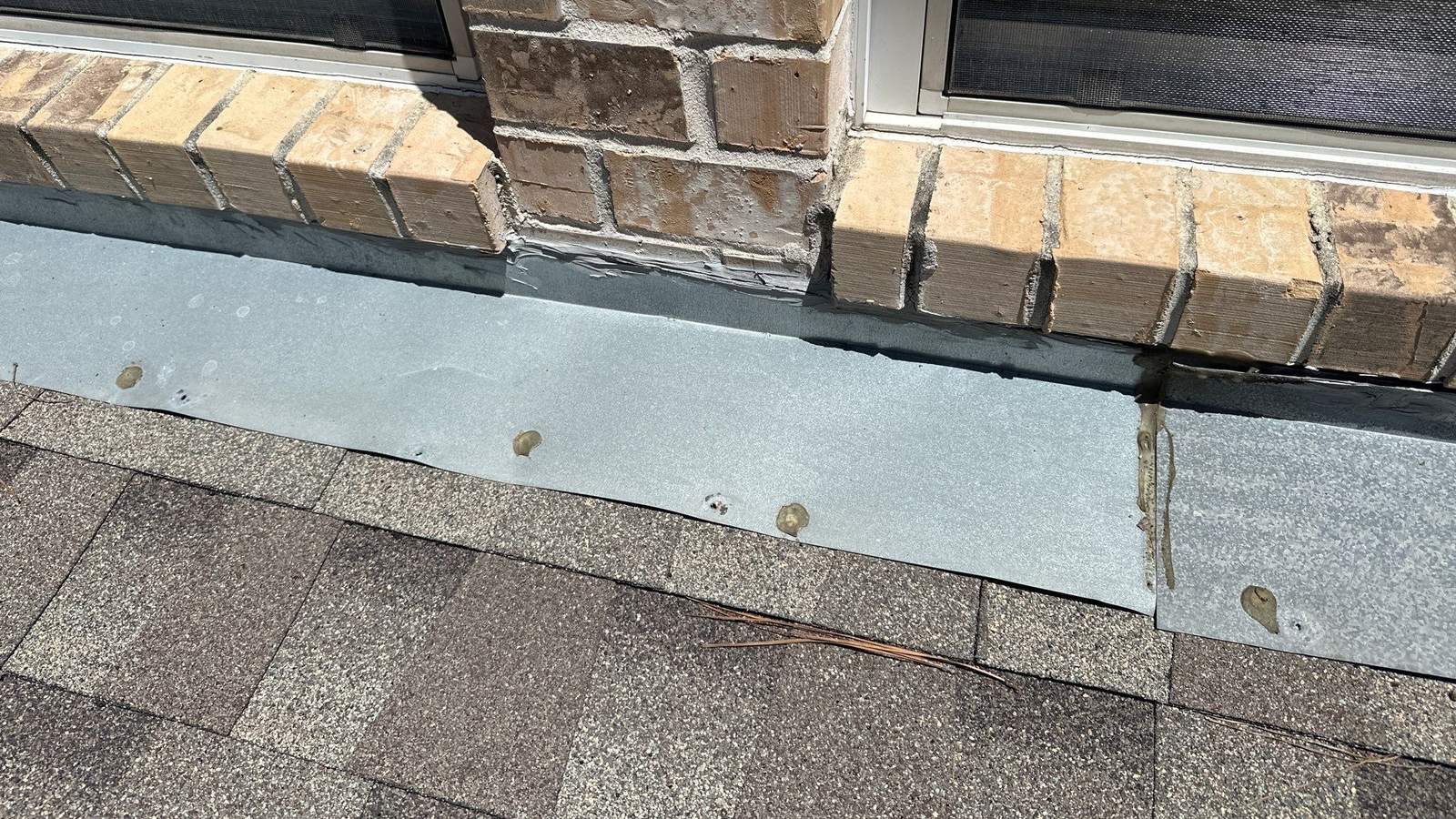
| Headwall or apron flashing | Where the top of a slope meets a wall | Carries water from the wall out over the shingles below |
| Kickout flashing | Where a roof edge ends against a wall | Turns water into the gutter instead of down the siding |
| Drip edge | Along the eaves and rakes | Directs water off the edge and into the gutter, and protects the edge of the deck |
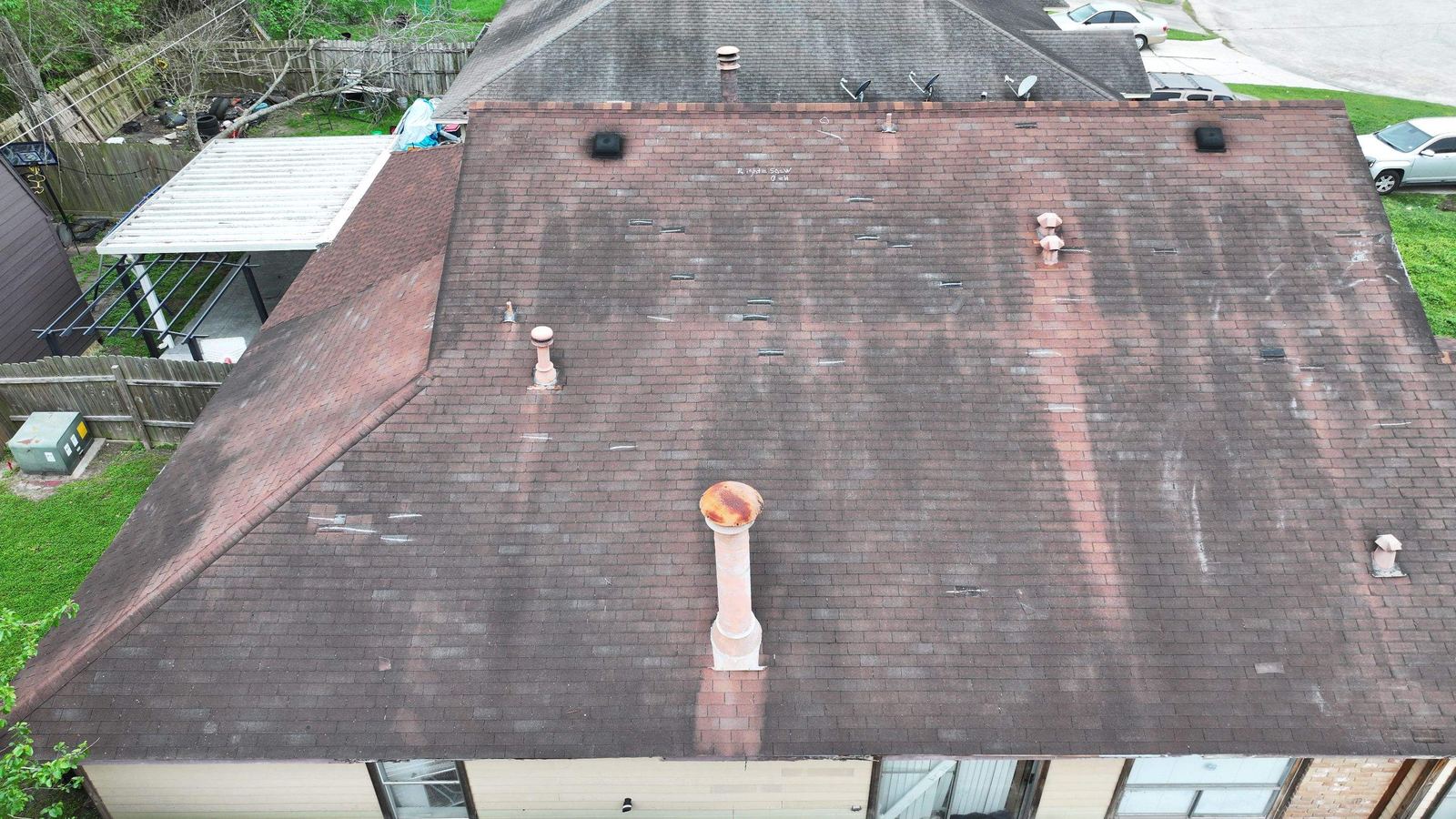
| Pipe boots | Around plumbing vent pipes | A metal or rubber collar that seals the pipe where it passes through the roof |
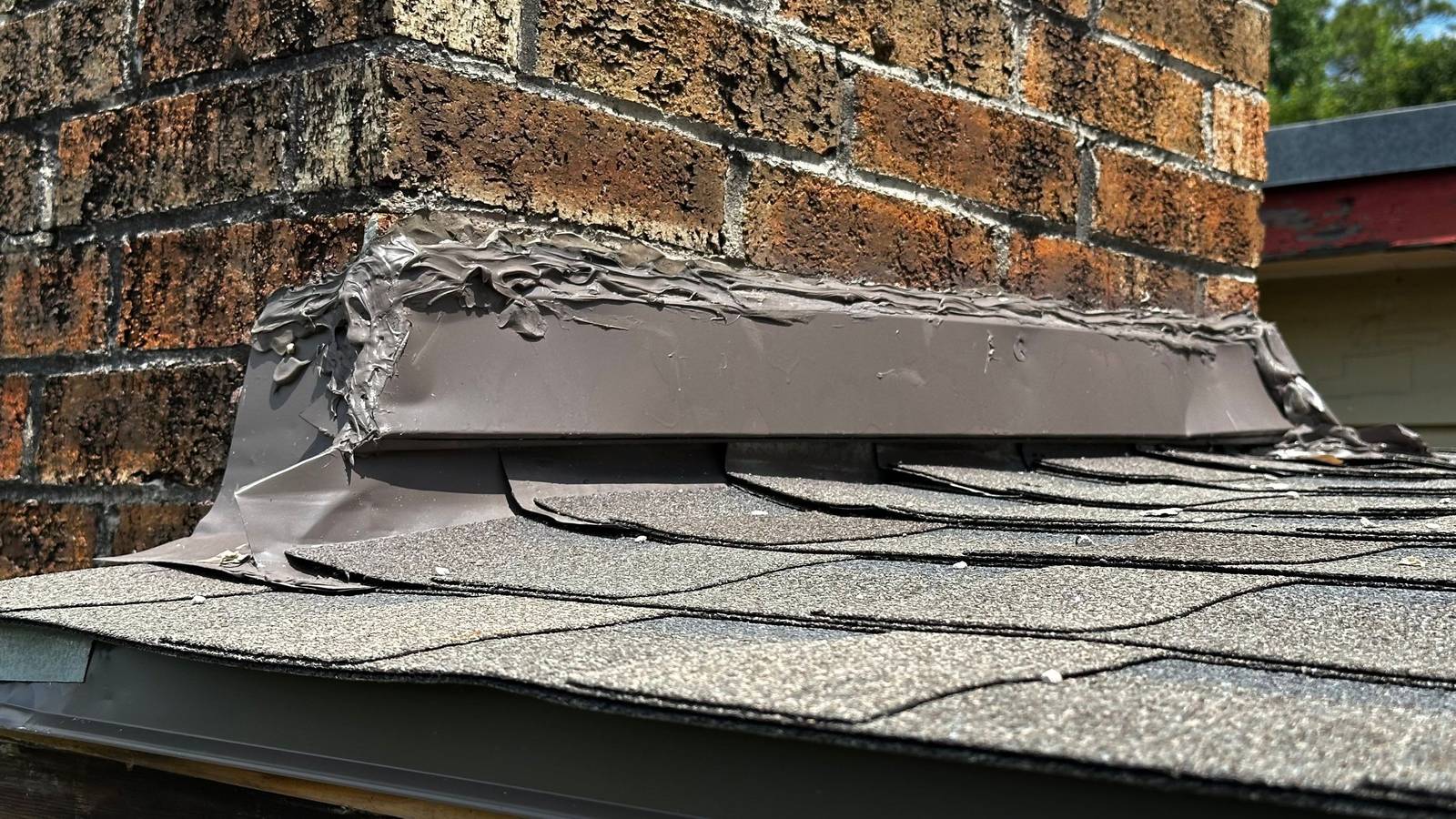
| Chimney flashing | Around the base of a chimney | A system of apron, step and counter flashing, sometimes with a small diverter called a cricket on the uphill side |
| Valley flashing | Where two slopes meet | Metal or membrane that lines the valley, the part of the roof that carries the most water |
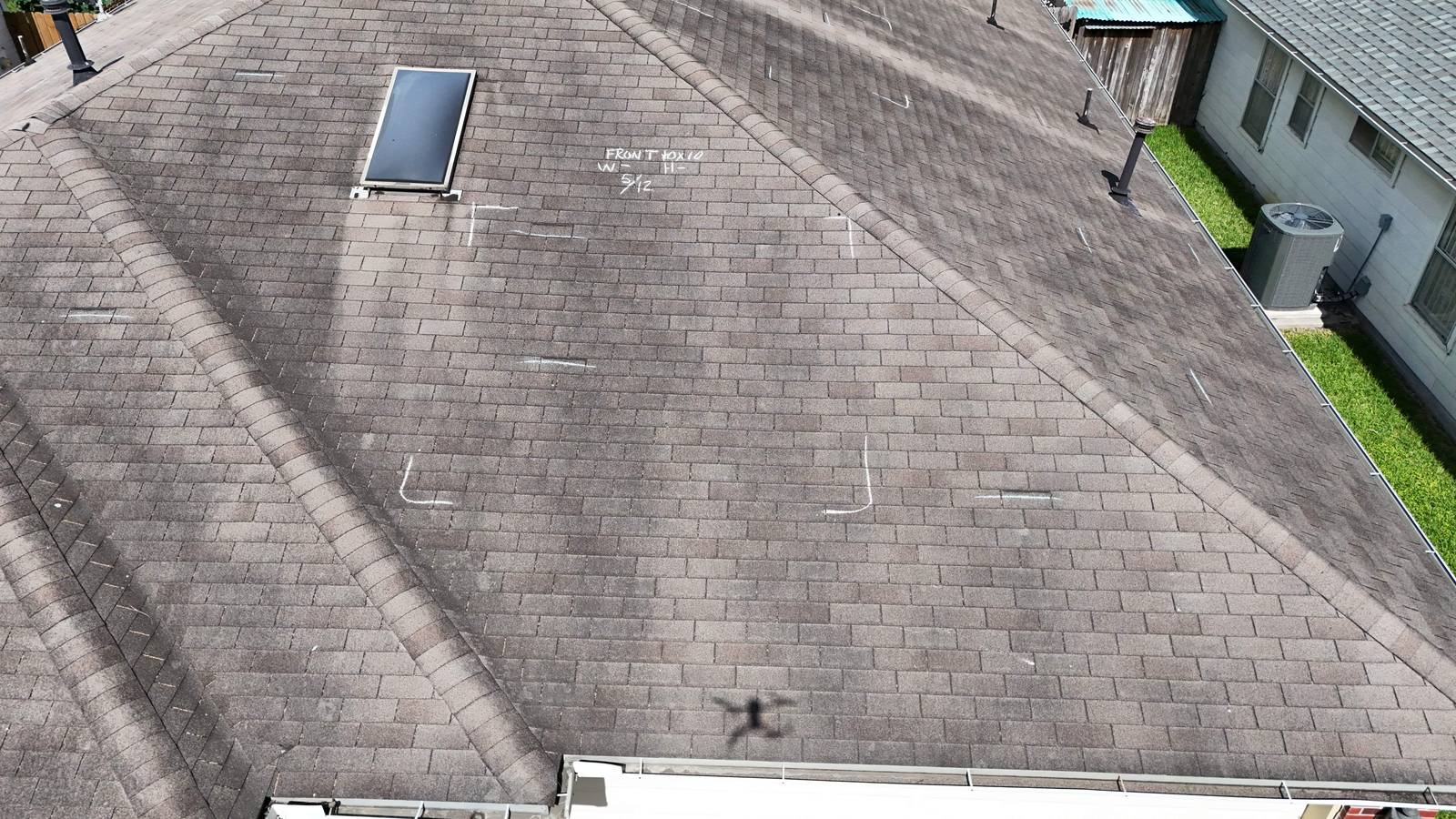
Skylights and many vents also have their own flashing kits, usually supplied by the manufacturer.
Why do so many roof leaks start at flashing?
- It sits at the joints. Anywhere two surfaces meet, water has a path in if the seal is not right.
- Materials move differently. Brick, siding, wood and metal expand and contract at different rates with our heat, which can loosen flashing over time.
- Sealant is not flashing. Caulk and roof cement dry out and crack in the sun. When a roof relies on sealant instead of properly lapped metal, it tends to leak sooner.
- Rubber ages. The rubber collars on many pipe boots split after years of sun exposure.
- Shortcuts at replacement. Reusing rusted or bent flashing, or skipping kickout flashing, can leave a weak spot under brand-new shingles.
Roof edges matter too. The Insurance Institute for Business & Home Safety notes that roof damage often begins when wind gets under the edge, and its FORTIFIED Roof standard calls for a wider drip edge and a fully adhered starter strip to strengthen that area.
What are the signs of failing flashing?
- Ceiling or wall stains near a chimney, skylight, dormer or where the roof meets a wall.
- Water stains or dark wood on attic rafters around a chimney or vent pipe.
- Flashing that is rusted, bent, lifted or pulling away from the wall.
- Cracked, dried or missing sealant where flashing meets brick or siding.
- A pipe boot with a cracked rubber collar or a gap around the pipe.
- Rotted or stained siding below a roof-to-wall intersection, often a sign of missing kickout flashing.
- Leaks that only show up in wind-driven rain, when water is pushed sideways into weak joints.
You can check much of this from the ground with binoculars or from inside the attic with a flashlight. The Texas Department of Insurance recommends checking your roof for damage after storms, checking the chimney for loose bricks and hiring a roof inspector every few years to find issues early. Please leave climbing to a professional.
Should flashing be repaired or replaced?
It depends on what failed and the age of the roof around it.
Flashing problems: repair or replacement?
| What it usually is | Typical examples |
|---|---|
| Usually a repair | A single cracked pipe boot, a loose section of drip edge, a small area of lifted step flashing, or resetting counter flashing on an otherwise sound chimney |
| Often a bigger repair | Rebuilding step flashing along a wall, which means removing shingles and sometimes siding trim, or re-flashing a whole chimney or valley |
| Usually a replacement item | During a full roof replacement, drip edge, pipe boots, step flashing and valley metal are commonly replaced with the shingles. Chimney counter flashing set into masonry is sometimes kept if it is in good shape. |
Ask how your quote handles each piece.
A patch of caulk over a leaking joint is not a repair. It may slow the leak for a while, but it often traps water and hides the real problem. In our preliminary ranges, roof repairs run $450 to $1,900 or more; small, contained fixes like a pipe boot tend toward the low end, and wall or chimney flashing work toward the middle or upper end. The final number is confirmed after an inspection. Our guide to roof leak repair cost in Houston breaks this down further.
Why does fixing flashing quickly matter?
Flashing leaks tend to be slow and hidden, running down inside a wall or along a rafter before they show. Over time that can mean rotted decking, damaged framing and mold. The EPA's guide to mold and moisture explains that fixing the water source is the first step to preventing mold. Insurance also tends to treat gradual leaks differently from sudden storm damage, so ask your insurer how your policy applies.
What should I ask a roofer about flashing?
- Where exactly is the flashing failing, and can you show me photos?
- Will you replace the flashing or reuse the existing metal, and why?
- Does the repair include removing shingles or siding to install flashing correctly, or is it sealant only?
- For a replacement, which flashing is included: drip edge, pipe boots, step, kickout, valley, chimney?
- Is the price written, and what happens if hidden damage is found?
Our guide to what happens during a roof inspection shows what a good visit should cover, and our repair-or-replace checklist helps when flashing is one of several problems.
Roof flashing questions
Can flashing be replaced without replacing the whole roof?
Yes, in most cases. A roofer can remove the shingles around the problem area, replace the flashing and reshingle. On older, brittle roofs, the repair area may grow because surrounding shingles can crack when lifted.
Is roof cement or caulk enough to fix flashing?
Sealant has a place as a finishing detail, but it is not a substitute for properly lapped flashing. It dries out in Houston sun, and leaks usually come back.
How long does flashing last?
Metal flashing can outlast a set of shingles when it is installed well, but rubber pipe boot collars usually wear out sooner. That is why pipe boots are one of the most common repair calls and are typically replaced with a new roof.
Seeing stains near a chimney, wall or vent? Book a free, photo-documented inspection with no obligation, or call PL Roofing & Remodeling at 832-860-0354. We show you where the flashing is failing and confirm the repair price after the inspection. Hablamos español.