Most skylight leaks start at the flashing around the skylight, not the glass itself, though failed seals and cracked domes cause leaks too. Water that appears on cold, humid days without rain is often condensation rather than a leak. A small flashing problem can sometimes be repaired, an older skylight often needs new flashing or a full replacement, and if you are replacing the roof, that is the best time to deal with the skylight.
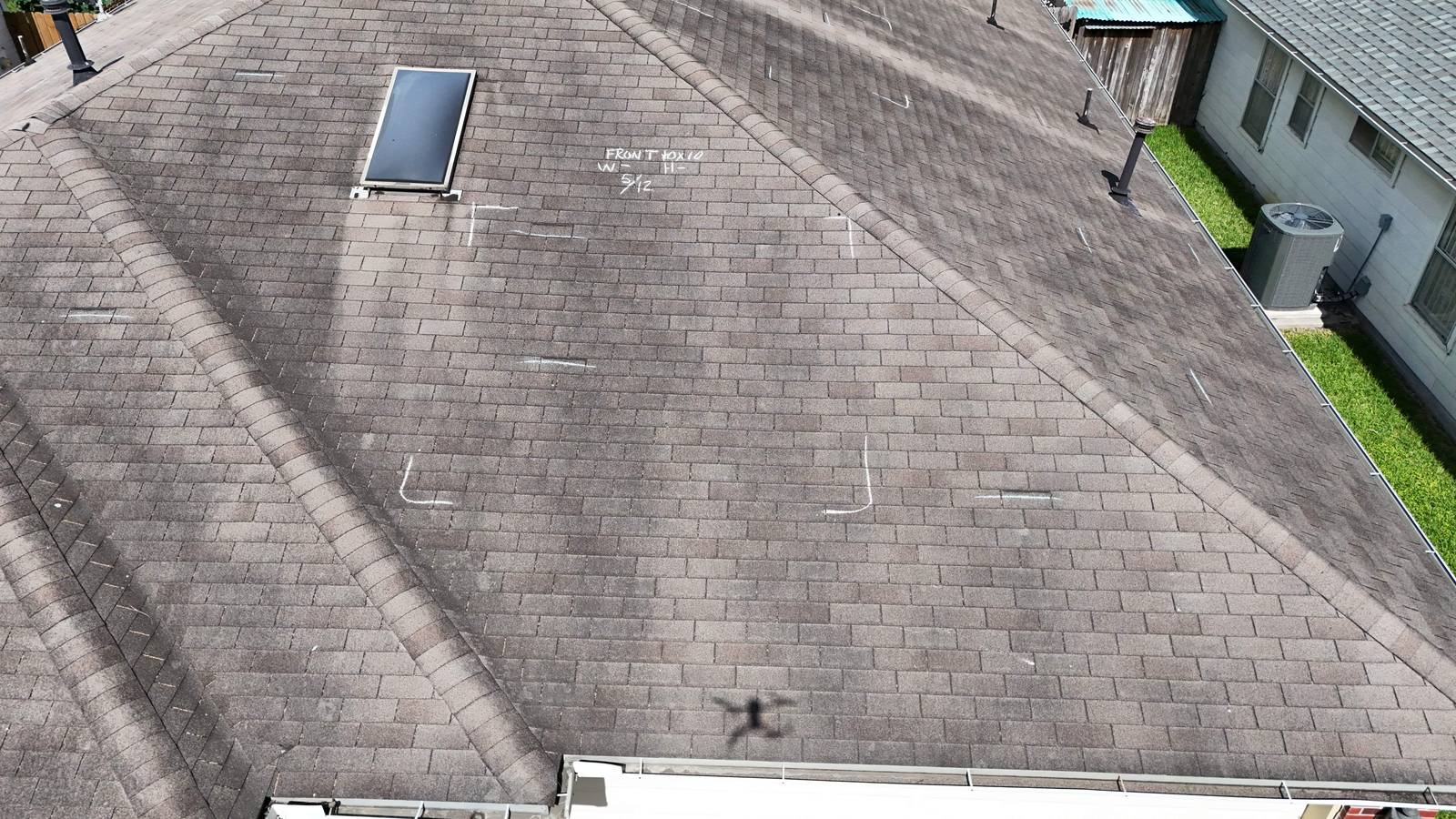
Skylights bring daylight into kitchens, bathrooms and hallways, but every one is a hole cut through the roof. In Houston, the flashing and seals around that hole deal with strong sun, heavy rain and wind-driven storms. When a stain shows up on the ceiling next to a skylight, homeowners often assume the skylight is done for. Sometimes it is. Often it is the flashing, and sometimes it is not a leak at all.
Why do skylights leak?
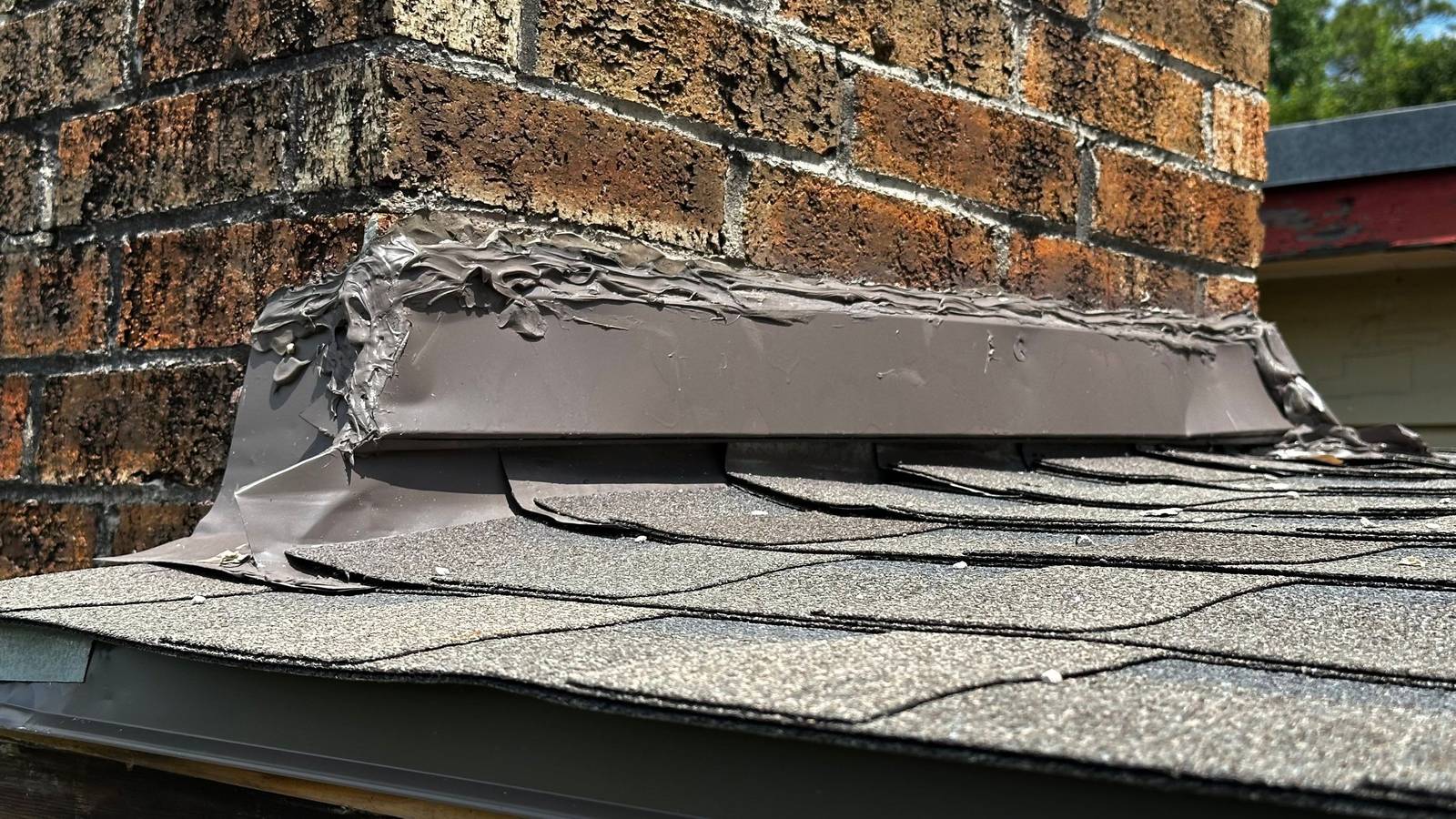
- Flashing problems. The metal flashing kit around the skylight directs water around the opening and back onto the shingles. If it was installed poorly, bent, rusted, or replaced with caulk, water can get in. This is the most common source.
- Old sealant. Roof cement and caulk around the curb dry out and crack in the sun.
- Failed seals or glazing. The seal between the glass or dome and the frame can break down with age.
- Cracked or brittle domes. Older plastic bubble skylights can craze, discolor and crack after years of sun.
- Debris on the uphill side. Leaves and pine needles that pile up above the skylight hold water against it.
- Surrounding roof wear. Worn shingles or underlayment near the skylight can leak and make the skylight look like the culprit.
Our guide to roof flashing explains why so many roof leaks start at joints and penetrations like skylights.
Is it condensation or a leak?
Houston air holds a lot of moisture. When warm, humid indoor air hits the cooler surface of a skylight, water can form and drip, especially in bathrooms and kitchens. The EPA's guide to mold and moisture notes that condensation can be a sign of high humidity, and recommends acting quickly to dry wet surfaces and reduce the moisture source.
| Clue | Points to condensation | Points to a leak |
|---|---|---|
| Timing | Shows up on cool mornings, after showers or cooking, with no rain | Shows up during or right after rain, especially wind-driven rain |
| Where the water is | Beads spread across the inside of the glass or frame | Drips or stains at one corner or along one side of the light well |
| Pattern | Comes and goes with humidity | Gets worse over time, with growing stains or peeling paint |
| Attic or roof side | Dry framing and flashing | Stained wood, damp insulation or visible gaps at the flashing |
If condensation is the issue, reducing indoor humidity, running bath and kitchen exhaust fans and making sure the attic is ventilated properly can help. Our article on attic ventilation in Texas heat covers the attic side. If the clues point to a leak, do not wait: the EPA advises drying water-damaged areas within 24 to 48 hours to help prevent mold growth.
Should a leaking skylight be repaired, reflashed or replaced?
Repair
A repair may make sense when the skylight is in good shape and the problem is limited, such as a small section of lifted flashing, a damaged shingle next to the curb, or debris damming water on the uphill side. Fresh sealant alone is rarely a lasting fix; it tends to fail again in the sun.
Reflash
Reflashing means removing the shingles around the skylight, installing a new flashing kit, and reshingling. It is a good option when the skylight unit itself is sound but the flashing is the weak point. Skylight manufacturers typically sell flashing kits designed for their units. VELUX, for example, notes that its skylight systems are compatible with VELUX flashing, which must be used to qualify for its installation warranty. Ask whether the flashing being installed matches your skylight.
Replace
Replacement is often the better choice for an older skylight. VELUX lists signs that it is time to replace an old dome or bubble skylight, including discoloration from sun exposure, mildew stains from moisture buildup, leaks, or condensation around the panes. When a skylight is replaced, the installer removes the existing unit and flashing and installs new ones.
In our preliminary ranges, roof repairs run $450 to $1,900 or more, and flashing work around a penetration tends to fall within that range depending on access and what is found. Skylight units themselves vary widely by size and type, so we price them after an inspection rather than quoting a general figure. Our guide to roof leak repair cost in Houston explains what affects a repair price.
Should I replace my skylight when I replace my roof?
Often, yes, or at least reflash it. During a roof replacement, the shingles around the skylight come off anyway, so new flashing can be installed correctly with the new underlayment and shingles. Reusing old flashing under a new roof can leave a weak spot, and replacing an aging skylight a few years after a new roof means disturbing new shingles.
VELUX also points out that some roofers prefer to install or at least flash in the skylight and replace the shingles around it themselves, so they know the flashing was done to their specifications. That is a reasonable thing to discuss when you plan a roof replacement.
- How old is the skylight, and is the glass or dome cloudy, cracked or fogged between panes?
- Has it leaked before?
- Is a matching flashing kit available for it?
- Would you rather remove the skylight and close the opening? A roofer can discuss that option too.
What should I ask a roofer about a skylight leak?
- Where exactly is the water getting in, and can you show me photos?
- Is this condensation, a flashing leak, a failed seal or a roof leak nearby?
- Will you install a new flashing kit, and is it made for my skylight?
- Is the fix mechanical flashing or just sealant?
- If I am replacing the roof soon, does it make more sense to handle the skylight then?
Skylight leak questions
Why does my skylight drip when it is not raining?
That is often condensation. Warm, humid indoor air meets the cooler skylight surface and water forms. Reducing indoor humidity and using exhaust fans usually helps. If stains keep growing, have it checked for a leak.
Can I just caulk a leaking skylight?
Caulk may slow a leak for a while, but it dries out in Houston sun and does not replace properly installed flashing. A lasting fix usually means repairing or replacing the flashing.
Is it better to reflash or replace an old skylight?
If the skylight is in good shape, reflashing may be enough. If it is older, cloudy, cracked or has leaked more than once, replacing it, especially during a roof replacement, is often the better choice.
Stain next to your skylight? Book a free, photo-documented inspection with no obligation, or call PL Roofing & Remodeling at 832-860-0354. We show you where the water is coming from and confirm the repair price after the inspection. Hablamos español.