Fresh caulk around a chimney can stop a drip for a while, but it rarely solves a flashing leak for good. Chimney flashing keeps water out with overlapping pieces of metal that shed water downhill; caulk depends on staying stuck to materials that move and bake in the sun. And sometimes the water isn't coming through the flashing at all. A lasting fix starts with finding where the water really gets in, then rebuilding what is failing.
For a full overview of chimney leak causes and repair options, see our chimney leak guide. This one is about a narrower problem: the chimney has been caulked, maybe more than once, and the stain keeps coming back.
Why does flashing work when caulk doesn't?
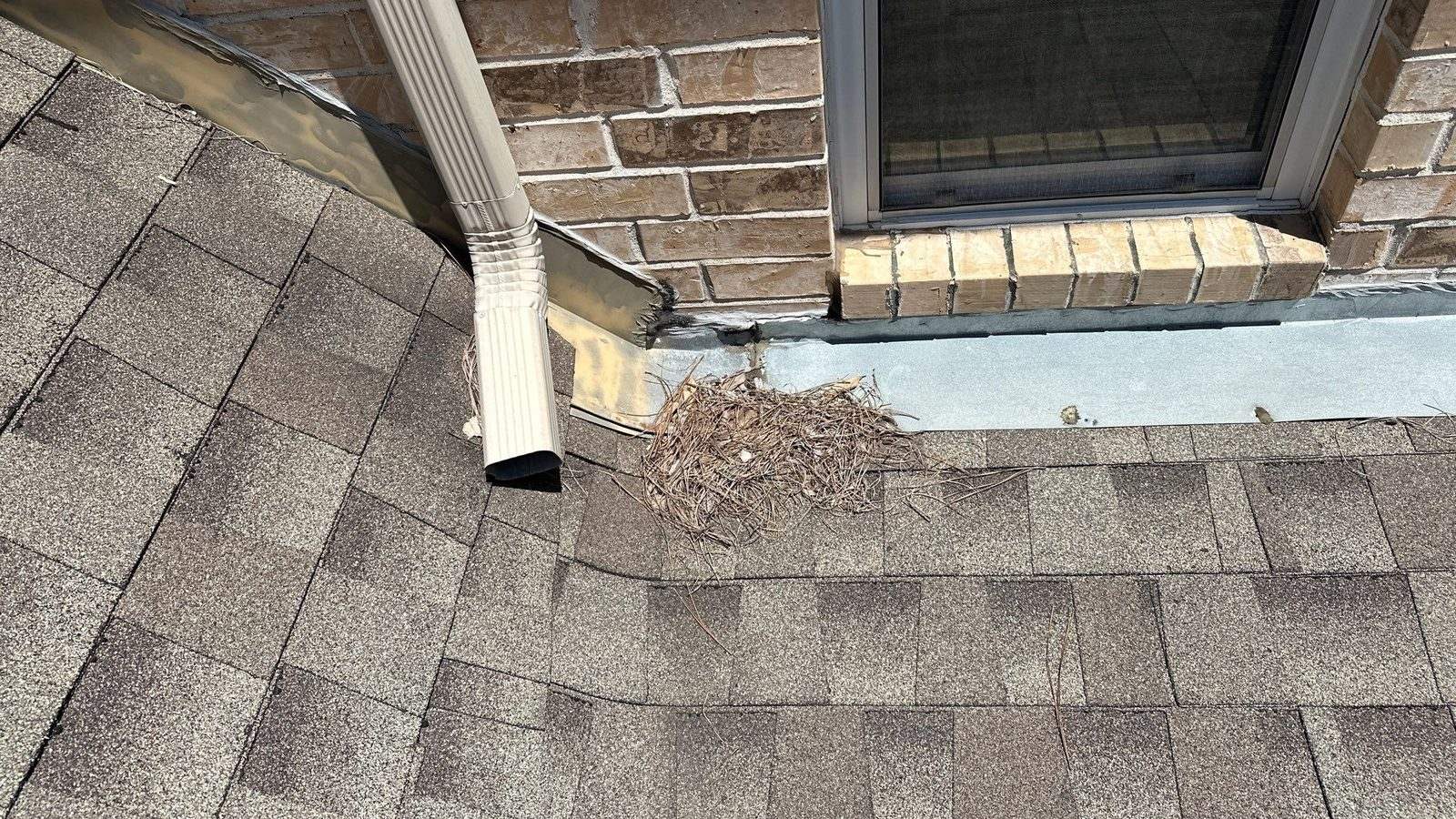
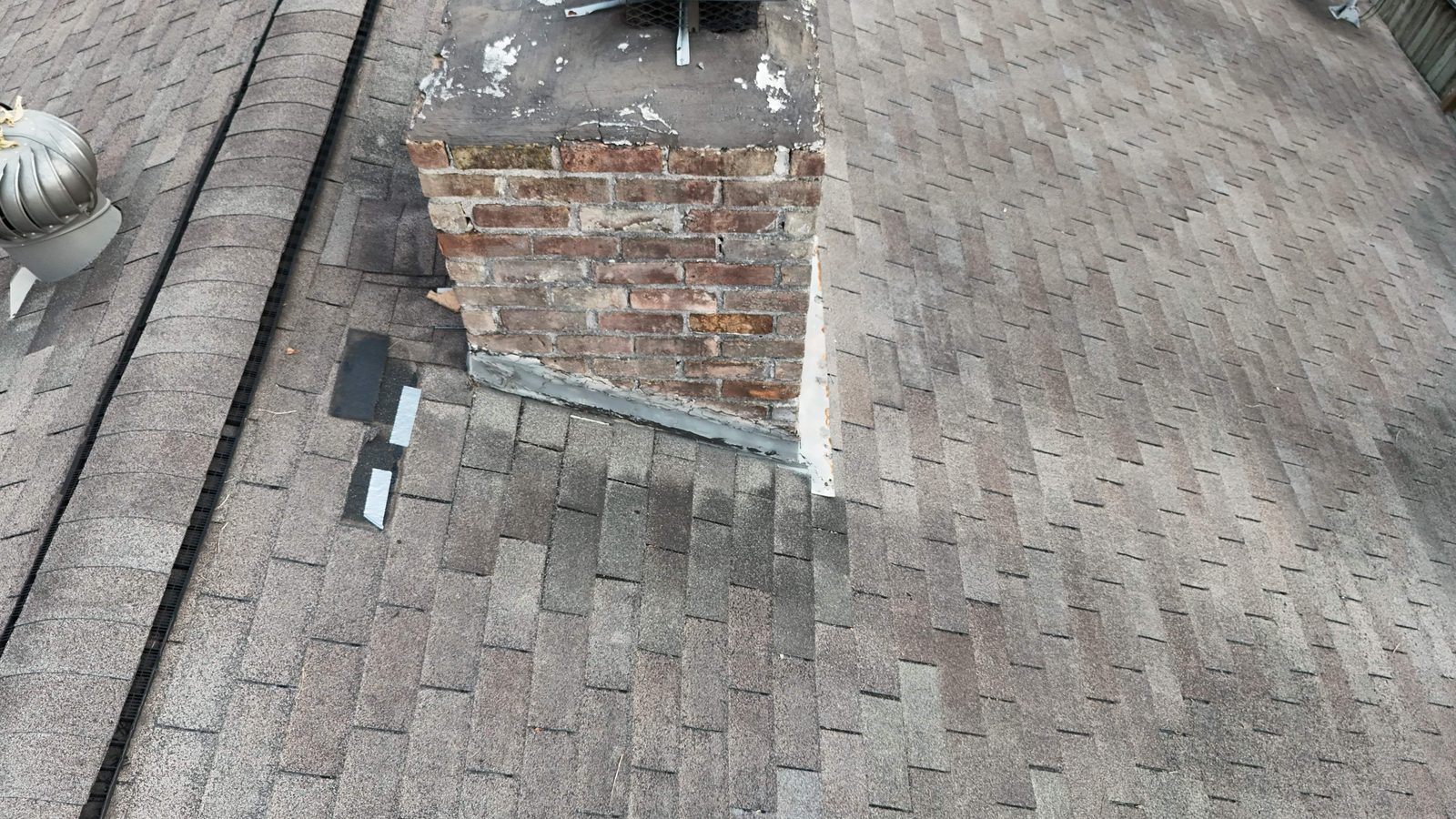
Properly installed chimney flashing doesn't rely on glue. Step flashing pieces are woven into each course of shingles along the sides, and counter flashing laps over them from the chimney, so water running down always meets a piece of metal that sends it back out on top of the roof. Gravity does the work.
Caulk is a single line of defense. It has to stay bonded to brick or stucco on one side and metal or shingle on the other, while those materials expand, shrink and shift. Once the bead pulls away even slightly, water slips behind it, and a thick layer of sealant can then hold that water against the brick and wood instead of letting it drain. Our guide to roof flashing explains the pieces in more detail.
The building code reflects this. The International Residential Code, which many local jurisdictions adopt (sometimes with amendments), requires flashing at wall and roof intersections and around roof openings, calls for metal flashing to be corrosion resistant and at least 0.019 inch thick, says base flashing against a vertical sidewall must be continuous or step flashing, and requires chimney flashing on asphalt shingle roofs to follow the shingle manufacturer's printed instructions. A bead of sealant isn't a substitute for any of that.
Is the flashing really the problem?
Often caulk fails because it was aimed at the wrong spot:
| Possible source | What you might notice | How it is usually checked | Will caulk at the base help? |
|---|---|---|---|
| Step or counter flashing | Stains on the ceiling or wall beside the chimney, often in heavy rain | Checking whether counter flashing is set into the mortar joints or only caulked on | Briefly, at best; the metal needs repair or replacement |
| Uphill side of the chimney | Leaks in long or heavy rains; leaves and debris piled behind the chimney | Checking the back of the chimney and measuring its width | No; water and debris keep collecting there |
| Brick, mortar or crown | Damp brick in the attic above the roof line, white mineral staining, water in the firebox | Inspecting the crown, cap and mortar joints; a chimney specialist may be needed | No; water is coming through the masonry above the flashing |
| Nearby roof | A stain that traces to a vent, valley or skylight uphill | Following the water path in the attic | No; the leak is somewhere else |
| Condensation | Damp spots in humid weather even without rain; sweating ducts or pipes nearby | Checking the attic for ducts, lines and ventilation near the chimney | No; it is a moisture problem, not an opening in the roof |
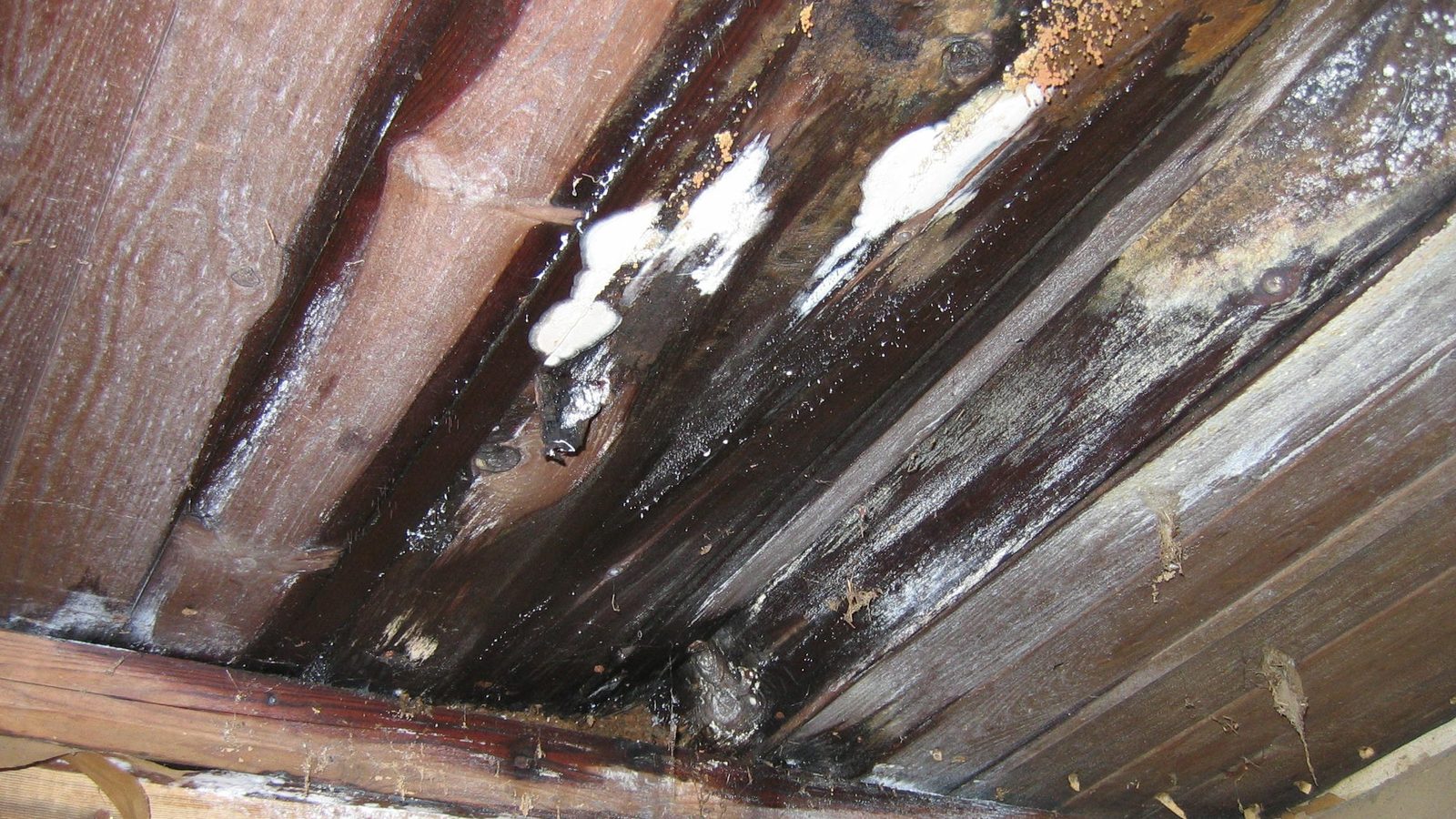
The Chimney Safety Institute of America notes in its water damage guidance that common brick is like a sponge, absorbing water and wicking moisture to the chimney interior, and that defective mortar joints increase that tendency. That is why a chimney can leak through the masonry even when the flashing is sound. The EPA's mold and moisture guide points to condensation on walls and pipes as a sign of high humidity, which can look like a leak.
Why are chimney leaks so hard to pin down?
Some leaks only happen in certain storms
A chimney that stays dry in an ordinary shower may leak when strong wind drives rain against one side of it. If the stain only grows in certain storms, write down the date, the wind direction if you know it, and how long it rained. That pattern is real evidence.
Water testing has limits
A roofer may run a controlled water test: wetting one area at a time, starting low and working uphill, while someone watches inside. It can confirm a suspected path, but it is slow, a garden hose doesn't reproduce wind-driven rain, and a test that stays dry doesn't prove an area is sound. Sometimes the honest answer is that the shingles beside the chimney need to come up so the flashing can be seen.
What should a proper flashing repair scope name?
A written scope should list the parts, not just say "seal chimney." Look for:
- Removing the shingles around the chimney to reach the old flashing.
- New underlayment around the chimney before new metal goes on.
- Apron flashing across the downhill face.
- New step flashing at each shingle course along both sides.
- New counter flashing set into the mortar joints, or tucked under the siding or stucco on a framed chase, not just surface-mounted with caulk.
- A cricket or back flashing on the uphill side. The IRC calls for a cricket or saddle on the ridge side of any chimney more than 30 inches wide.
- The metal to be used, and where any sealant will go as a finishing detail.
- Any crown, cap, mortar or chase cover work, and who will do it. Masonry repairs generally belong before the new flashing goes on.
- Before-and-after photos, and whether the repair carries a written workmanship warranty.
Is caulk ever the right call?
Yes, as a stopgap. If water is coming in and a proper repair can't happen right away, sealing an obvious gap, or an emergency tarp after storm damage, can limit damage while you schedule the real work. Just tell whoever does the repair what was applied and when.
How PL Roofing & Remodeling looks at a chimney leak
Our free inspection covers chimney and wall flashing, which is where many leaks start, plus an attic look when it's relevant. We photograph every concern and explain in plain language what we think is happening, including what can't be confirmed without opening up the roof. You then get a written estimate or a next-step plan.
Chimney flashing questions
Why does my chimney still leak after it was caulked?
Either the sealant has already pulled away, the flashing under it has failed, or the water is coming from somewhere else, such as the masonry, the uphill side of the chimney or a nearby part of the roof. Finding the actual entry point comes first.
Can chimney flashing be replaced without a new roof?
Often, yes. The shingles around the chimney are removed and reinstalled or replaced along with the new flashing.
Does my chimney need a cricket?
The International Residential Code calls for a cricket or saddle on the ridge side of any chimney more than 30 inches wide.
Tired of re-caulking the same chimney? Book a free, photo-documented inspection or call PL Roofing & Remodeling at 832-860-0354, and we'll show you where the water is getting in. Hablamos español.
Sources
- 2021 International Residential Code, Chapter 9: Roof Assemblies (sections R903.2, R903.2.1, R903.2.2, R905.2.8.3, R905.2.8.4), International Code Council (2021 IRC, via UpCodes) (reviewed Oct. 29, 2026)
- Four Low-Cost Recommendations to Prevent Major Water Damage, Chimney Safety Institute of America (reviewed Oct. 29, 2026)
- A Brief Guide to Mold, Moisture and Your Home, U.S. Environmental Protection Agency (reviewed Oct. 29, 2026)