A well-ventilated attic pulls outside air in low at the soffits and lets hot, moist air out high near the ridge. In Houston, that steady airflow helps keep heat and humidity from baking shingles and dampening the roof deck. Blocked soffits, too little exhaust or mixed vent types can shorten a roof's life and cause moisture problems.
When we inspect roofs around Spring and north Houston, the attic tells us almost as much as the shingles do. Two roofs of the same age and brand can look completely different, and ventilation is often the reason. One has lived with a steady breeze under the deck; the other has spent twenty summers in a closed, damp oven. Ventilation is not glamorous, and you never see it from the street, but it is one of the few things that affects every square foot of your roof at once.
What does attic ventilation actually do for a roof?
It moves air through the space between your ceiling insulation and the roof deck. ENERGY STAR explains that in summer, natural airflow in a well-vented attic moves super-heated air out of the attic, protecting roof shingles and removing moisture. The EPA's guide to mold, moisture and your home makes the same point from the other direction: the key to preventing mold is controlling moisture, and venting moisture sources such as bathrooms and dryers to the outside is one of its core recommendations.
Houston asks a lot of an attic on both counts. We have long, hot summers that load the roof with heat, and humid air most of the year that carries moisture into any space it can reach.
How does a balanced ventilation system work?
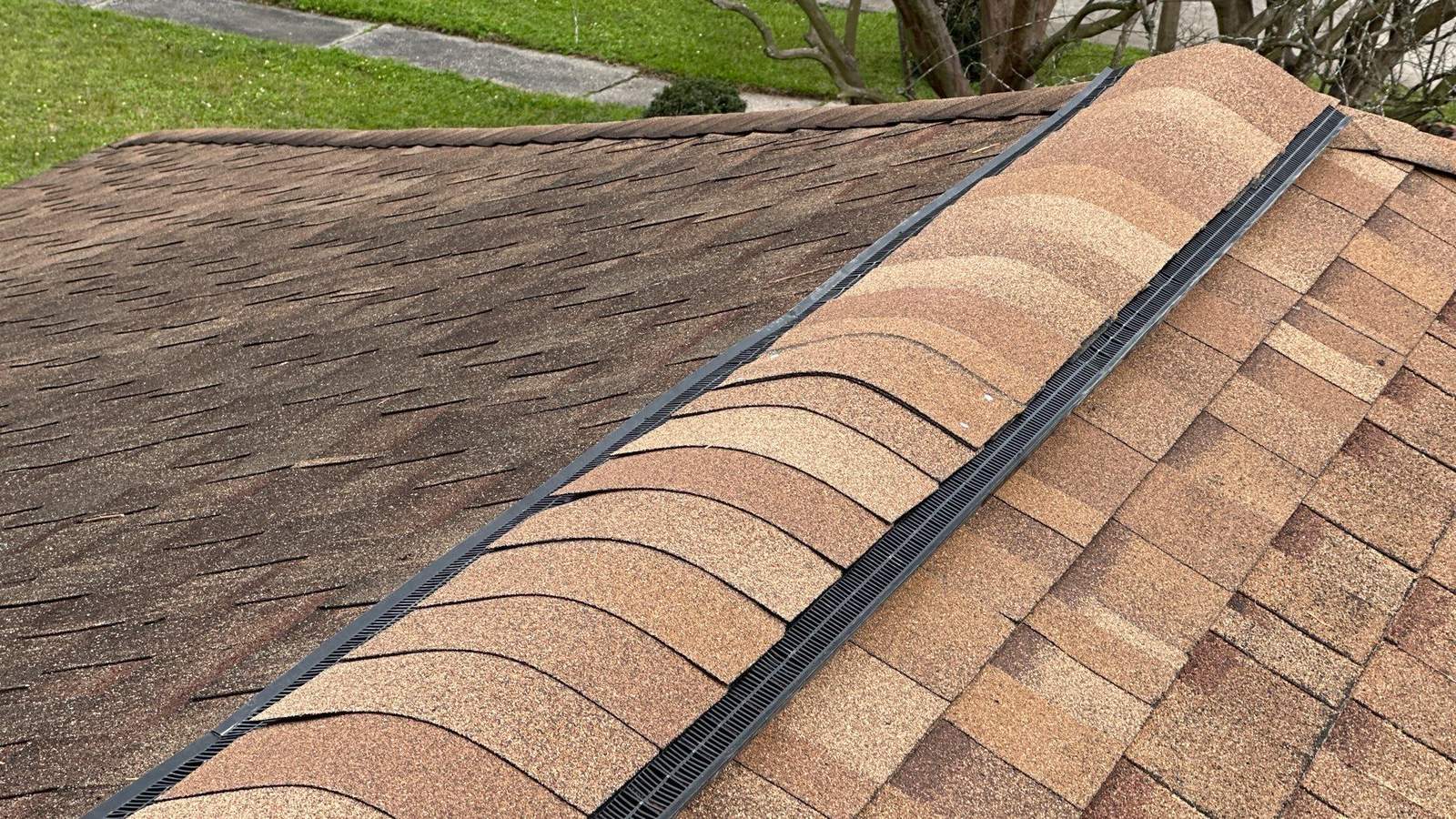
Think of it as a chimney. Cooler outside air enters through intake vents low on the roof, usually in the soffits under the eaves. Warm air rises and leaves through exhaust vents near the peak, such as a ridge vent or roof-mounted vents. For the air to move, both ends have to be open.
The residential building code sets a minimum amount of vent opening. IRC Section R806.2 calls for net free ventilating area of at least 1/150 of the vented attic area, which can drop to 1/300 when the vents are split between high and low positions as the code describes. Shingle manufacturers also publish ventilation guidance in their installation instructions, and your shingle warranty terms may refer to it. The takeaway for homeowners is balance: enough intake to feed the exhaust.
What are the signs my attic is poorly ventilated?
| What you notice | What it may point to |
|---|---|
| Shingles that look blistered, curled or aged faster than the neighbors' | Excess heat under the deck |
| Rusty nail tips or dark staining on the underside of the deck | Moisture condensing in the attic |
| Musty smell, or mold on rafters or decking | Humid air trapped with no way out |
| Insulation packed against the soffits, no daylight at the eaves | Blocked intake |
| Bathroom or kitchen fan duct ending in the attic | Moisture being pumped into the attic |
| A ridge vent plus a power fan plus box vents on one roof | Mixed exhaust that can short-circuit airflow |
| Rooms under the attic that stay much hotter than the rest of the house | Poor airflow, often combined with thin insulation or air leaks |
None of these alone proves a ventilation problem, and some have other causes. Together, they are worth a closer look during a roof inspection.
What are the most common ventilation mistakes in Houston homes?
- Insulation covering the soffit vents. ENERGY STAR is blunt about it: never cover attic soffit vents with insulation; use rafter vents, also called baffles, to keep the airflow path open.
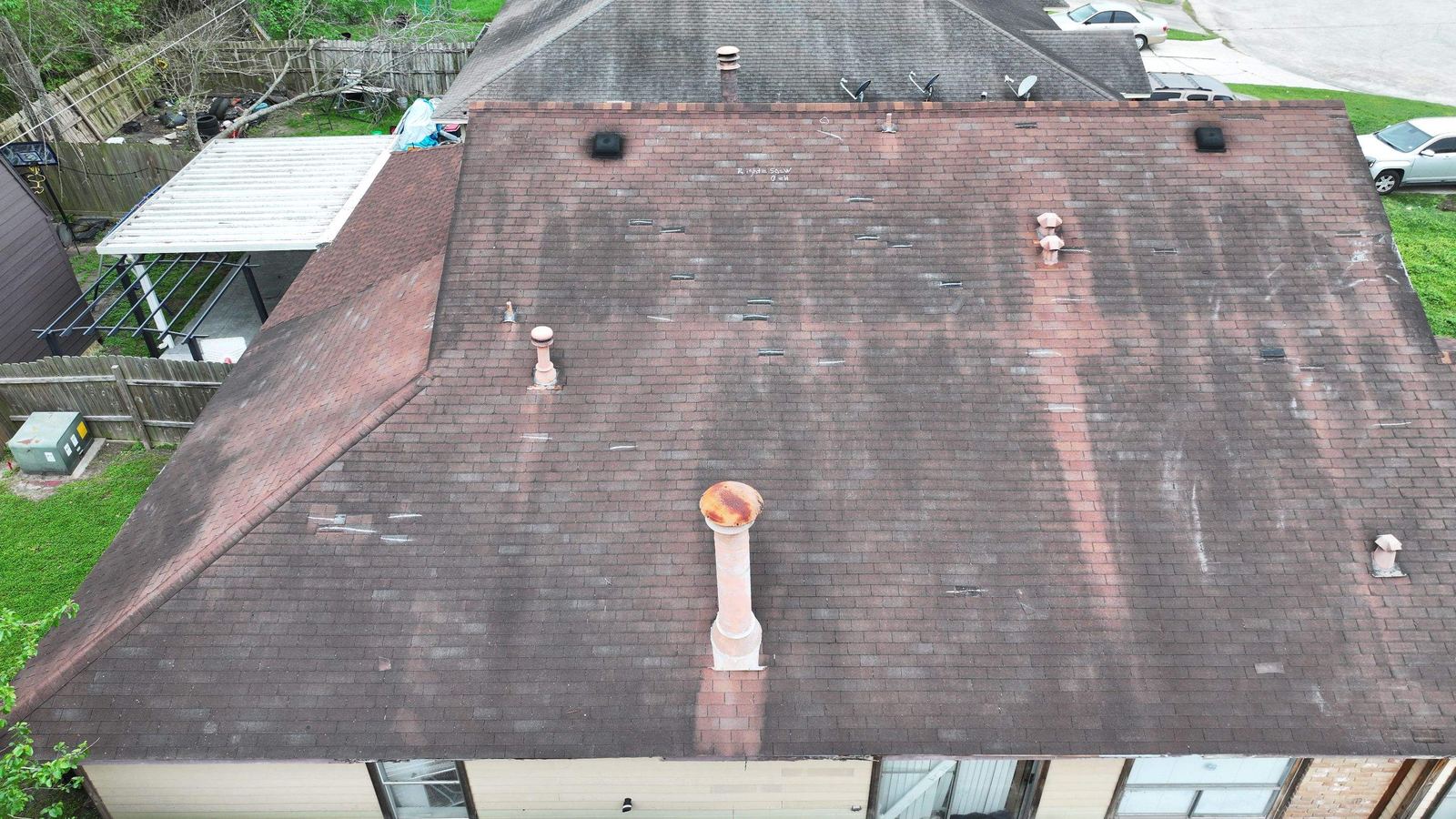
- Mixing exhaust types. Many shingle and vent manufacturers advise against combining different exhaust vents on the same attic, because one can pull air in through the other instead of through the soffits.
- Adding exhaust without intake. More roof vents do not help if the attic cannot draw air in from below.
- Power fans in a leaky attic. ENERGY STAR warns that with blocked soffits and a poorly sealed ceiling, attic fans can pull cool conditioned air out of the house and into the attic.
- Venting fans into the attic. Bath and kitchen exhaust should go outside, not into the attic, where the moisture can cause serious problems.
Does every attic need vents?
No. Some homes use an unvented, or conditioned, attic, typically with spray foam applied under the roof deck. That design is meant to stay sealed, and adding roof vents to it can create problems. If your attic has foam on the underside of the deck, tell your roofer before any vent work, and check what your shingle manufacturer says about unvented assemblies.
How is poor attic ventilation fixed?
It depends on what we find. Common fixes include clearing or opening soffit intake, installing baffles so insulation stays out of the airflow path, correcting a bath fan that dumps into the attic, removing a redundant exhaust vent, or switching to a single exhaust type. Some fixes are simple repairs; others make the most sense during a roof replacement, when the ridge is open and the whole system can be designed at once. We look at ventilation as part of every replacement quote rather than treating it as an extra.
If your roof is already showing heat damage, our guide to the signs you need a new roof will help you judge how far along it is, and our shingle guide for Houston weather covers materials for the next roof.
Attic ventilation questions
Will better attic ventilation lower my electric bill?
It can help comfort, but ventilation is not a substitute for insulation and air sealing, which usually matter more for energy use. We focus on ventilation for the roof's health and point out insulation concerns when we see them.
Is a ridge vent better than box vents?
Both can work when they are sized correctly and paired with enough soffit intake. A continuous ridge vent spreads exhaust along the peak, but the right choice depends on your roof's shape and length of ridge.
Can ventilation be improved without replacing the roof?
Often, yes. Clearing blocked soffits, adding baffles, redirecting a bath fan or removing a conflicting vent can be done as a repair. Larger changes to exhaust are usually easier during a replacement.
Wondering whether your attic is cooking your shingles? Book a free inspection that includes an attic look when it applies, or call PL Roofing & Remodeling at 832-860-0354. Hablamos español.