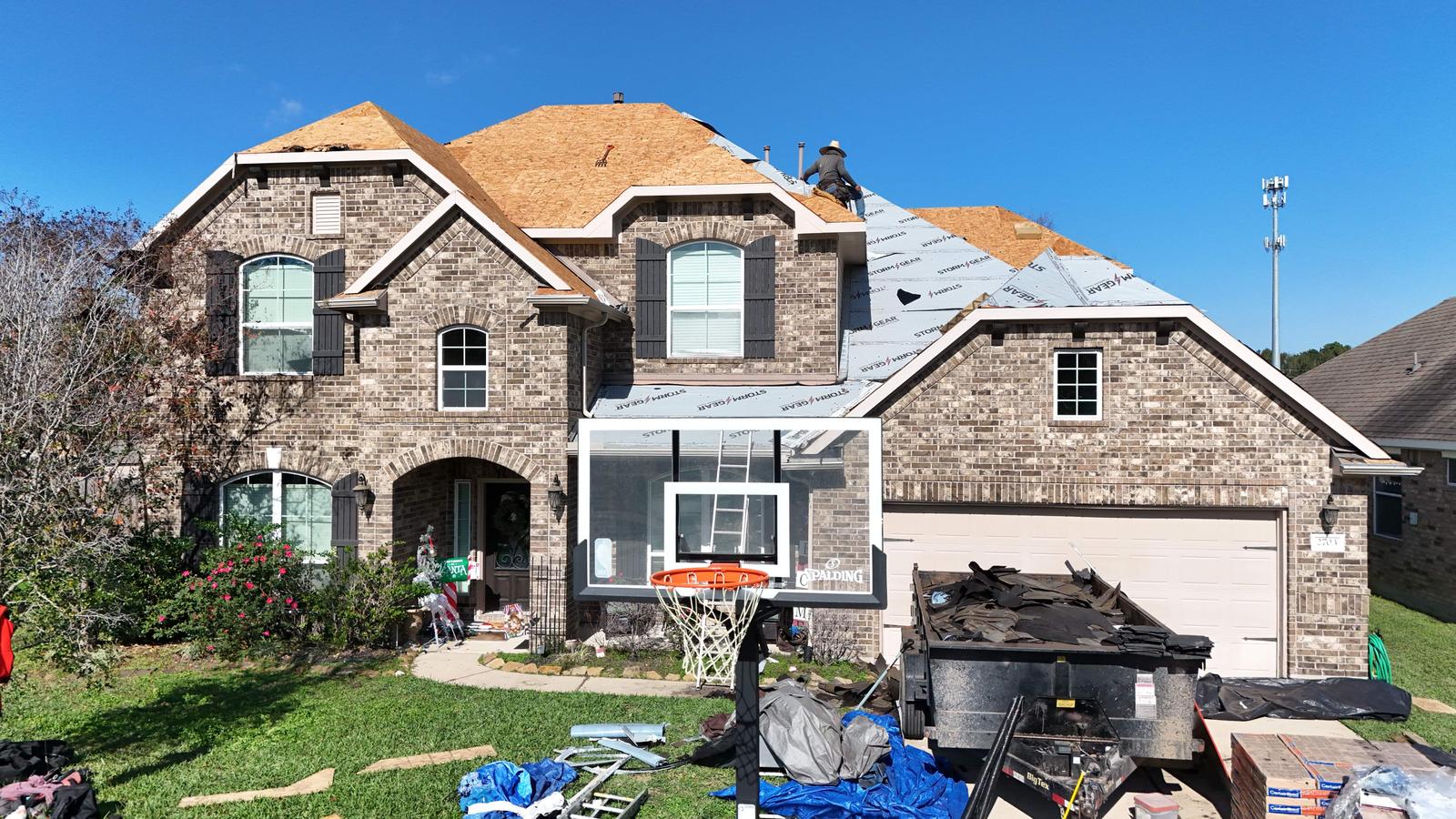
For most Houston homes, a roof replacement takes one to two days. The crew protects the property, tears off the old roof, inspects and repairs the decking, installs drip edge, underlayment, flashing, vents and shingles, then cleans up and sweeps for nails. Size, pitch, layers, rotted wood and weather decide whether it runs into a second day.
Homeowners often picture a roof replacement as a week of chaos. In reality, a well-run job is a long, loud, organized day, sometimes two. Knowing the sequence helps you plan your day, understand the noises overhead, and know what to check when the crew leader asks you to walk the job at the end. This is a general picture of how replacement day unfolds for a typical single-family home in Spring and north Houston. Your crew leader will confirm the details for your roof.
How long does a roof replacement take in Houston?
One to two days for most homes. A single-story ranch with one layer of shingles and a simple roofline often finishes in a day. A two-story home with a steep pitch, many valleys, two layers to remove or a lot of damaged decking can run into a second day. Weather is the other variable: crews do not tear off a roof with rain in the forecast, so a stormy week can move your start date. The National Weather Service Houston/Galveston office is the same forecast we watch.
What happens before replacement day?
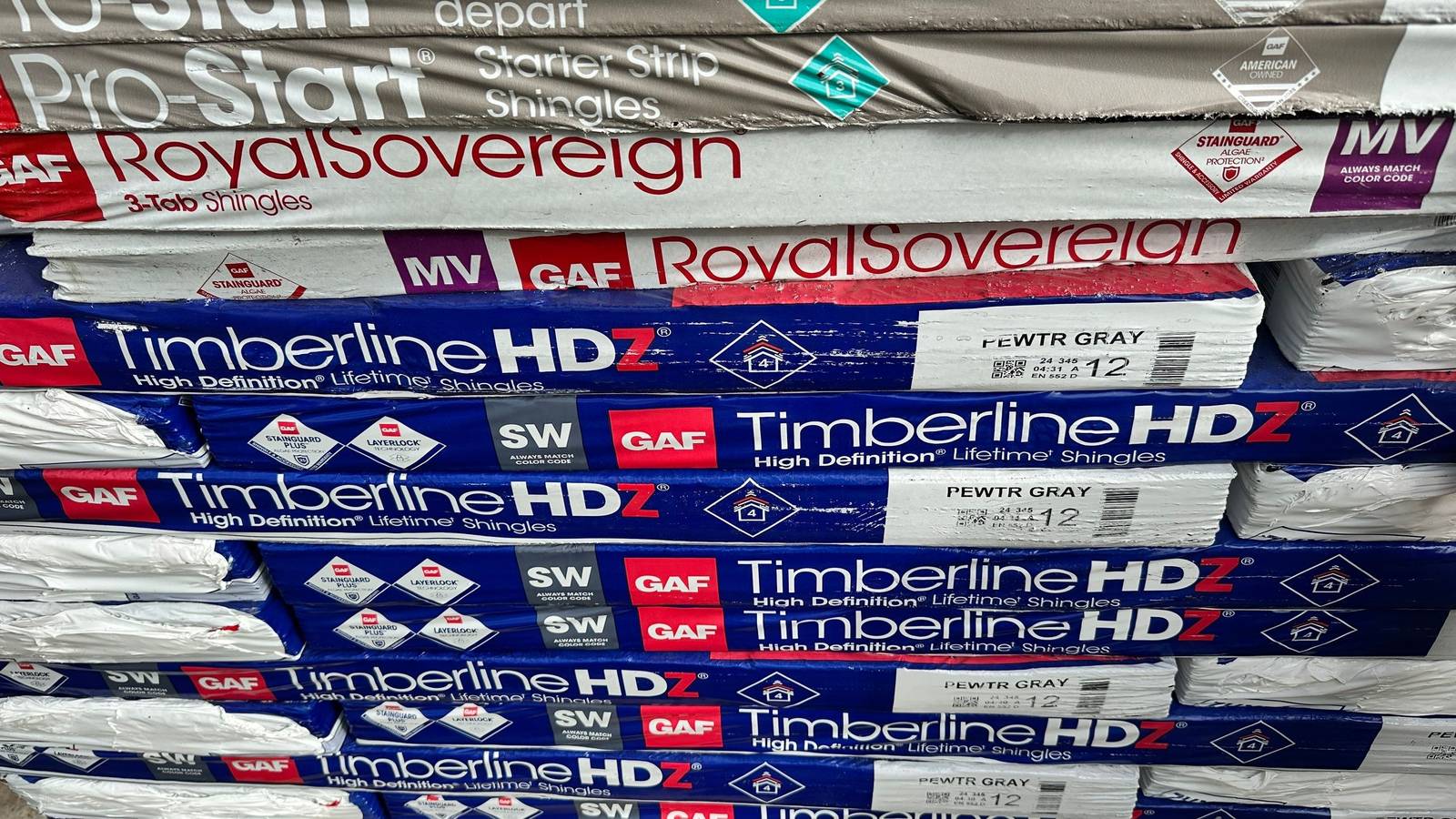
By the time the crew arrives, you should have a signed contract, your shingle style and color chosen, any HOA approval in hand if your neighborhood requires it, and a permit if your city requires one. Materials are often delivered the day before or early that morning, sometimes placed on the roof by a boom truck. A dumpster or trailer may arrive too. Our installation day page lists the simple things to do at home, like moving cars and taking fragile items off the walls.
What happens hour by hour on replacement day?
Times are approximate and assume a one-day job that starts early.
| Time | What is happening | What you will notice |
|---|---|---|
| 7:00 to 7:30 a.m. | Crew arrives, walkthrough with the crew leader, property protection goes down | Tarps over plants, AC units and patios; plywood or covers near doors |
| 7:30 to 10:30 a.m. | Tear-off, usually one section at a time, debris sent straight to the dumpster or trailer | The loudest part of the day: scraping, thumping, dust in the attic |
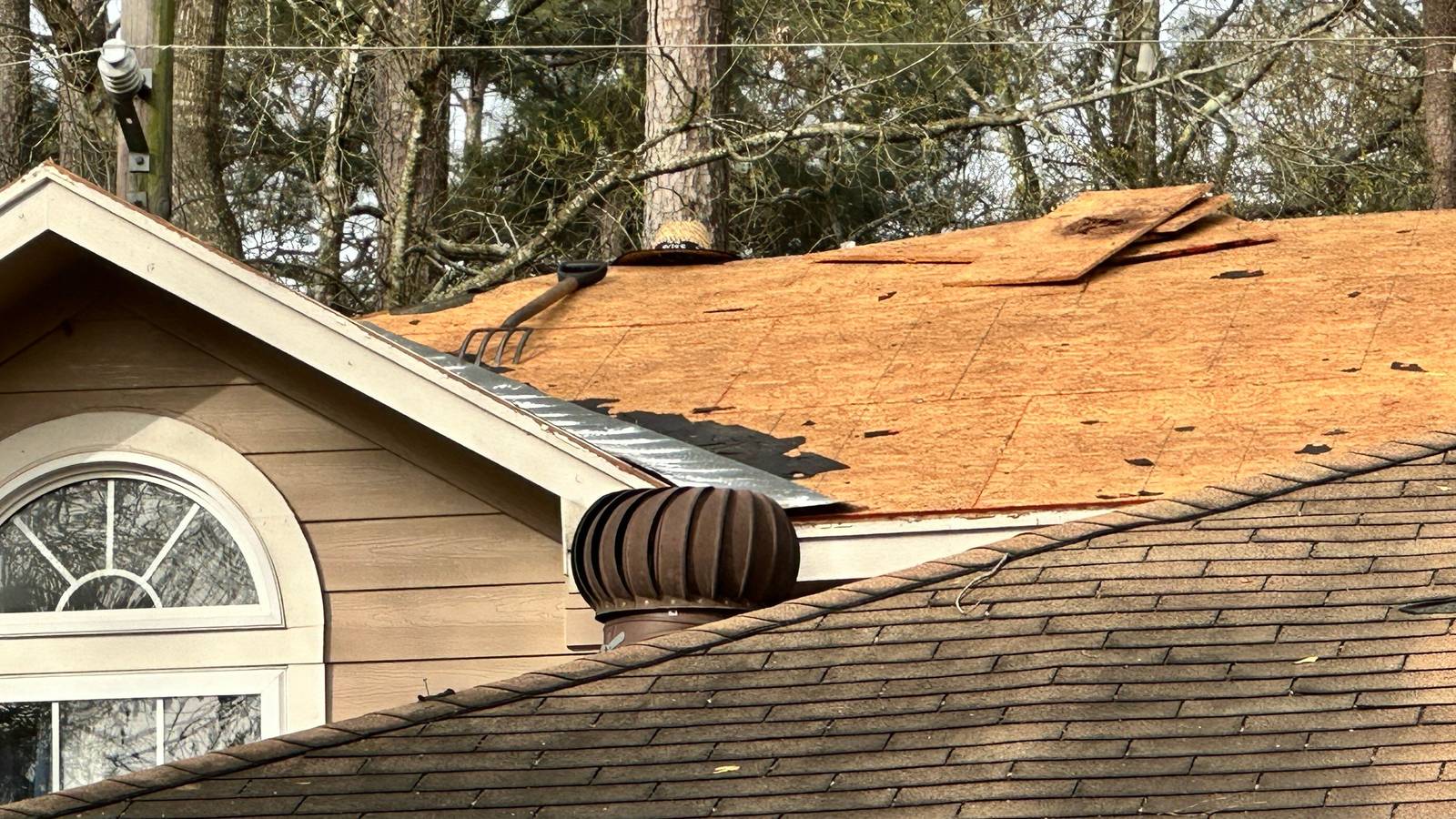
| 9:00 to 11:00 a.m. | Decking inspected as it is exposed; damaged wood photographed and replaced | The crew leader may show you photos of rotted sections |
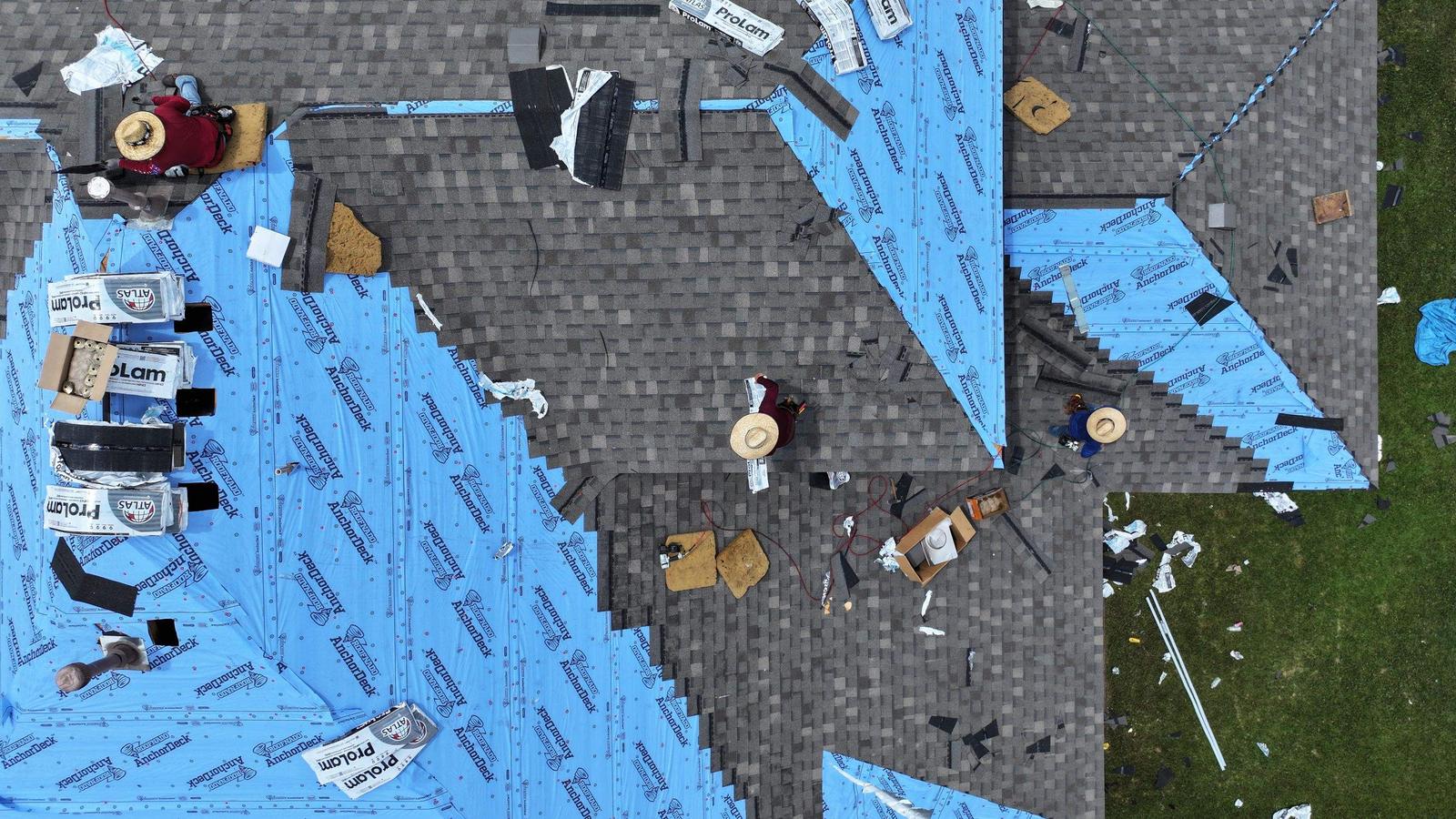
| 10:00 a.m. to noon | Drip edge, underlayment and extra protection in valleys and at other leak-prone areas | The roof turns gray or black as underlayment goes down |
| Noon to 3:00 p.m. | Starter strip, shingles course by course, flashing at walls, chimneys and pipes | Steady nail-gun rhythm; the new color appears |
| 2:00 to 4:00 p.m. | Vents, pipe boots, ridge vent and ridge caps | Work concentrates near the peaks |
| 4:00 to 5:30 p.m. | Cleanup, gutters cleared, magnetic sweep of yard and driveway | Crew walking the lawn with rolling magnets |
| End of day | Final walkthrough and photos | You walk the job with the crew leader |
Why does the decking inspection matter so much?
Because it is the only time anyone can see it. Once shingles go back on, the deck is hidden for the next couple of decades. Water-damaged, delaminated or soft plywood gets replaced so the new shingles are nailed into solid wood. Your contract should say how replacement wood is priced, usually per sheet, so there are no surprises. We photograph what we find and show you before we cover it.
What goes on the roof besides shingles?
- Drip edge along the eaves and rakes, which the residential code requires on shingle roofs (IRC R905.2.8.5).
- Underlayment over the whole deck as a second line of defense against water.
- Extra waterproofing in valleys and around penetrations, where leaks most often start.
- Starter strip at the edges so the first course seals down against the wind.
- Flashing at walls, chimneys and skylights, and new pipe boots.
- Ventilation balanced between intake and exhaust.
These components are what separate a roof that lasts from one that only looks new. Our process page shows how we check each step.
Do I need to be home during the roof replacement?
Not all day, but be reachable. We like to do a short walkthrough in the morning and the final walkthrough at the end. If you work from home, plan for noise from tear-off through shingling and a room away from the loudest side. Keep pets indoors and calm, and keep children away from the work zone and the dumpster. Let neighbors know, especially if you share a driveway or fence line.
What should I check at the final walkthrough?
- Walk the yard, driveway and flower beds for nails and debris.
- Look at the roof from each side: straight lines, even ridge, nothing lifted.
- Check gutters and downspouts for debris.
- Ask for the photos of decking repairs and finished details.
- Confirm your paperwork: final invoice, manufacturer warranty registration and our written workmanship warranty terms.
Still comparing options for the new roof? Our roof cost guide explains the price per square, and our shingle guide helps with the material.
Roof replacement day questions
What happens if it rains during my roof replacement?
Crews watch the forecast and avoid starting a tear-off with rain expected. If weather changes mid-job, the exposed areas are dried in with underlayment or tarps before the crew leaves, and work resumes when it is safe.
Will nails end up in my yard?
Some always fall during tear-off. That is why we cover landscaping and run magnetic sweepers over the yard, driveway and beds at the end of each day. If you find one later, call us.
Can I stay in my house during the replacement?
Yes. Most families stay home. Expect noise, some vibration and dust falling in the attic, so cover anything stored up there and take fragile items off shared walls.
Planning a new roof? Book a free inspection and we will walk you through what your replacement day would look like, or call PL Roofing & Remodeling at 832-860-0354. Hablamos español.