In the Houston area, a well-installed architectural asphalt shingle roof commonly lasts around 20 to 25 years, 3-tab shingles usually less, and metal and tile roofs usually much longer. Heat, humidity, poor attic ventilation, overhanging trees, storms and installation quality are what shorten a roof's life, and simple maintenance helps it reach the upper end.
The number printed on a shingle warranty and the number of years a roof actually lasts in Houston are often different things. Our summers bake roofs, our humidity feeds algae and rot, and our storms test every weak spot. Two roofs installed the same year on the same street can age very differently. Here is what to expect from each material, what wears a roof out early, and what you can do about it.
How long does each type of roof last in Houston?
These are rough planning ranges for a properly installed, ventilated roof, not guarantees. Your roof's actual condition, which an inspection can show, matters more than its age alone.
| Roof material | Typical lifespan in Houston | What usually wears out first |
|---|---|---|
| 3-tab asphalt shingles | Usually under 20 years | Tabs lift and crack; granules wear off the sun-facing slopes |
| Architectural asphalt shingles | Commonly around 20 to 25 years | Granule loss, brittleness, sealant strips losing grip |
| Impact-resistant (Class 4) shingles | Similar to architectural; heat ages them the same way | Same as architectural, with better hail resistance |
| Metal (standing seam) | Usually decades longer than asphalt | Coatings, sealants and flashing details |
| Concrete or clay tile | The tile itself can last for decades | The underlayment beneath the tile, plus cracked or slipped tiles |
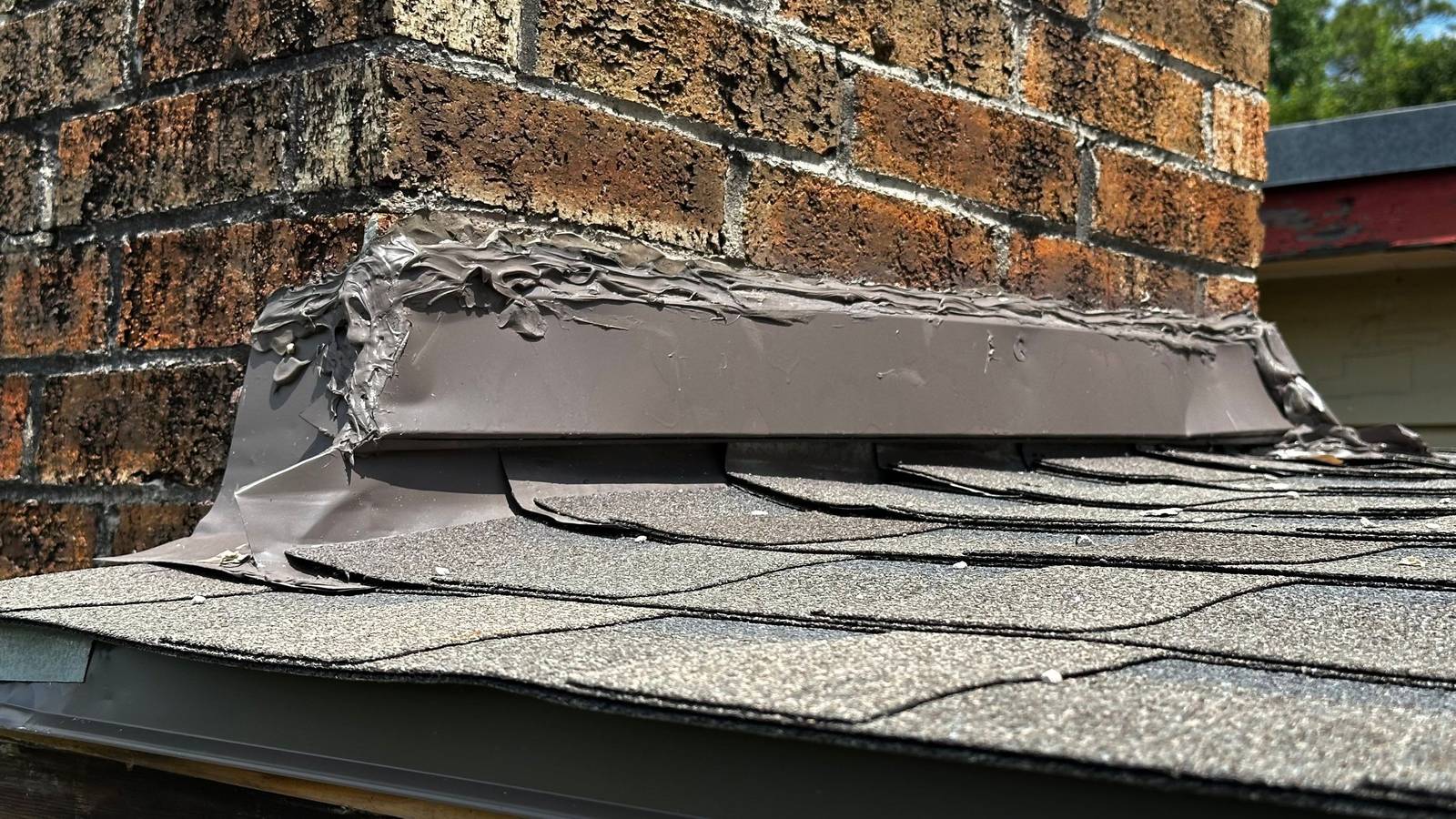
Components also age on their own schedule. Rubber pipe boots, sealant at flashing and exposed nail heads often fail years before the shingles do, which is why a roof in its middle years may need a repair rather than a replacement.
What shortens a roof's life in Houston?
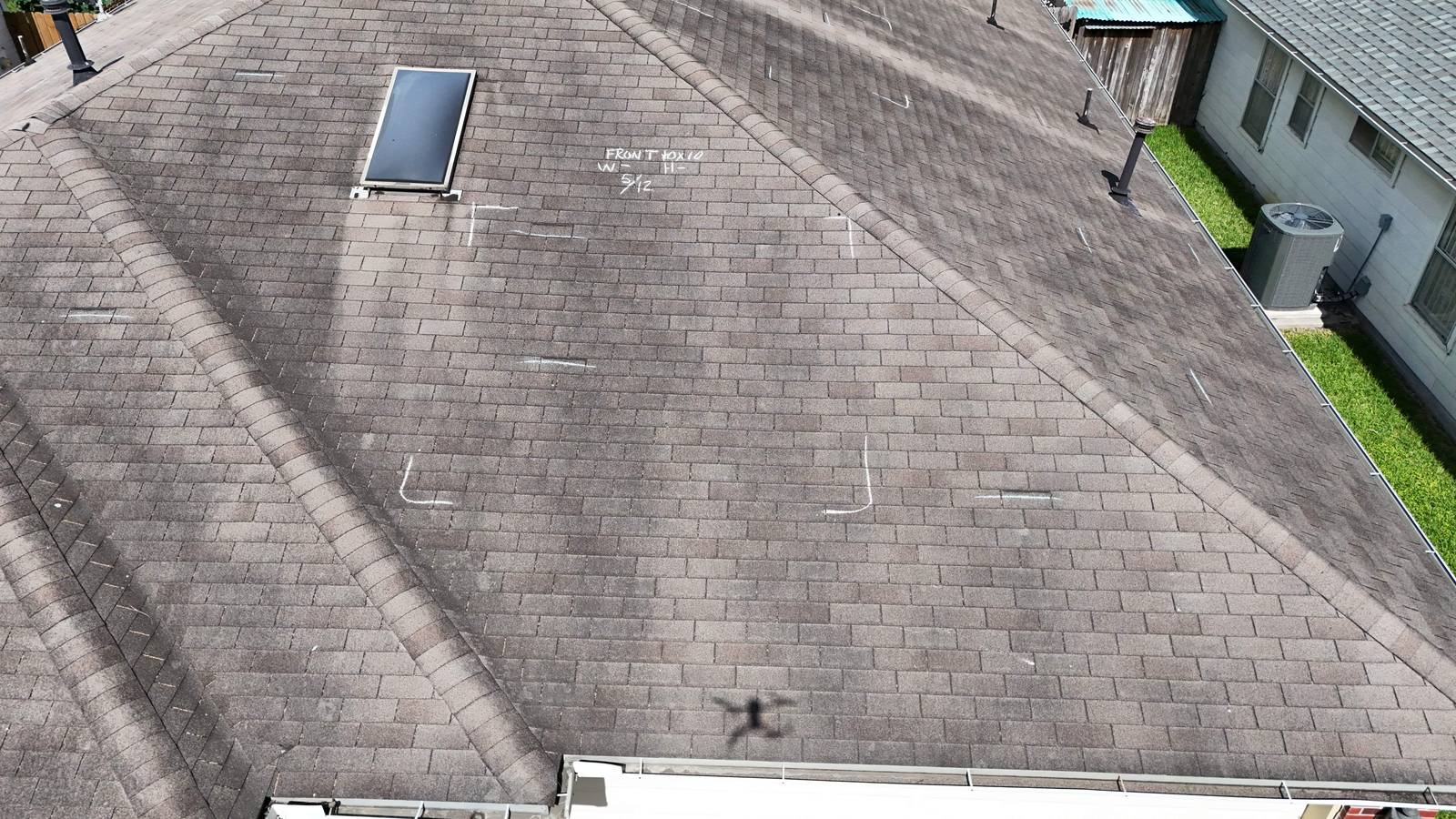
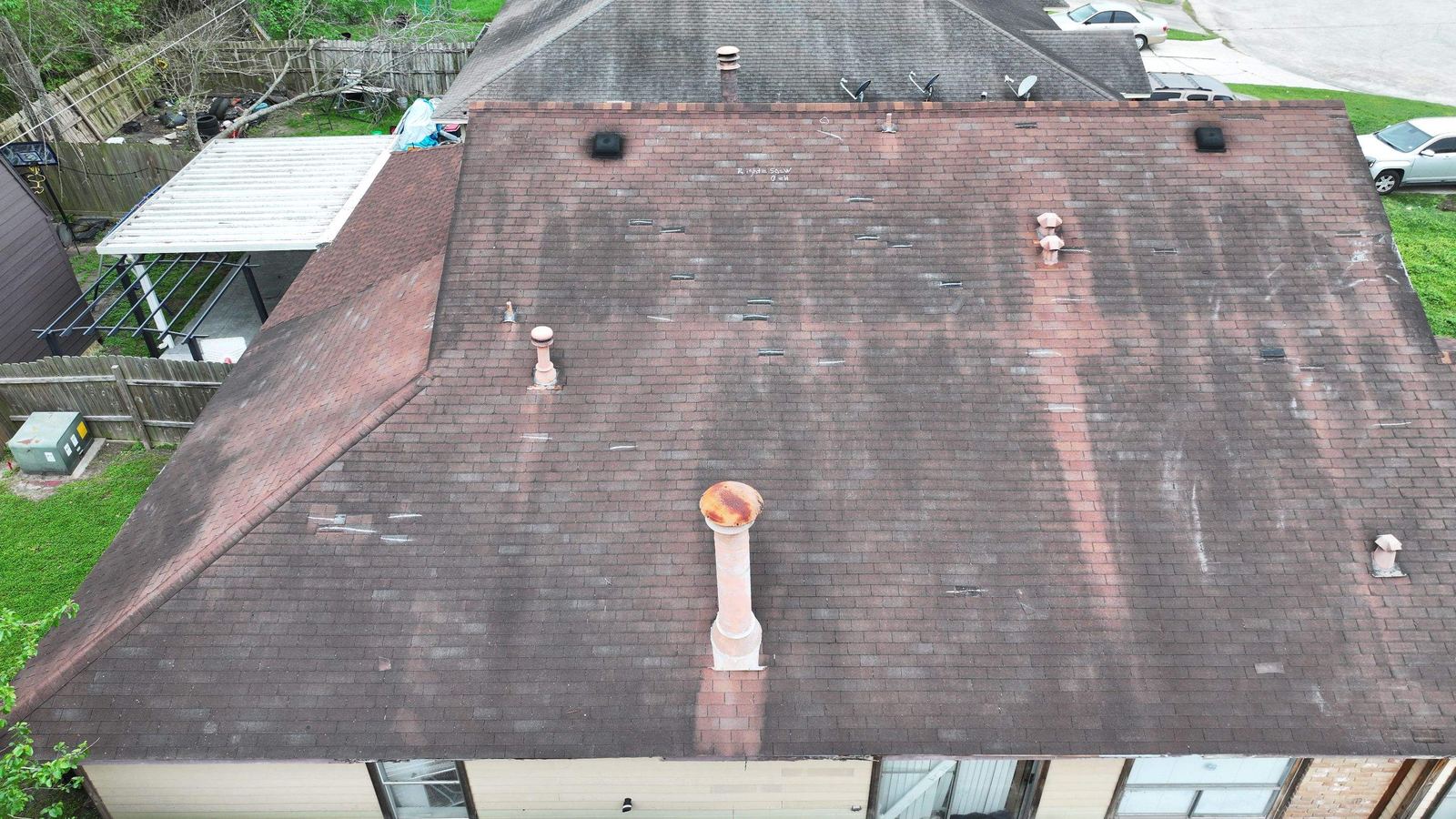
- Heat and sun. UV and high surface temperatures dry out asphalt, so shingles become brittle and shed granules. South- and west-facing slopes usually age first.
- A hot, poorly ventilated attic. When heat and moisture are trapped under the deck, shingles cook from below and decking can rot.
- Humidity and shade. Damp, shaded slopes grow algae and moss and stay wet longer, which is hard on decking and fasteners.
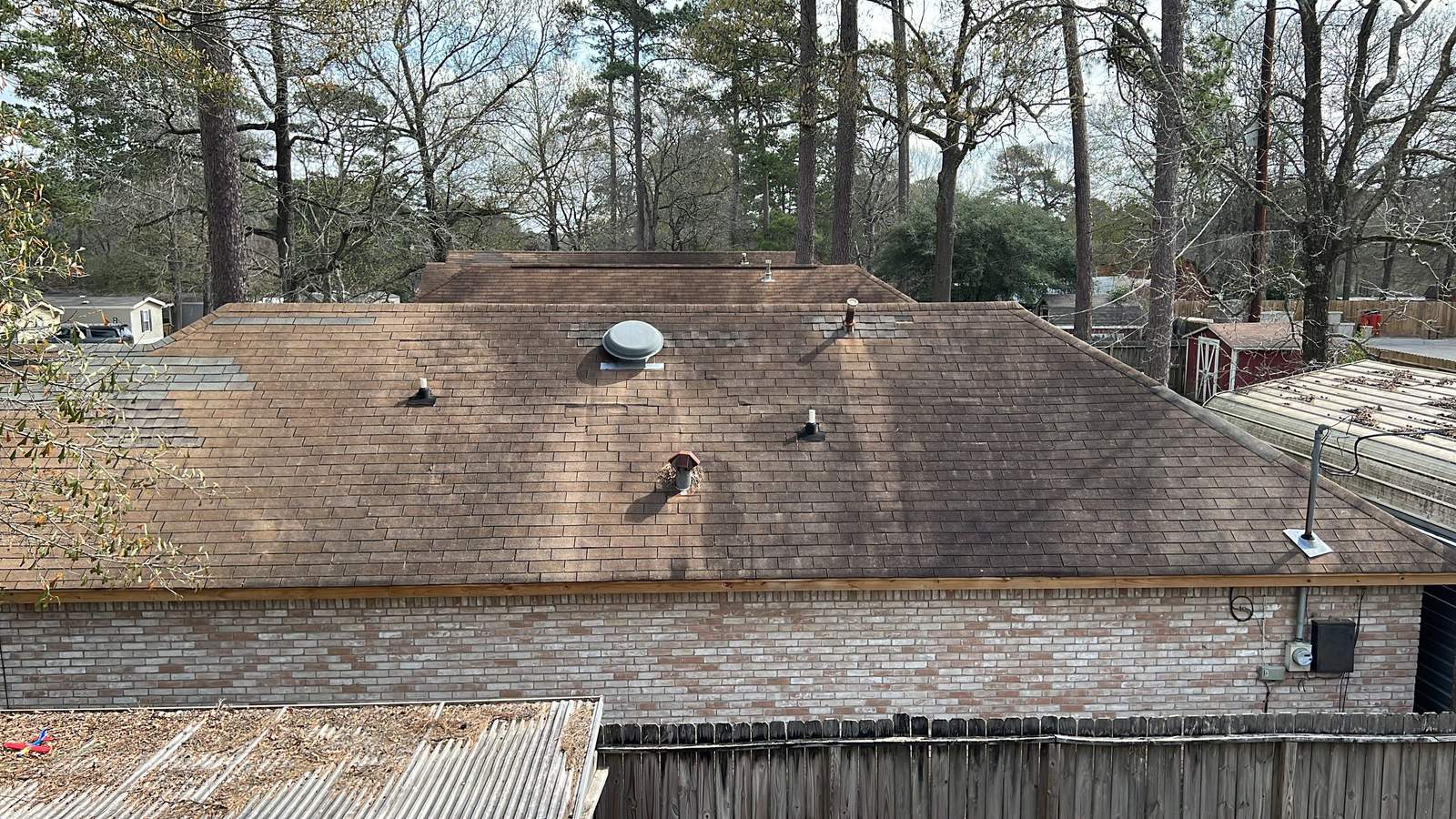
- Trees. Branches scrape shingles, drop debris that clogs valleys and gutters, and can fall in storms.
- Storms. Hail bruises shingles and wind breaks their seal, even when nothing looks wrong from the ground.
- Clogged gutters. Water that backs up at the edge soaks the fascia and roof deck.
- Installation shortcuts. Wrong nailing, reused flashing, missing drip edge or mixed exhaust vents can cut years off a new roof.
- Layering over an old roof. A second layer traps heat, adds weight and hides decking problems.
Why does attic ventilation matter so much in Texas?
ENERGY STAR explains that in summer, natural airflow in a well-vented attic moves super-heated air out, protecting roof shingles and removing moisture, and that insulation should never cover the soffit vents. In Houston that matters more than almost anywhere, because the heat load is so long. Blocked soffits, too little exhaust, or a bathroom fan venting into the attic are common reasons a roof ages faster than the neighbors'. Our guide to attic ventilation in Texas heat covers the warning signs and fixes.
What maintenance helps a roof last longer?
The Texas Department of Insurance offers a simple roof maintenance checklist: remove tree limbs over or near the roof, check for missing or damaged shingles after storms, keep gutters clean, and have the roof inspected every few years to find issues early. Here is how that looks for a Houston home:
- Clean gutters at least in spring and fall, more often under heavy trees.
- Trim branches so none touch or hang over the roof.
- Look after every major storm. From the ground, check for missing shingles, lifted edges and debris.
- Check the attic after a heavy rain for stains, damp insulation or daylight.
- Replace small parts before they cause leaks, such as cracked pipe boots or loose flashing.
- Keep soffit vents clear and make sure bath and kitchen fans vent outside.
- Stay off the roof. Walking on hot or brittle shingles can damage them, and falls are a real risk.
Does roof age affect my home insurance?
It can. TDI notes that as roofs age, some companies switch roof coverage to actual cash value, and a roof in poor condition may not be covered at all. TDI also says insurers will not pay for a new roof just because it is old or worn out. Check your roof coverage at each renewal, and keep records of repairs and inspections. Storm research groups study this too; the Insurance Institute for Business & Home Safety runs long-term research on how roof age affects hail performance.
How do I know how old my roof is?
- Check closing documents, a prior inspection report or the seller's disclosure.
- Look for a permit record with your city, if one was required where you live.
- Ask neighbors; homes in the same section were often roofed around the same time.
- Ask a roofer to estimate it from the shingle type, wear and any product labels found in the attic.
When is an old roof worth repairing instead of replacing?
Age alone is not the deciding factor. A 17-year-old roof with one failed pipe boot may only need a repair, while a 12-year-old roof with widespread storm damage may not. In our preliminary ranges, typical repairs run $450 to $1,900 or more, and a full asphalt replacement runs about $375 to $650 per roofing square; the final number is confirmed after an inspection. Our repair-or-replace checklist shows how to weigh it, and our guide to the signs you need a new roof explains what end-of-life wear looks like.
Roof lifespan questions
Does a 30-year shingle really last 30 years in Houston?
Often not. The label describes the product and its warranty, not Houston's heat, your attic or your trees. Many architectural roofs here last around 20 to 25 years. Read the warranty terms, including what they require for ventilation and installation.
Does roof color change how long it lasts?
Color can change how hot the surface gets, and heat is a major aging factor, but ventilation, installation and storms usually matter more. If your HOA allows it, ask about lighter or cool-rated options.
How often should I have my roof inspected?
TDI suggests having a roof inspected every few years. It also makes sense after major hail or wind, and when a roof reaches its middle years so you can plan ahead instead of reacting to a leak.
Wondering how many good years your roof has left? Book a free, photo-documented inspection with no obligation, or call PL Roofing & Remodeling at 832-860-0354. If your roof has years left, we will tell you so. Hablamos español.