Shingle color does affect how hot your roof gets: lighter shingles and specially made reflective, or "cool," shingles absorb less of the sun's heat than dark ones, which can mean a somewhat cooler attic in a Houston summer. But color is only one piece. Attic ventilation and insulation usually matter more, and the best color is the one that suits your home, your HOA and your budget.
Choosing a roof color feels like picking paint, but you will live with it for decades, and in Houston it sits under strong sun most of the year. Here is what color really changes, what cool roof shingles are, and how to choose a color you will still like long after the crew packs up.
Does shingle color really affect attic heat in Houston?
Yes, to a degree. A roof heats up when its surface absorbs sunlight. The Cool Roof Rating Council explains that a cool roof reflects and emits the sun's heat back to the sky instead of passing it into the building, and that lighter colors are generally more reflective than darker ones, although color is not the only indicator. Less heat at the surface means less heat soaking through the decking into your attic.
How much that matters depends on the rest of the house:
- Attic ventilation. A well-vented attic moves hot air out whatever the shingle color. A poorly vented attic stays hot even under a light roof.
- Insulation. Good attic insulation slows the heat that does build up from reaching your living space.
- Ductwork in the attic. Many Houston homes run AC ducts through the attic, so attic temperature affects the air those ducts carry.
- Shade and direction. A slope under big oaks or facing north gets far less direct sun than an open, west-facing slope.
Because of all those factors, we do not promise a dollar or percentage savings from a color change. Our guide to attic ventilation in Texas heat explains why airflow often moves the needle more than color does.
What are cool roof or reflective shingles?
They are asphalt shingles made with specially treated granules designed to reflect more sunlight than standard granules. The EPA lists asphalt shingles surfaced with light- or cool-colored granules among the cool roof options for steep-sloped residential roofs, and explains that solar reflectance is the most important property, with thermal emittance also playing a role in warm, sunny climates like ours.
- Not always white. Some reflective lines include mid-tone colors, so "cool" does not have to mean a bright roof.
- Narrower palette. Reflective shingles usually come in fewer colors than standard lines, and availability varies by brand and supplier.
- Look up the rating. The Cool Roof Rating Council publishes rated reflectance for roofing products, so you can check a specific product instead of relying on a brochure.
- Check your HOA. A reflective product still has to fit your community's color rules.
How do light, mid-tone and dark shingles compare?
| Color family | Heat | Look | Things to weigh |
|---|---|---|---|
| Light grays and tans | Reflect more sun than dark blends | Suits stucco, pale brick and Mediterranean-style homes | Streaks and stains can show more on some homes |
| Mid-tones such as weathered wood or pewter | In between | Works with most Houston brick | A safe resale choice that hides dirt reasonably well |
| Dark charcoal, black and deep brown | Absorb the most heat | Crisp contrast on white, gray and light brick | Ventilation matters even more under a dark roof |
| Reflective, cool-rated lines | Designed to reflect more than standard shingles | Depends on the line; fewer choices | Check the product's rating, availability and HOA rules |
Does shingle color affect how long a roof lasts?
Heat is one of the things that ages asphalt shingles, and a hot roof over a hot, poorly vented attic adds stress. In practice, though, installation quality, ventilation, trees and storms usually have a bigger effect on lifespan than color alone. If you love a dark roof, choose it, and make sure the attic can breathe.
What about HOA rules on roof color?
Many master-planned communities in Spring, The Woodlands, Cypress and Katy restrict roof colors and require written approval before you change yours. Get the exact product name and color before you submit, and wait for written approval before anything is ordered. Our guide to HOA roof approval in the Houston area explains what reviewers usually ask for and the Texas law that limits how an HOA can restrict certain impact-resistant and energy-efficient shingles.
How should I choose a shingle color?
- Start with what will not change. Your brick, stone, stucco and trim set the palette. Pick a roof that works with them.
- Check your HOA first, so you only fall in love with approved colors.
- Look at real samples on your house. Screens and printed brochures are not accurate. Hold a sample against your brick in daylight, in the morning and again in the afternoon.
- See a whole roof. A small sample reads differently from a full roof, which often looks lighter and more blended from the street. Drive past homes with the color you like, or ask your roofer for photos of finished roofs in that color.
- Judge from the street, where you and your neighbors will actually see it.
- Decide how much heat matters. If your attic runs hot, address ventilation first, then consider a lighter or cool-rated shingle.
- Think about resale. Neutrals appeal to the widest pool of buyers; bolder colors are a personal choice.
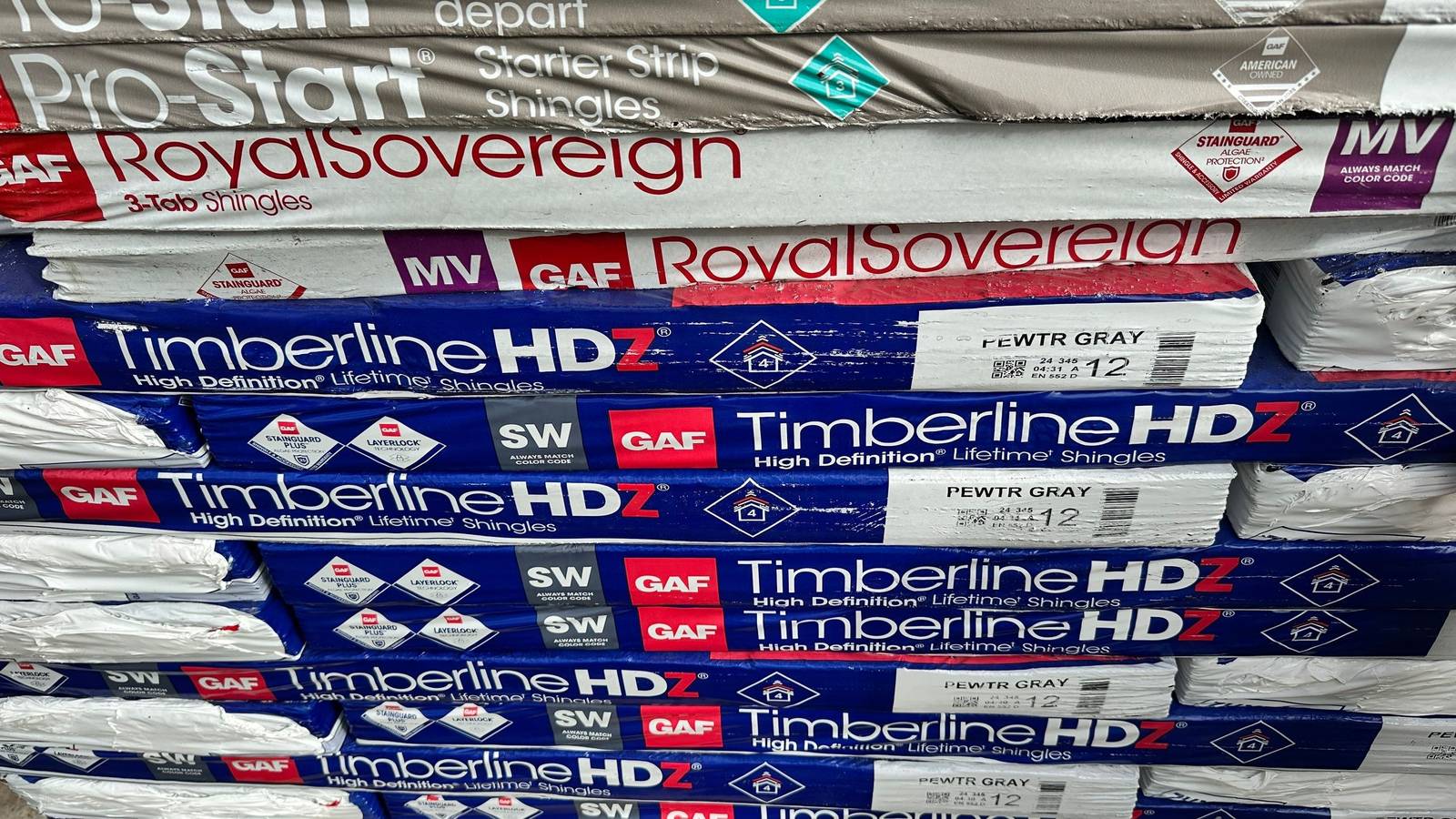
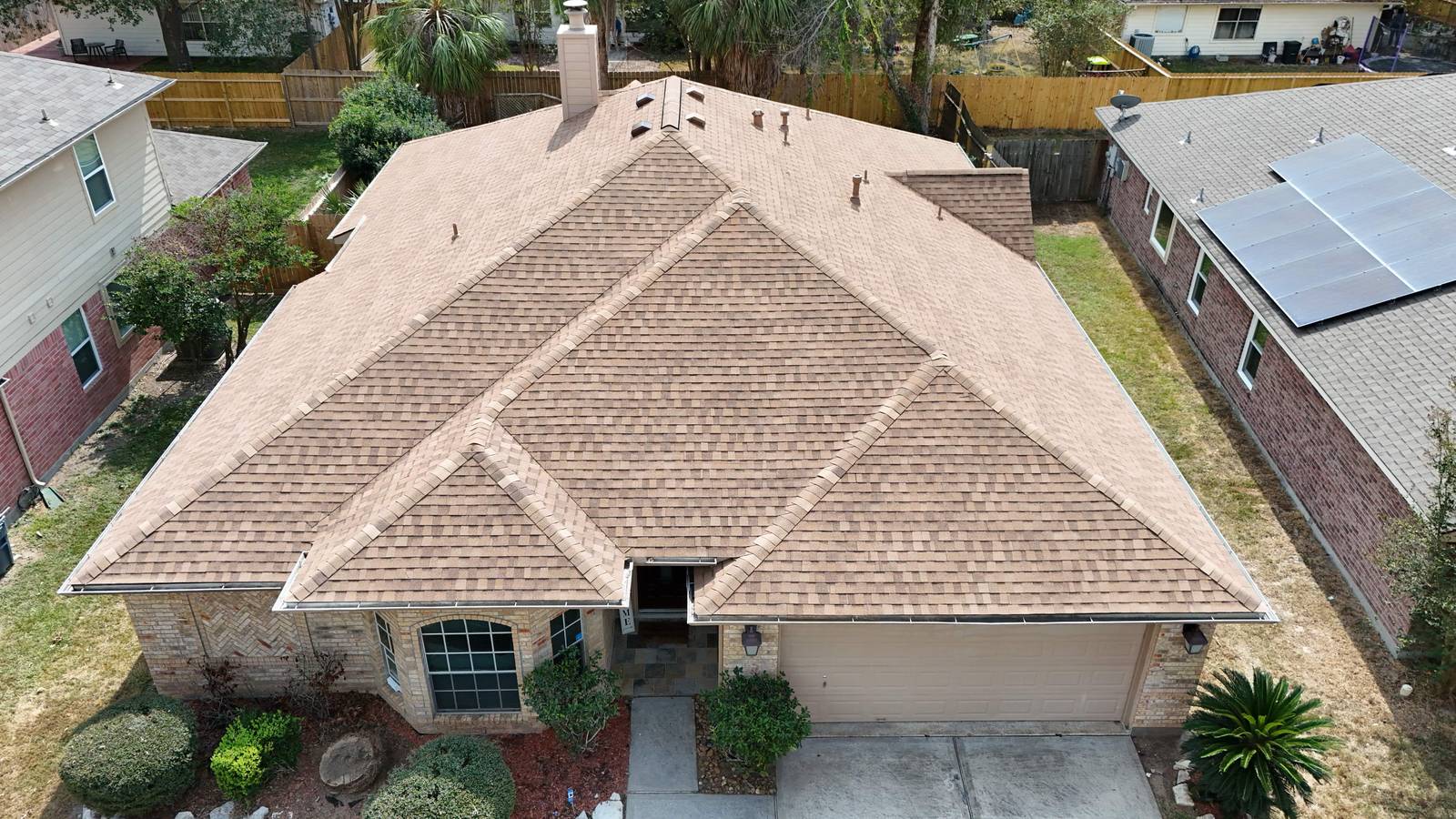
Our shingle color gallery shows popular color families on real roofs, and our brands page lists the shingle lines we install.
Does shingle color change the price of a new roof?
Within the same shingle line, colors are usually priced the same or close to it. Switching to a different line, such as a reflective or designer shingle, can change the price. In our preliminary ranges, a full asphalt replacement runs about $375 to $650 per roofing square (100 square feet), and the final number is confirmed after an inspection. Our pricing guide explains what moves the price.
Shingle color questions
Is a white roof a good idea in Houston?
Pure white asphalt shingles are uncommon on Houston homes, and very light roofs can show dirt and streaks. Many homeowners who want a cooler roof choose a light gray, a tan or a cool-rated line instead. Check your HOA rules either way.
Will a lighter roof lower my electric bill?
It can reduce the heat reaching your attic, but how much that shows up on your bill depends on ventilation, insulation, ductwork and shade. We do not promise a specific savings. Ask for the product's rated reflectance if heat is a priority.
Can I change my roof color when I replace it?
Usually, yes, as long as your HOA approves. Get written approval with the exact product and color before anything is ordered, and keep a copy with your project paperwork.
Want to see colors on your own home before you decide? Book a free inspection with no obligation, or call PL Roofing & Remodeling at 832-860-0354. We photo-document your roof and confirm your price after the inspection. Hablamos español.