A damp attic is not automatically a roof-vent problem. Much of the moisture in an attic comes from the house below: a bath fan or dryer duct that ends in the attic, sweating ductwork, or warm indoor air leaking up through the ceiling. Before anyone sells you more vents, ask where the moisture is coming from, whether the intake vents are actually open, and whether the vents you already have are working against each other. The right fix depends on what an inspection finds.
Our earlier article on attic ventilation in Texas heat covers how intake and exhaust work together and why airflow matters for shingle life. This one focuses on moisture, and on the questions worth asking before you agree to a ventilation change.
Where does attic moisture come from?
These are the usual suspects:
| Moisture source | What you might notice in the attic | Question to ask |
|---|---|---|
| Bathroom exhaust fan ducted into the attic, or a duct that has come loose | Damp or stained insulation and decking near the fan, a duct end lying on the insulation | Does every bath fan duct run all the way to a cap on the roof or wall? |
| Kitchen or clothes dryer exhaust | Lint, grease film or wet spots near a duct run | Where does this duct actually end? |
| HVAC ducts and equipment in the attic | Water marks under ducts or around the air handler and its drain line | Is this a duct, insulation or drain issue for an HVAC professional rather than a roofer? |
| Air leaks from the house below | Dark staining on the decking above light fixtures, an attic hatch or wall tops | Would air sealing the ceiling help more than adding vents? |
| A roof leak | Stains that track uphill to a pipe boot, valley, chimney or skylight | Can you show me where the water is getting in? |
The model code is clear about exhaust fans. The residential mechanical code section shown for Texas editions on UpCodes, Section M1501.1, says air removed by a mechanical exhaust system must be discharged to the outdoors and “shall not be exhausted into an attic, soffit, ridge vent or crawl space.” The U.S. EPA likewise recommends venting moisture-producing appliances such as clothes dryers to the outside. If a bath fan blows into the attic, adding roof vents treats the symptom, not the cause.
Questions worth asking before anyone adds vents
1. Is the intake actually open?
Exhaust vents near the ridge can only move air that comes in low, usually through soffit vents. Insulation blown over the soffits, painted-over vent strips or solid soffit boards can cut intake off. The International Residential Code, Section R806.3, says insulation must not block the free flow of air where eave vents are installed and calls for at least a 1-inch space between the insulation and the roof sheathing at the vent.
2. How much ventilation does this attic need, and how did you calculate it?
Under IRC Section R806.2, the minimum net free ventilating area is 1/150 of the vented attic area. It can drop to 1/300 when 40 to 50 percent of the required area is in upper vents, within 3 feet of the ridge, with the rest in the bottom third of the attic (the code also adds a vapor-retarder condition for cold climate zones). “Net free area” means the open area air can pass through, which is less than a vent's outside size. Local code adoption varies, so a good answer names the numbers used and where the intake and exhaust will be.
3. Are we mixing exhaust types?
Ridge vents, box vents, turbines, gable vents and power fans are all exhaust vents. Air Vent, a ventilation manufacturer, states in its product guidance that it is “never OK to mix two different types of attic exhaust vents” over a common attic, because one can act as intake for the other and parts of the attic get bypassed. If a proposal adds a ridge vent, ask what happens to the existing box vents or fan.
4. Will more exhaust without more intake help?
Adding exhaust to an attic that is short on intake can pull air from the wrong places, including through short-circuited vents or from the house below. Ask how the proposal balances the two.
5. Is this attic meant to be vented at all?
Some homes have spray foam under the roof deck and are designed as sealed, unvented attics. Adding roof vents to those can create problems, so ask the roofer to confirm the attic type first.
6. Can you show me photos of what you found?
A ventilation recommendation should rest on evidence: photos of the soffits, the exhaust vents, the decking and any ducts. During a PL Roofing & Remodeling inspection we include a ventilation review and an attic look when it is relevant, and we photograph each concern so you can see what we saw.
Why “add more vents” is not an automatic answer
Ventilation cannot keep up with a duct pumping shower steam into the attic, and it cannot fix a roof leak. Changing vents also changes how the whole system behaves, so the order of fixes matters: stop moisture at the source, open up blocked intake, remove conflicting exhaust, and only then decide whether more ventilation is needed. Our roofing warranty page notes that blocking or sealing soffit and ridge vents traps heat and moisture and can put coverage at risk, which is one more reason to change ventilation only with a plan. On our roof replacements, exhaust vents, ridge ventilation and intake are installed as a balanced system.
What can you check yourself?
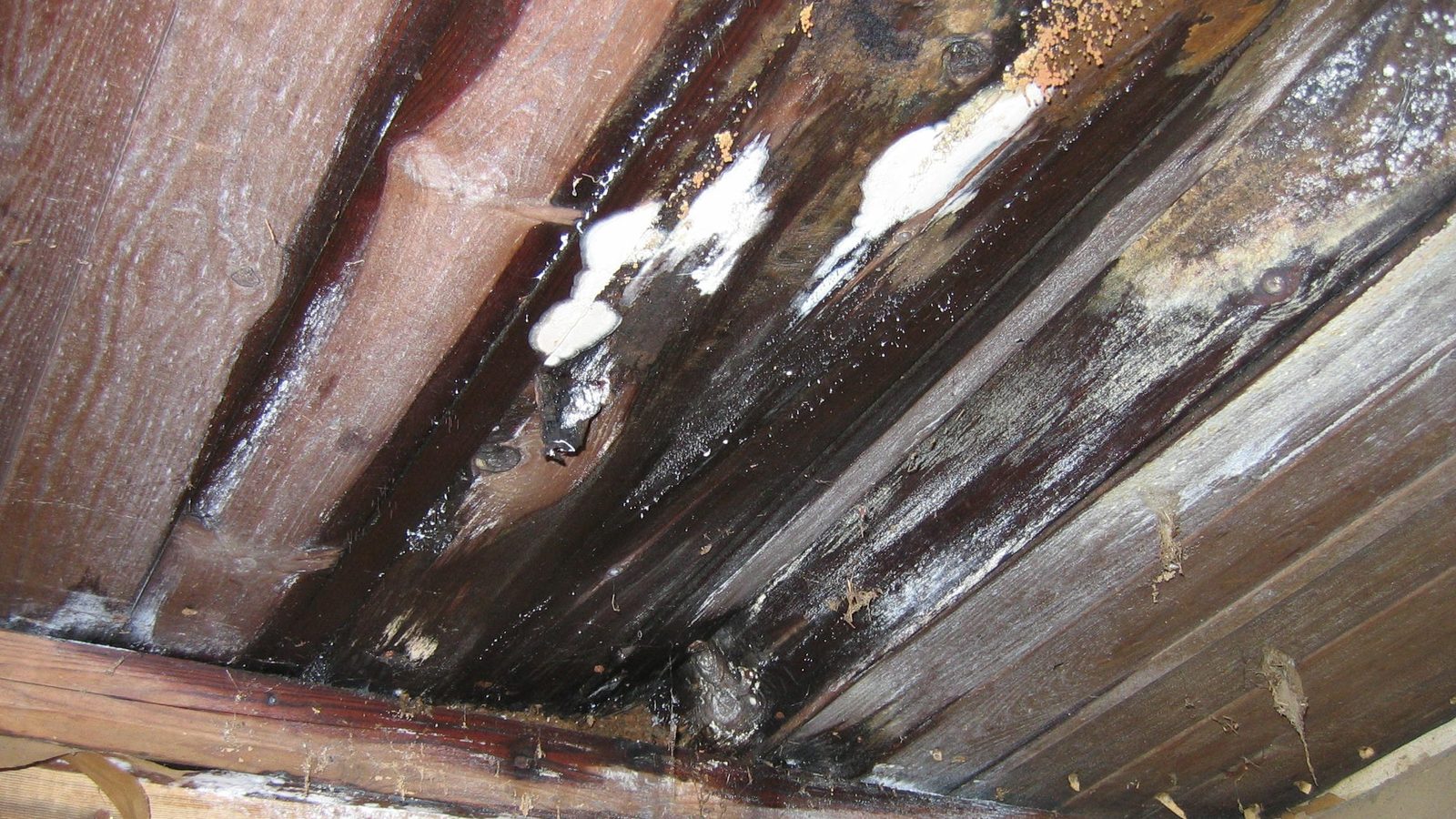
- From the attic hatch with a flashlight: musty smells, dark staining on the underside of the decking, rusty nail tips, damp insulation, or ducts ending loose in the attic.
- From outside: look for a cap on the roof or wall for each bath fan and the dryer. No visible cap is a good question to raise.
- If you find wet materials, the EPA advises drying them within 24 to 48 hours to help prevent mold growth.
Attic moisture questions
Can a bathroom fan vent into the attic?
Not under the model code. Section M1501.1, as shown for Texas editions on UpCodes, says exhaust air must go outdoors and not into an attic, soffit, ridge vent or crawl space. Check with your city for the code edition it enforces.
Will a ridge vent fix a damp attic?
Not by itself. If moisture comes from a duct, an HVAC issue or a leak, that source has to be fixed first. A ridge vent also needs open intake, and it should not be mixed with other exhaust types over the same attic.
Is it OK to have box vents and a ridge vent on the same roof?
Air Vent's guidance says it is never OK to mix two different types of exhaust vents over a common attic, because one can short-circuit the other.
Musty attic or stained decking? Book a free, photo-documented inspection or call PL Roofing & Remodeling at 832-860-0354. We will look at the vents, the attic and the likely moisture sources before recommending anything. Hablamos español.
Sources
- International Residential Code 2021, Section R806.2 Minimum vent area (UpCodes) (reviewed Oct. 29, 2026)
- International Residential Code, Section R806.3 Vent and insulation clearance (UpCodes) (reviewed Oct. 29, 2026)
- International Residential Code, Section M1501.1 Outdoor discharge, Texas editions (UpCodes) (reviewed Oct. 29, 2026)
- Air Vent (Gibraltar Building Products), Is mixing exhaust vents OK? (reviewed Oct. 29, 2026)
- U.S. EPA, A Brief Guide to Mold, Moisture and Your Home (reviewed Oct. 29, 2026)