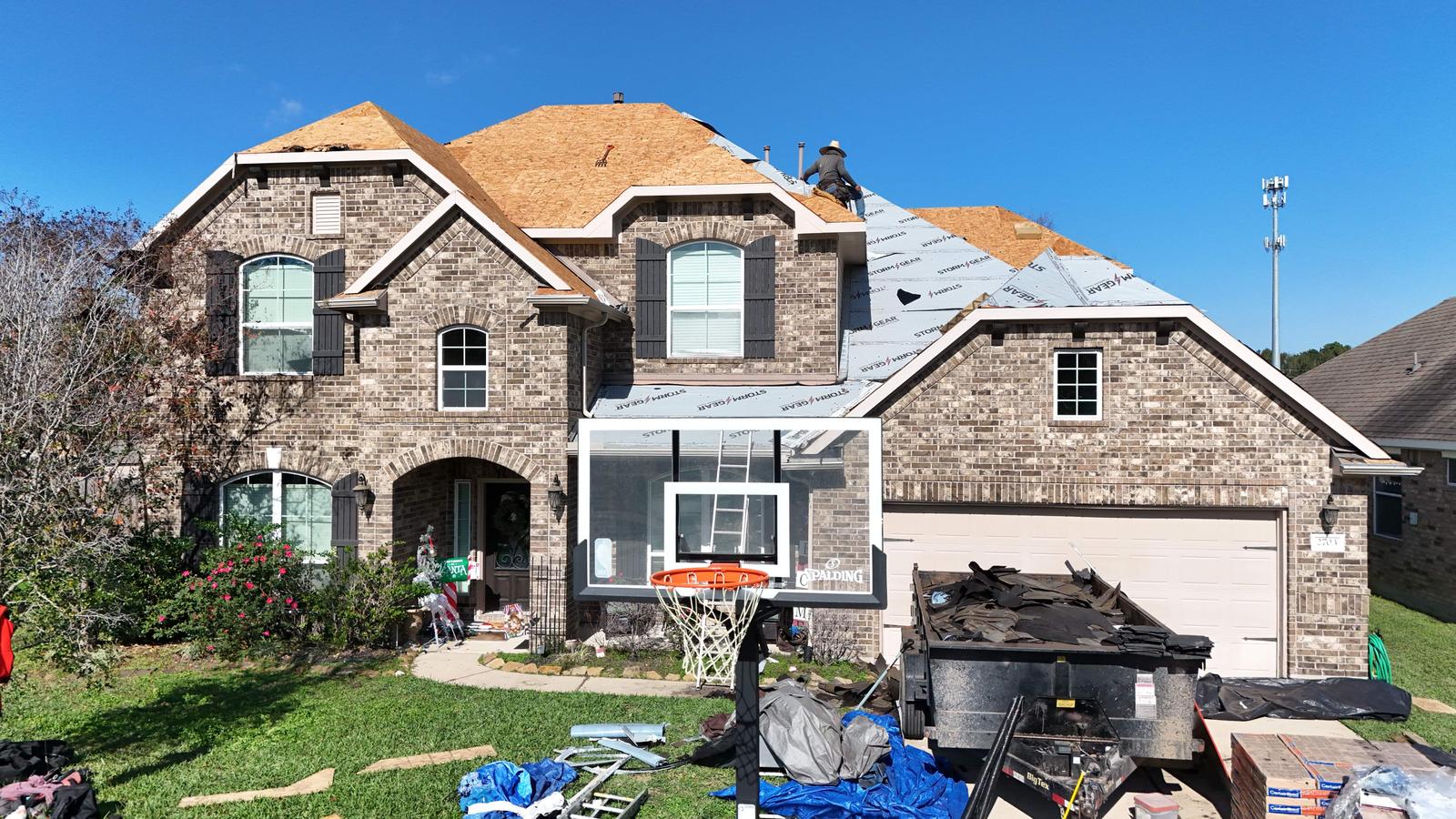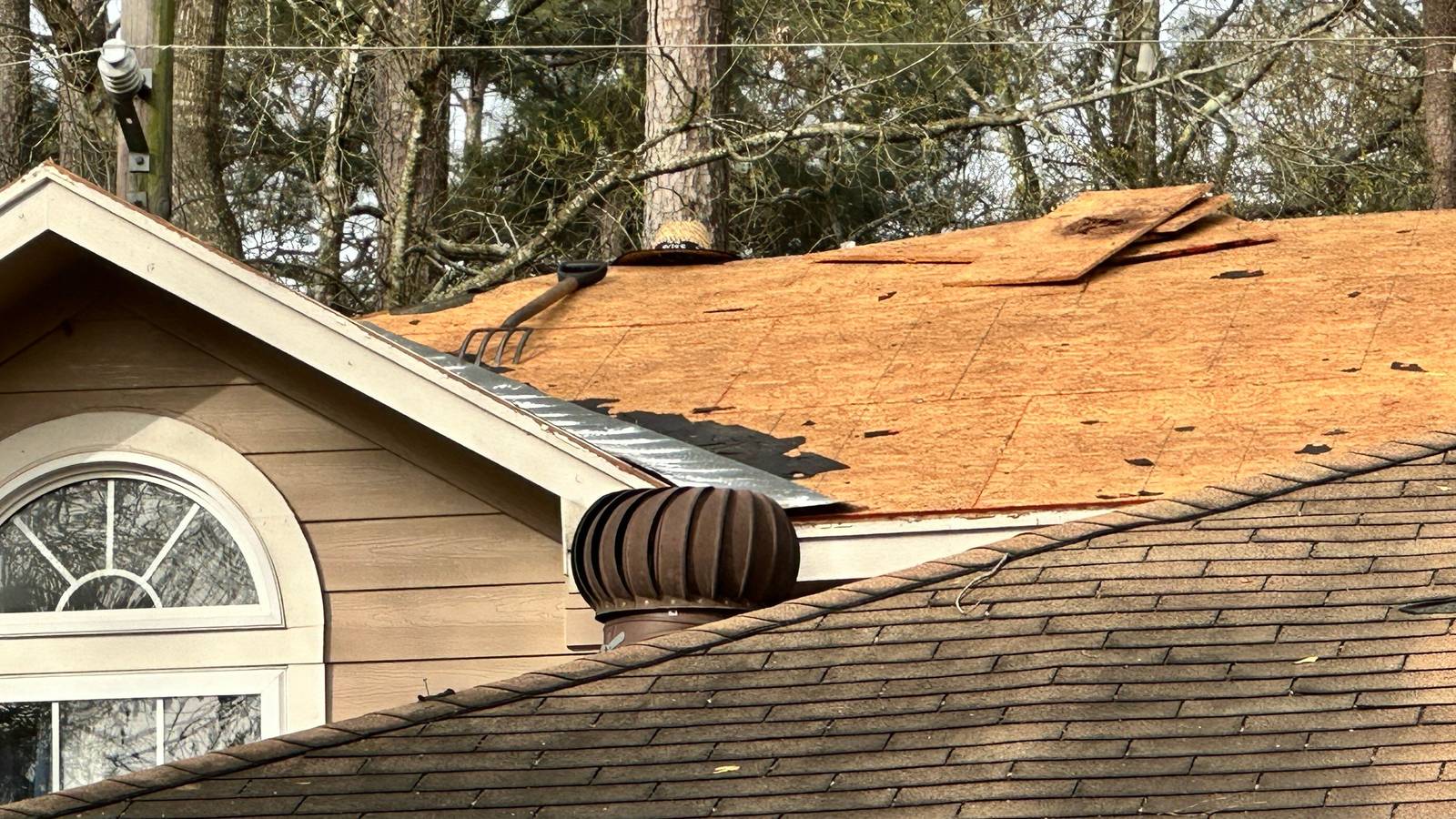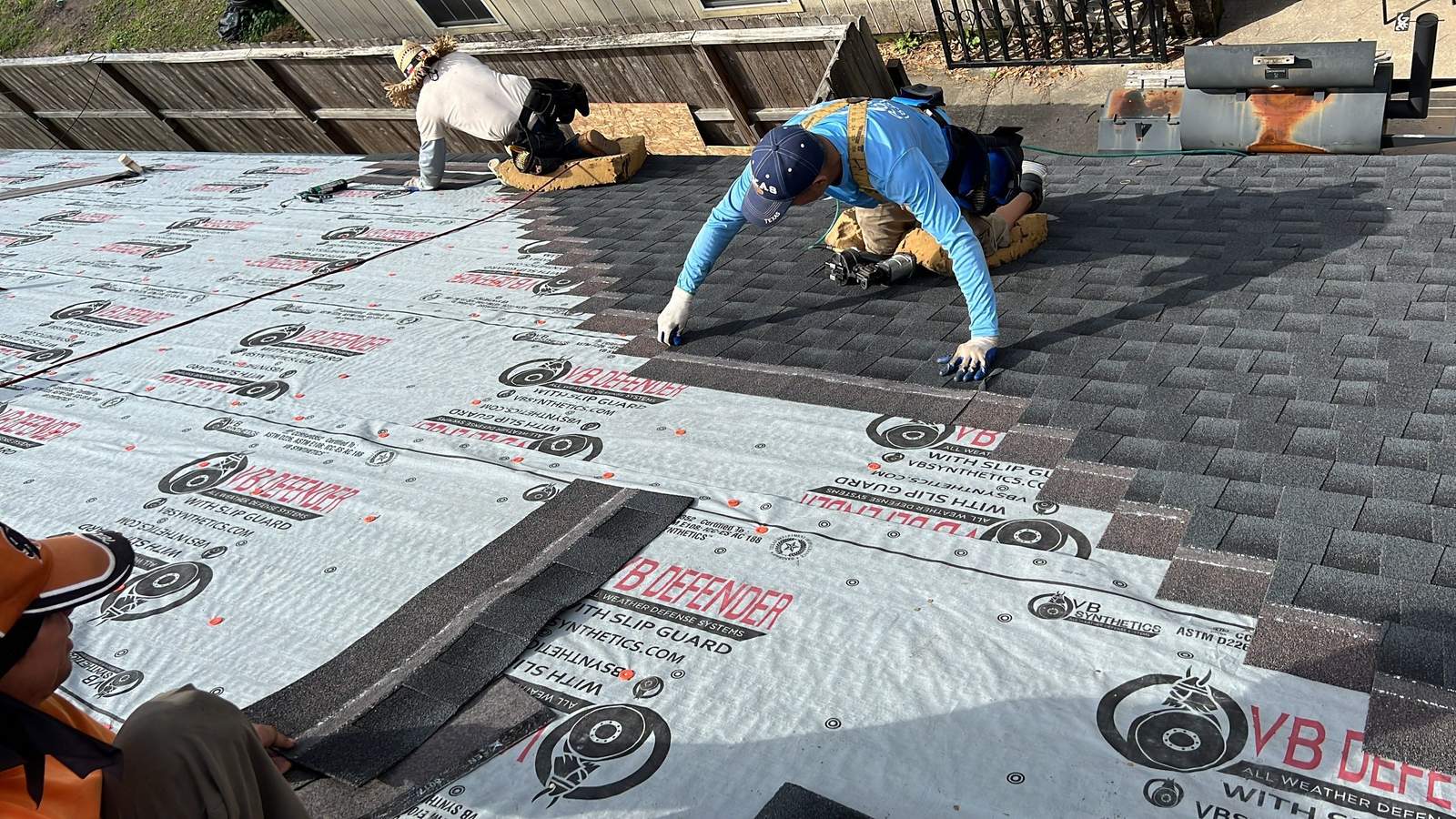
Underlayment is the water-resistant layer between the wood roof deck and your shingles, your backup if wind-driven rain gets past the shingles. Felt is the traditional option; synthetic underlayment is lighter, tougher and handles exposure during installation better; and self-adhered leak barrier sticks to the deck and seals around nails. Many Houston roofs use synthetic on the open areas and self-adhered barrier in valleys, around penetrations and at other leak-prone spots.
Nobody sees underlayment once the shingles go on, which is exactly why it gets overlooked on quotes. But when a storm lifts shingles or rain blows sideways under them, underlayment is what stands between that water and your attic. Here is what each type does, where it belongs, and what to ask your roofer to write down.
What does roof underlayment actually do?
Shingles shed most of the water, but they are not a sealed surface. Underlayment gives the roof a second line of defense:
- Backup against wind-driven rain that gets under shingles during a storm.
- Temporary protection for the deck during installation, before shingles go on.
- A separation layer between the wood deck and the asphalt shingles.
- Extra protection where it matters most, such as valleys, walls and around pipes, when self-adhered barrier is used.
The Insurance Institute for Business & Home Safety explains why this layer matters: if wind rips off the roof covering, the exposed deck lets water pass through the gaps. Its FORTIFIED Roof program requires a sealed roof deck, and IBHS says sealing the seams of the deck can reduce that water intrusion by up to 95%.
What is the difference between felt and synthetic underlayment?
Felt (often called tar paper) is a mat saturated with asphalt. It has been used for generations and still works when installed correctly. Its weak points are that it is heavier, it can tear more easily when walked on, and it can wrinkle if it gets wet before the shingles go on.
Synthetic underlayment is made from woven or spun plastics. It is generally lighter, more tear-resistant and better at lying flat, and many products are rated to stay exposed longer during installation than felt. That matters in Houston, where a pop-up afternoon storm can arrive mid-job. Synthetic is now common on residential replacements.
Self-adhered leak barrier, often called ice-and-water shield, is a rubberized asphalt membrane with a sticky back. It bonds directly to the deck and seals around the nails driven through it. We do not get much ice in Houston, but the same sealing ability is useful anywhere water concentrates or wind drives rain sideways.
How do the three types compare?
| Type | Where it is usually used | Strengths | Trade-offs |
|---|---|---|---|
| Asphalt-saturated felt | Open areas of the roof | Long track record; familiar to every crew | Heavier; can tear or wrinkle; less forgiving if exposed to rain during the job |
| Synthetic underlayment | Open areas of the roof | Lighter, tear-resistant, lies flat; many products tolerate longer exposure | Quality varies by product; must be installed and fastened per the manufacturer |
| Self-adhered leak barrier | Valleys, around pipes, vents, chimneys and skylights, along walls, at eaves, and on low-slope sections | Bonds to the deck and seals around nails | Costs more than felt or synthetic, so it is usually placed in targeted areas, not the whole roof |
Where should self-adhered leak barrier go on a Houston roof?
The exact layout depends on the shingle manufacturer's instructions, local code and your roof's shape, but these are the spots where it earns its keep:
- Valleys, where two slopes meet and carry the most water on the roof.
- Around penetrations such as plumbing vents, exhaust vents, chimneys and skylights.
- Roof-to-wall intersections, behind the step flashing where a roof meets a second-story wall.
- Eaves and rakes, the roof edges most exposed to wind-driven rain.
- Low-slope sections, such as a porch tie-in, where water moves slowly.
Some homeowners choose to have the whole deck covered in a self-adhered membrane or to have the deck seams taped for extra storm protection. If that interests you, ask for it to be priced as a separate line so you can compare.
Does underlayment type change the price of a new roof?
It is part of the full replacement price rather than a separate project. Choices like synthetic over felt, more self-adhered coverage or a sealed deck can move the total, which is one reason two quotes for the "same" roof can differ. In our preliminary ranges, a full asphalt replacement runs about $375 to $650 per roofing square (100 square feet), with the final number confirmed after an inspection. Our guide to what a new roof costs in Houston explains the other factors.
What should I ask to see on a roofing quote?
The Texas Department of Insurance advises homeowners to make sure the contract lists the materials the contractor will use and to get more than one bid. For underlayment, that means the quote should answer:
- Which underlayment, by type and product name, goes on the open areas of the roof?
- Where does self-adhered leak barrier go? Valleys, penetrations, walls, eaves, low-slope areas?
- Is all the old underlayment removed down to the deck during tear-off?
- How is damaged decking handled if it is found under the old roof, and how is it priced?
- Is new drip edge included, and does it go over or under the underlayment at each edge, per the manufacturer's instructions?
- Will the installation follow the shingle manufacturer's instructions, which can affect the manufacturer's warranty terms?
If a quote just says "underlayment" with no detail, ask. A good roofer can explain the choice in plain language. Our guide to what happens on roof replacement day shows when each layer goes on, and our guide to choosing shingles for Houston weather covers the layer on top.
Roof underlayment questions
Is synthetic underlayment always better than felt?
Not always, but it is generally lighter, stronger and more forgiving of weather during installation, which is why it has become common on replacements. A properly installed felt roof can still perform. What matters most is the product, the installation and the details in valleys and around penetrations.
Do I need ice-and-water shield in Houston if it never freezes?
The name comes from colder climates, but the self-sealing membrane is useful here in valleys, around pipes and chimneys, along walls and at edges, where water concentrates or wind drives rain sideways.
Can underlayment be replaced without replacing the shingles?
Only in small areas during a repair, such as when a valley or flashing is rebuilt. Replacing underlayment across the roof means removing the shingles, so it is normally done as part of a full replacement.
Want to know what is under your shingles and what a new roof should include? Book a free, photo-documented inspection with no obligation, or call PL Roofing & Remodeling at 832-860-0354. We photo-document what we find and confirm your price after the inspection. Hablamos español.