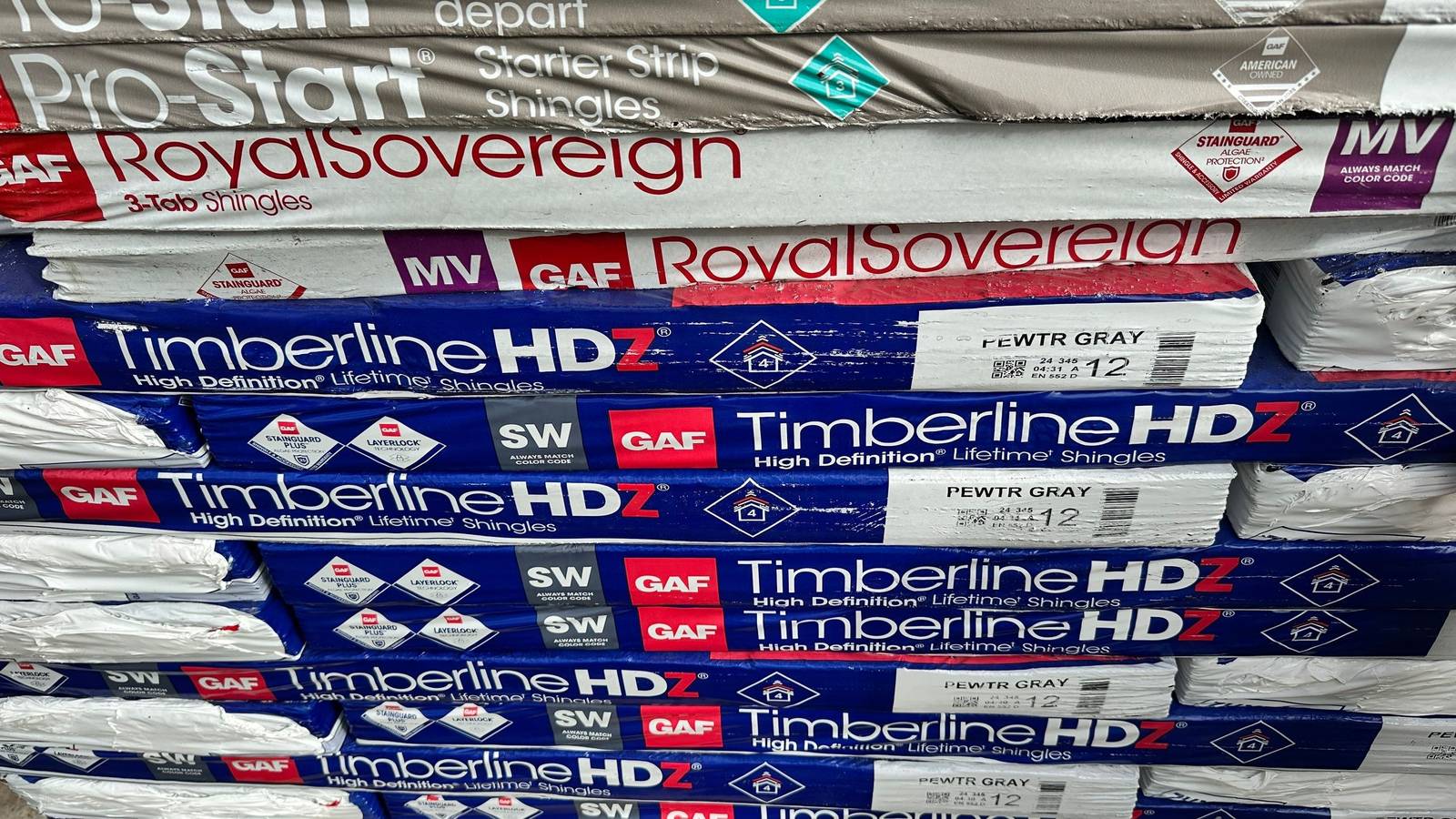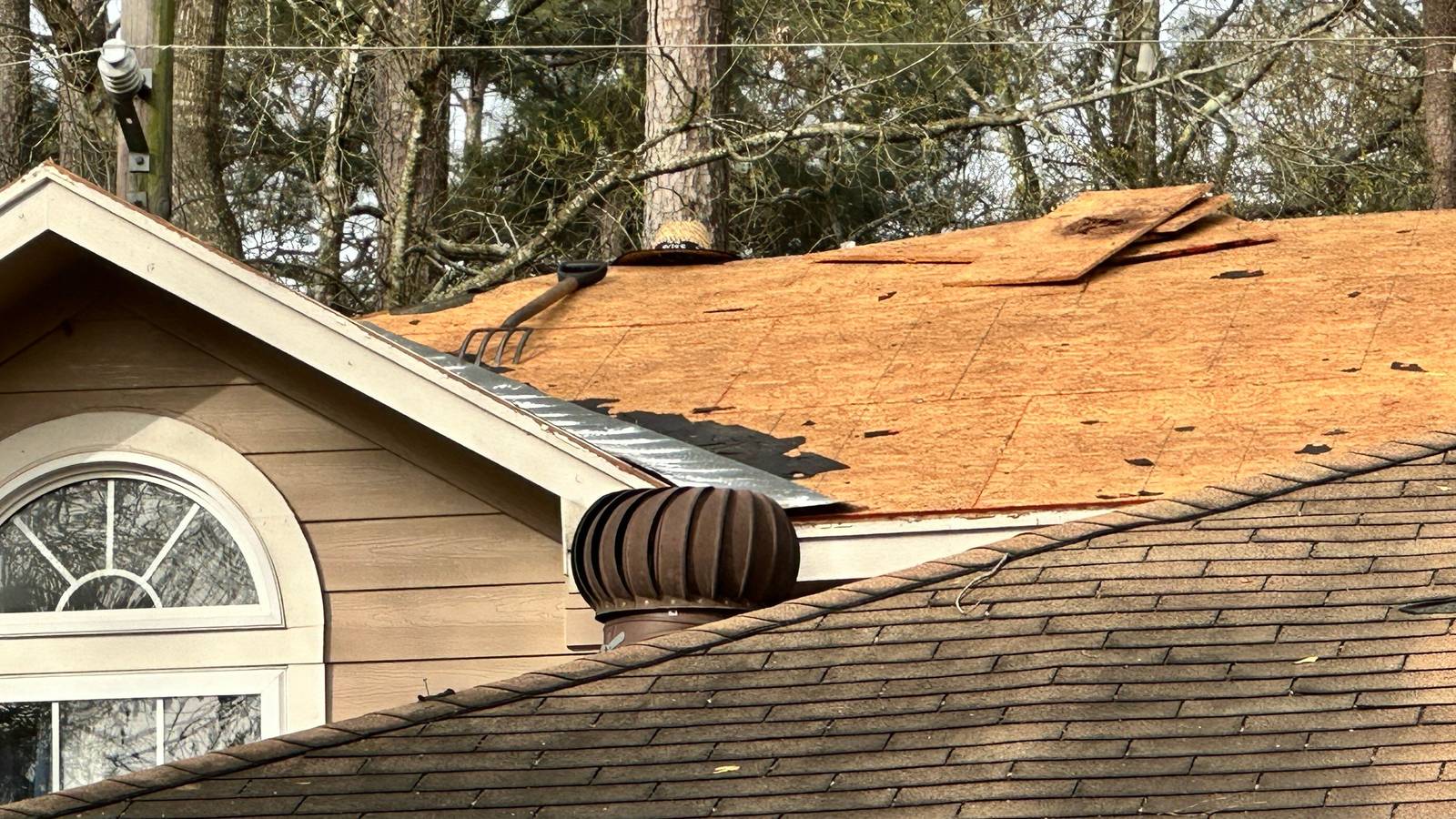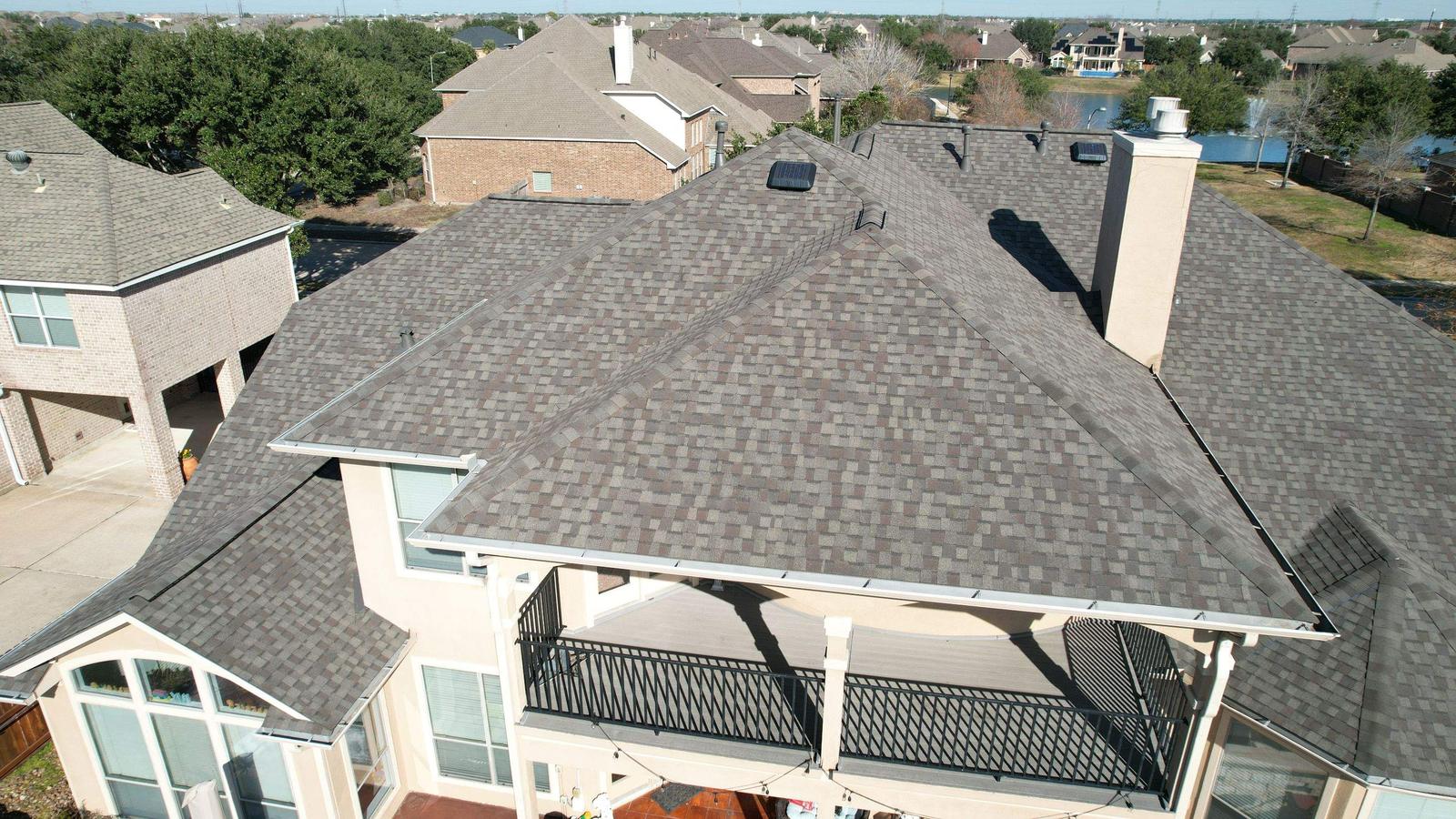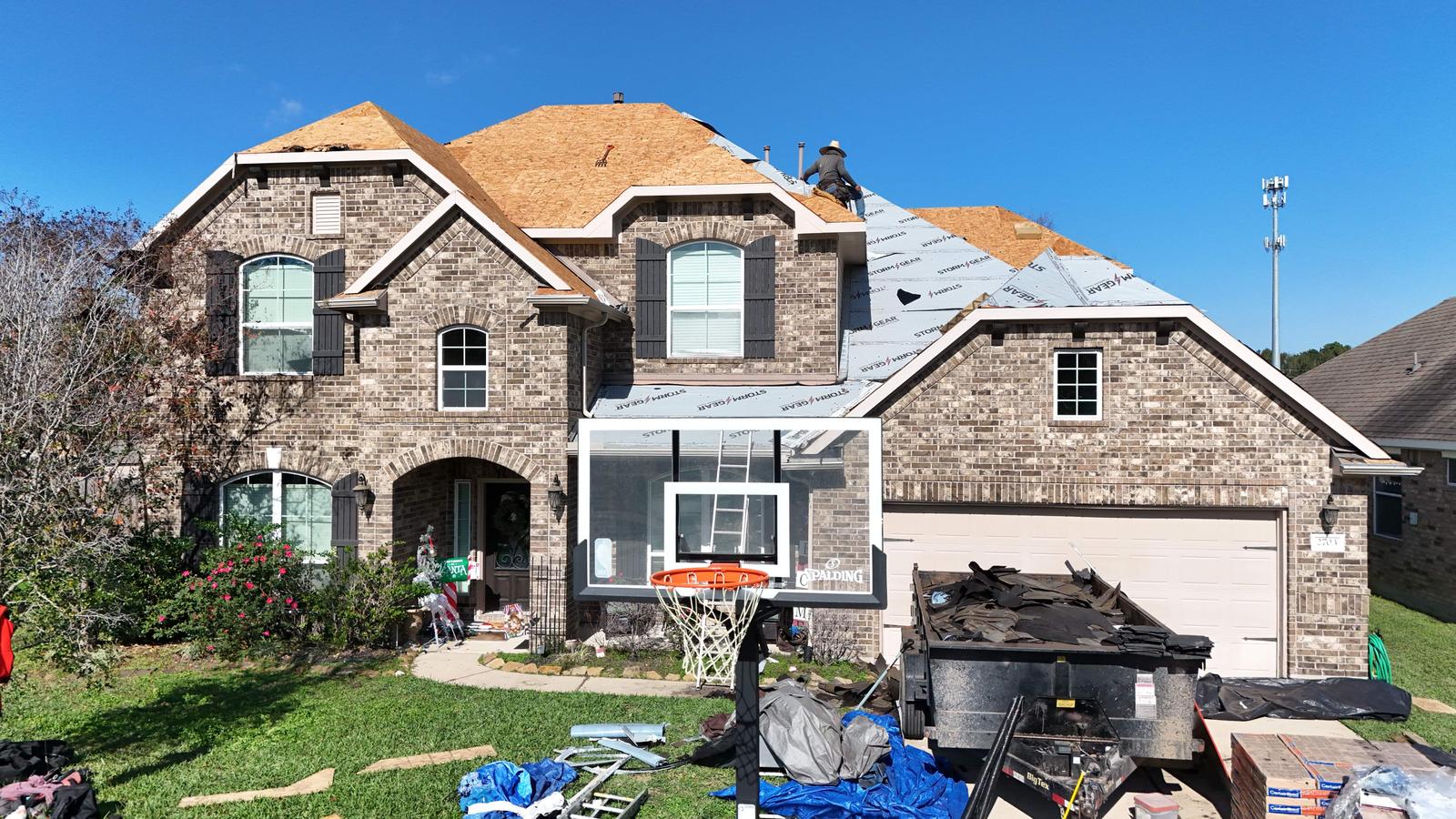
Class 4 impact-resistant shingles are shingles that passed the toughest level of the UL 2218 impact test, in which a 2-inch steel ball is dropped from 20 feet onto the same spot twice without cracking through the shingle. They generally hold up to hail better than standard shingles, but they are not hail-proof. They cost more than standard architectural shingles, and some insurers offer discounts for them; ask your insurer, because it depends on your policy.
Houston's spring storms can bring hail, and after a hailstorm many homeowners start asking whether their next roof should be impact-resistant. Here is what the rating actually means, how these shingles are built, which products carry it, and how to decide whether the upgrade makes sense for your home.
What does Class 4 mean? The UL 2218 test explained
UL 2218 is a lab test for how well a roof covering resists impact. Steel balls are dropped onto a sample roof section, and the result is rated from Class 1 to Class 4 based on the largest ball the product withstands:
| Rating | Steel ball diameter |
|---|---|
| Class 1 | 1.25 inches |
| Class 2 | 1.50 inches |
| Class 3 | 1.75 inches |
| Class 4 | 2.00 inches |
According to the Insurance Institute for Business & Home Safety (IBHS), the balls are dropped from the height needed to match the energy of a hailstone of the same size. Malarkey describes the Class 4 test as a 2-inch steel ball dropped from 20 feet, and each spot is hit twice. A shingle passes if the back shows no tearing, fracturing, cracking or splitting.
Two points matter for homeowners. First, IBHS notes that dents, crushed or loosened granules, and marks visible only on the top of the shingle are not counted as failures in UL 2218. Second, IBHS points out that these standardized tests do not exactly replicate natural hailstones. Class 4 tells you a shingle is tougher than one without the rating; it does not tell you it will come through every storm looking new.
How are impact-resistant shingles different from standard shingles?
IBHS describes two main approaches manufacturers use:
- Reinforcement. A mesh or scrim on the back of the shingle helps it resist cracking.
- Polymer-modified asphalt. Polymers such as SBS (styrene-butadiene-styrene) are blended into the asphalt, making the shingle more rubber-like and flexible so it can absorb an impact instead of cracking. These shingles look the same as standard shingles.
In a 2014 IBHS study of 22 asphalt shingle products, impact-resistant shingles performed better than standard ones, and polymer-modified impact-resistant shingles performed better than traditional impact-resistant shingles across all four test classes, most noticeably with the larger balls. The same study also showed that results varied from product to product. Products have changed since then, but the lesson holds: the rating is a starting point, and the construction behind it matters.
SBS modification also helps in other ways. Owens Corning says its Duration FLEX shingles, made with SBS polymer-modified asphalt, are more pliable than standard shingles, which helps them resist cracks and tears.
Which Class 4 shingles are available in Houston?
Most major manufacturers offer at least one impact-rated line. Examples from the brands we install include:
| Impact-rated shingle | Construction and rating |
|---|---|
| Owens Corning TruDefinition Duration FLEX | SBS polymer-modified, UL 2218 Class 4. |
| CertainTeed NorthGate | CertainTeed describes NorthGate as SBS-modified with a Class 4 impact rating. |
| GAF Timberline AS II | GAF's UL 2218 Class 4 architectural shingle. |
| Atlas StormMaster Shake and Slate | Class 4 impact-rated in shake and slate-look profiles. |
| Malarkey Legacy | Built on Malarkey's rubberized, polymer-modified asphalt and impact-rated. |
| TAMKO StormFighter IR | TAMKO's impact-rated option. |
Ratings apply to specific products, so confirm the rating on the manufacturer's page for the exact shingle being quoted, and ask whether matching impact-rated hip and ridge caps are available. Our shingle brands page compares the lines we install, and our guide to choosing shingles for Houston weather covers heat and wind too.
How much more do Class 4 shingles cost?
More than standard architectural shingles, but how much more depends on the product line, the roof and the rest of the scope. Our estimator uses $375 to $650 per square for installed architectural asphalt shingles, including tear-off; as our pricing guide puts it, premium and impact-rated lines cost more. We do not quote a general upgrade figure, because the difference changes from brand to brand. Instead, we price the Class 4 option and the standard option side by side on the same roof so you can see the real gap. Our guide to how much a new roof costs in Houston explains the other factors.
Do insurers give discounts for impact-resistant roofs?
Some insurers offer discounts for impact-resistant roofs. Whether yours does, and how much, depends on your policy, and your insurer decides. Before you choose a shingle:
- Call your insurer or agent and ask whether an impact-resistant roof changes your premium.
- Ask what information they need to show the roof is Class 4, such as the product name.
- Bring that answer to your roofing quote so you can weigh the difference in price against any savings.
We cannot promise a discount, and no contractor should. Keep your closeout paperwork, which lists the product installed, in case your insurer asks for it.
Are Class 4 shingles worth it in Houston?
Reasons to consider them:
- Better resistance to hail than standard shingles, especially in polymer-modified lines.
- SBS shingles stay flexible, which helps them resist cracking through heat cycles.
- A possible insurance discount, depending on your insurer and policy.
- More value the longer you plan to stay in the home.
Reasons for caution:
- They cost more up front.
- They are not hail-proof; large hail can still damage them, and metal vents, gutters and skylights on the same roof can still be dented.
- Installation still matters. Flashing, ventilation and fastening decide how any roof performs.
If your home has a hail history or you plan to stay for many years, Class 4 is worth pricing. If you are selling soon or budget is tight, a well-installed architectural shingle may be the better fit. Also compare metal roofs vs shingles if long life is your priority.
Impact-resistant shingle questions
Are Class 4 shingles hail-proof?
No. Class 4 is a laboratory impact rating, not a guarantee. It means the shingle passed the toughest level of the UL 2218 steel-ball test, and it generally resists hail better than a standard shingle, but severe hail can still damage it.
Will a Class 4 roof lower my insurance premium?
It might. Some insurers offer discounts for impact-resistant roofs, but it depends on your policy and your insurer decides. Ask your insurer before you choose a shingle, and we will quote Class 4 and standard options side by side.
Can I tell a Class 4 shingle just by looking at it?
Usually not. Polymer-modified shingles look like standard shingles, and a reinforcing mesh on the back is hidden once the roof is installed. Keep the product name and your closeout paperwork so you know exactly what is on your roof.
Wondering whether Class 4 makes sense for your home? Book a free, photo-documented inspection with no obligation, or call PL Roofing & Remodeling at 832-860-0354. We quote impact-rated and standard shingles side by side and confirm your price after the inspection. Hablamos español.