A good roofing estimate lists the size of the roof in squares, what is being torn off, how damaged decking will be handled and priced, and every major component: underlayment, drip edge, flashing, ventilation, starter and ridge, disposal, permit and warranty terms. If a line is missing or vague, ask about it before you sign. To compare two estimates fairly, line them up item by item instead of looking only at the total.
Two quotes for the same Houston roof can be far apart, and the reason is usually hidden in the details. One includes new flashing and the other reuses the old metal. One prices decking up front and the other leaves it open. Here is how to read each part of an estimate, what should make you pause, and how to compare quotes side by side.
What does a roofing square mean on an estimate?
Roofers measure in squares. One square is 100 square feet of roof surface, not floor space. A 2,000-square-foot house often has more than 20 squares of roof once you count the pitch, overhangs, porches and garage. The estimate should state the number of squares and whether it includes a waste allowance for cuts at hips, valleys and edges.
If two estimates list very different square counts for the same house, ask each roofer how they measured. For reference, our preliminary ranges for a full asphalt shingle replacement run about $375 to $650 per roofing square, with metal roughly 1.9 times asphalt and tile roughly 2.3 times. The final number is confirmed after an inspection. Our pricing guide and our article on how much a new roof costs in Houston explain what moves a project up or down in that range.
What should each line on a roofing estimate cover?
| Line item | What it means | What to look for |
|---|---|---|
| Tear-off and layers | Removing the old shingles down to the deck | How many layers are coming off, and whether extra layers cost more |
| Decking | Replacing rotted or damaged plywood or OSB | A written unit price, how many sheets are included, if any, and photos before extra wood is billed |
| Underlayment | The water-resistant layer under the shingles | Synthetic or felt, plus self-adhered leak barrier in valleys and around penetrations |
| Drip edge | Metal along the eaves and rakes | New drip edge, and whether it goes on both eaves and rakes |
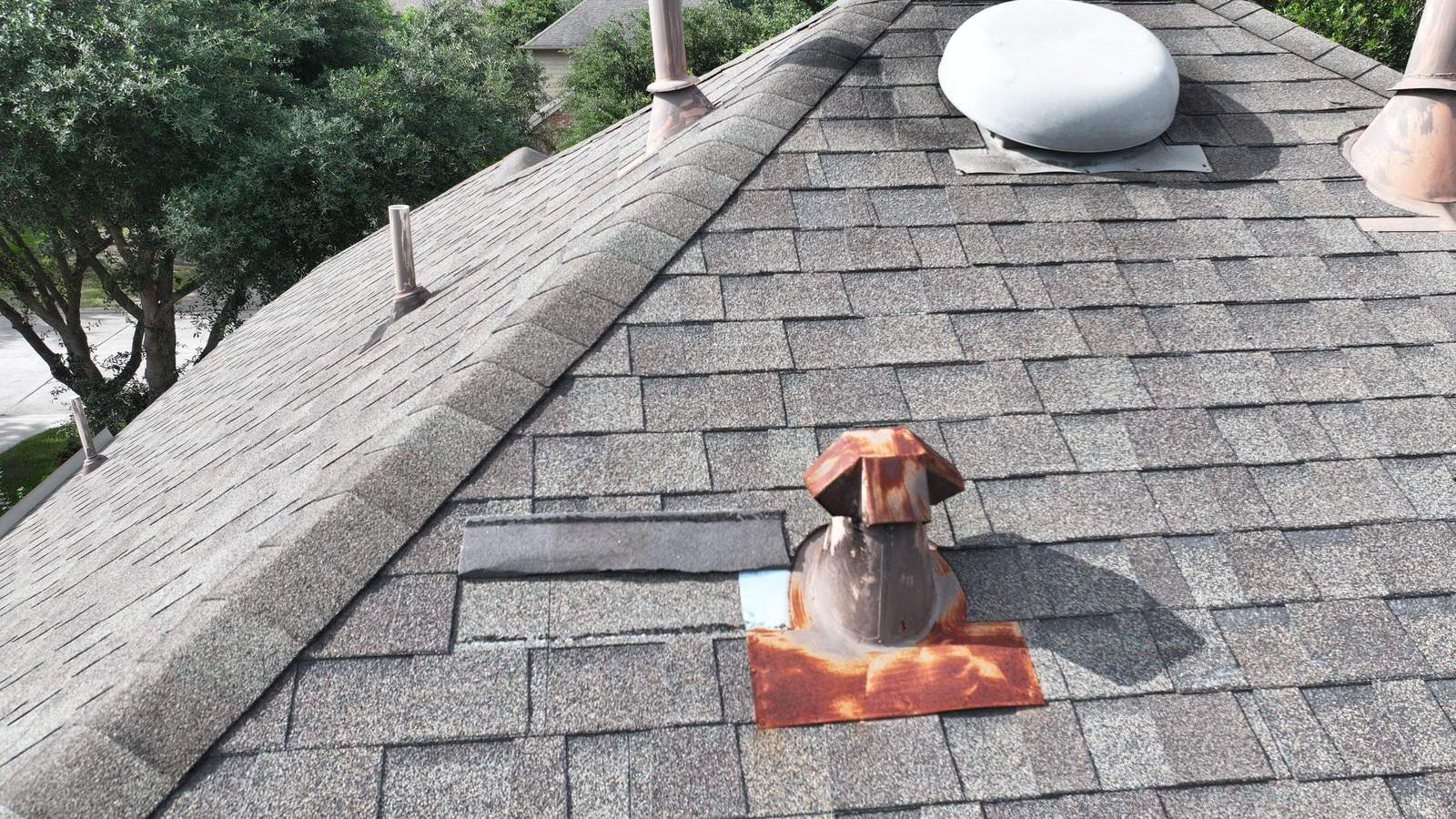
| Flashing | Metal at walls, chimneys, valleys and pipes | New or reused, and which pieces: step, kickout, pipe boots, chimney |
| Ventilation | Intake and exhaust vents for the attic | Type of vents, how many, and whether the plan balances intake and exhaust |
| Starter and ridge | Starter strip at the edges and cap shingles on hips and ridges | Manufacturer starter and ridge products, not cut-up field shingles |
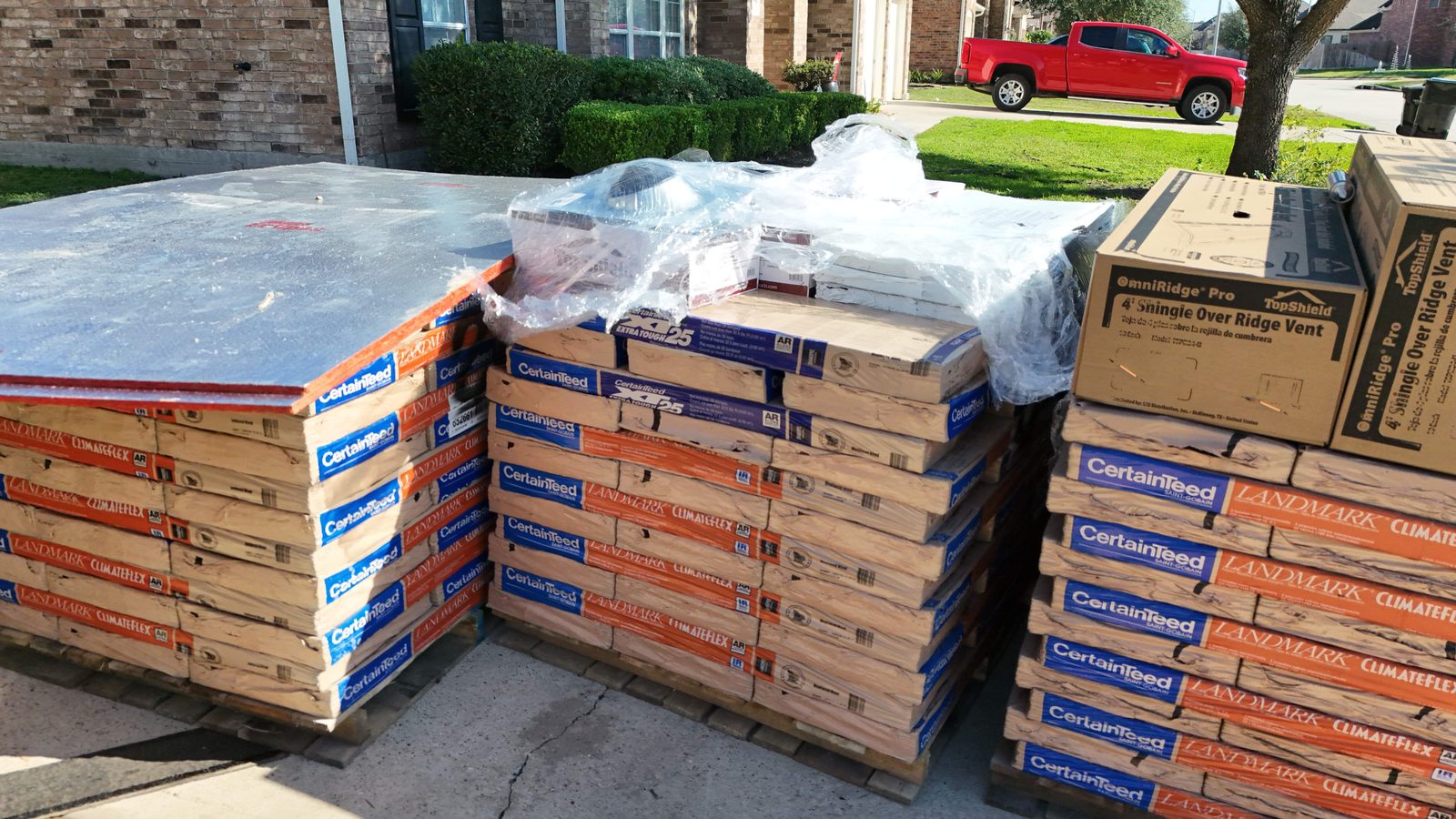
| Shingles | The brand, product line and color | The exact product name, not just "architectural shingles" |
| Disposal and cleanup | Dumpster, haul-off and magnetic nail sweep | Included or extra, and how the yard and driveway are protected |
| Permit | Any permit your city or county requires | Who pulls it, and whether the fee is included |
| Warranty | Manufacturer coverage and the roofer's workmanship coverage | Both in writing, with what each covers and for how long |
Tear-off and layers
A full tear-off removes old shingles and underlayment so the deck can be inspected. Some older homes have two layers. Removing more than one layer takes more labor and disposal, so the estimate should say what happens if a second layer is found.
Decking allowance
No one can see every board until the old roof comes off. That is why a clear estimate spells out a unit price for replacement decking, how many sheets are included if any, and how you will be notified before extra wood is added. Our guide to roof decking damage signs explains what roofers look for.
Underlayment, flashing and ventilation
These are the parts you will never see once the job is done, and they are where estimates differ most. Look for product names and where each one goes. Our comparison of synthetic vs felt underlayment covers the hidden layer in detail.
What are the red flags on a roofing estimate?
- One lump sum with no breakdown. You cannot compare it or tell what is included.
- No product names. "Shingles and underlayment" could mean anything.
- Blank spaces or missing terms. The Texas Department of Insurance warns homeowners not to sign a contract with blank spaces, and to make sure the contract lists the materials that will be used.
- A paper called an estimate that is really a contract. TDI also warns that some scammers get homeowners to sign a contract by calling it an estimate.
- A large payment up front. TDI advises being wary if a contractor asks for a large or full down payment.
- An offer to cover your deductible. TDI explains that it is illegal for contractors to waive your deductible or help you avoid paying it, including through rebates or inflated estimates. The rules are in Texas Insurance Code Chapter 707.
- No local address or phone number. TDI recommends bids on company letterhead with a phone number and address.
- A price far below the others. Something may have been left out, or the square count may be off.
How do I compare two roofing estimates?
- Check the square count. If one quote is for 28 squares and another for 32, the totals are not comparable until you know why.
- Match the shingle products. Same brand and line, or an equivalent? Ask to see the product names.
- Go line by line. Mark which estimate includes new drip edge, new flashing, leak barrier, ridge vents and permits.
- Compare decking terms, not just totals. A lower total with an open-ended decking line can end up costing more.
- Read both warranties. Who backs the workmanship, what does it cover, and is it in writing?
- Ask what is not included. Gutters, skylights, chimney work and satellite dish resets are common exclusions.
TDI recommends getting more than one bid, because comparing bids helps you spot offers that may be too high or too good to be true. Texas has no state roofing license, so reading the estimate carefully and checking references is part of your homework.
What should I ask a roofer about the estimate?
- How did you measure the roof, and how many squares did you count?
- What exact shingle, underlayment and ventilation products are included?
- Which flashing will be replaced and which, if any, reused?
- What is the unit price for extra decking, and how will you tell me before adding it?
- Who pulls the permit, and is disposal included?
- What does your workmanship warranty cover, and where is it written?
Roofing estimate questions
Why are two roofing estimates for the same house so different?
Usually because they are not pricing the same job. Differences in square count, shingle line, flashing, underlayment, ventilation and decking terms add up quickly. Compare line by line to see where the gap comes from.
Is a roofing estimate the same as a contract?
Not always. An estimate describes the proposed work and price, while a contract is a signed agreement. Read anything carefully before you sign it, and make sure there are no blank spaces.
Should the cheapest estimate always win?
Not necessarily. A low price can reflect missing items like new flashing, leak barrier or permits, or an open-ended decking line. Choose the estimate that is clear, complete and in writing.
Want an estimate you can actually read? Book a free, photo-documented inspection with no obligation, or call PL Roofing & Remodeling at 832-860-0354. We walk you through each line and confirm the final price after the inspection. Hablamos español.